Conclusión: La mejor manera de fijar buenos precios para las bebidas es fijar un costo de servicio estricto del 15 al 18% calculando continuamente el costo exacto por onza de las botellas de pozo y fijando los precios minoristas en función de recetas precisas y estandarizadas. Los directores de bebidas y los gerentes de bares lo logran de manera sostenible al utilizar WISK para automatizar el control de los costos de vertido y detectar las variaciones en tiempo real, lo que garantiza que las bebidas de gran volumen generen ingresos sin mermar secretamente el total rentabilidad del bar.
¿Cómo se calcula el coste real de una buena bebida?
Calcular el costo real de una bebida de pozo requiere dividir el precio mayorista de la botella por el total de onzas y, a continuación, multiplicar el costo de esa onza por el tamaño exacto de vertido, añadiendo entre 0,10 y 0,25 dólares adicionales para tener en cuenta el costo de las batidoras y los aderezos.
Escucha, no puedes simplemente adivinar los costos de tu pozo basándote en lo que cobra el bar de al final de la calle. Tienes que hacer los cálculos reales y tienes que hacerlo cada vez que recibas una nueva factura. Si pagas 14 dólares por una botella de 1 litro (33,8 onzas) de vodka Well, el precio del licor crudo es de aproximadamente 0,41 dólares por onza. Si compras un estándar 750 ml botella (25,4 onzas) por 12 dólares, su costo aumenta a 0,47 dólares por onza. Una cantidad estándar de 1.5 onzas por litro cuesta 0,62$, mientras que la misma cantidad de una botella de 750 ml cuesta 0,71$. Pero detenerse ahí es un enorme error.
- Tenga en cuenta los modificadores: La gaseosa de la pistola, un chorrito de arándano y una rodaja de lima no son gratis. Si una rodaja de lima cuesta 0,08 dólares y su sirope de soda cuesta 0,05 dólares, el precio real de la bebida con esa botella de un litro es de 0,75 dólares, no de 0,62 dólares.
- Actualice los costos constantemente: Los precios mayoristas de las bebidas alcohólicas fluctúan. Confiar en los anticuados precios mayoristas de hace seis meses es la forma más rápida de perder margen. Debes basar tus cálculos en el último precio de compra, no en el promedio histórico.
- Comprenda el impacto en los precios: Para alcanzar sus objetivos de margen, ese costo real de USD 0.75 dicta su precio del menú. Si quieres un precio de servicio del 15%, esa bebida sencilla y de pozo debe tener un precio mínimo de 5,00 dólares en tu menú.
¿Cuál es el porcentaje de costo de vertido ideal para un licor de pozo?
El costo de vertido ideal para bueno, licor oscila estrictamente entre el 15 y el 18%, lo que actúa como un contrapeso financiero necesario para los costos de servicio más altos, del 20 al 25%, que normalmente se asocian a las bebidas espirituosas de primera calidad y los cócteles artesanales complejos.
Bueno, las bebidas son el motor de volumen de tu local. No van a obtener las enormes ganancias en dólares brutos de un trago de 30 dólares de whisky escocés de primera calidad, pero deben tener márgenes porcentuales superiores. Cuando un operador me dice que el costo total de sus bebidas es elevado, lo primero que miro es el pozo. Si el coste de vertido de su pozo supera el 20%, se encuentra en un territorio peligroso.
- El efecto de la subvención: Necesitas que tus bebidas funcionen al 15% para poder permitirte vender ese caro bourbon al 22% y aun así alcanzar un objetivo combinado del 18 al 20% en general.
- Establezca una línea de base: Consistente nuestro monitoreo de costos es la única forma objetiva de saber si realmente estás alcanzando este objetivo del 15 al 18% semana tras semana. Sin los datos, solo se opera con esperanza.
- Evaluación comparativa de la industria: Si nos fijamos en las métricas estándar de rendimiento de los bares, los establecimientos con mejor rendimiento mantienen una disciplina extrema con respecto a las bebidas alcohólicas de nivel más bajo, ya que ahí es donde se produce el mayor volumen de transacciones.
¿Cómo afecta el desbordamiento a la rentabilidad de las bebidas de pozo?
Derramando un beberemos con solo un cuarto de onza (0,25 oz) aumenta el costo bruto de la bebida en un 16%, lo que elimina sistemáticamente hasta un 20% de los márgenes de beneficio proyectados para bebidas alcohólicas en un solo fin de semana ajetreado.
Veo que esto sucede constantemente. Un camarero bien intencionado piensa que añadir un «toque» extra hace feliz al huésped y se asegura una mejor propina. Pero en una ajetreada noche de viernes, esas «salpicaduras» se acumulan en botellas enteras que faltan. Cuando se realizan cientos de transacciones de pozos por noche, las pequeñas variaciones físicas se convierten en enormes desastres financieros.
- La matemática compuesta: Si su vertido de 1.5 onzas cuesta USD 0.60, uno de 1.75 onzas cuesta USD 0.70. Si tomas 1000 bebidas, ese cuarto de onza extra te cuesta 100 dólares en efectivo directamente del bolsillo.
- La pérdida de ingresos: Peor que el costo perdido de $100 es el valor minorista perdido. Esas 250 onzas que regalaste representan 166 bebidas reales que podrías haber vendido a 6 dólares cada una, lo que significa una pérdida de casi 1000 dólares en ingresos de primera línea.
- Resolver el problema: Tienes que implementar un estricto seguimiento del exceso de agua para identificar exactamente qué turnos y qué bebidas alcohólicas específicas están desapareciendo más rápido de lo que su POS las llama.

¿Por qué es esencial el seguimiento de los costos a nivel de receta para tomar bebidas saludables?
El seguimiento de los costos a nivel de receta garantiza que todos los componentes, incluidos el toque de la batidora de 2 onzas y el costo fluctuante de los cítricos, se tengan en cuenta en el costo final del vertido, lo que evita que los costos ocultos de los ingredientes reduzcan los márgenes entre un 3% y un 5%.
Es demasiado fácil para los operadores centrarse estrictamente en la botella de licor e ignorar el resto del vaso. Pero, ¿qué pasa cuando hay escasez agrícola y el precio de las limas se duplica? ¿O cuando un camarero usa cerveza de jengibre embotellada de primera calidad para preparar un pozo oscuro y tormentoso en lugar del ginger ale más barato del mercado? Tus márgenes teóricos se convierten en una obra de ficción.
- Visibilidad granular: Cierto seguimiento de costos a nivel de receta te obliga a trazar las especificaciones exactas e innegociables de tus bebidas de pozo, asignando un valor en dólares en tiempo real a cada gota y guarnición.
- Alinear el POS con el inventario: Cuando realiza un seguimiento a nivel de receta, los datos de su punto de venta se alinean perfectamente con el agotamiento teórico de su inventario. Un refresco de vodka sin parar agota exactamente 1,5 onzas de vodka, 3 onzas de refresco y 1 rodaja de lima de su base de datos.
- Control de las fugas ocultas: Los costos no controlados de los modificadores son uno de los principales impulsores de la inflación de costos ocultos en las operaciones hoteleras. El seguimiento a nivel de receta elimina las conjeturas.
¿Cómo puede el seguimiento automatizado del agotamiento prevenir la contracción del licor de los pozos?
El seguimiento automatizado del agotamiento compara instantáneamente lo que se introdujo en el punto de venta con lo que quedó físicamente en la botella, lo que reduce las pérdidas no registradas por encogimiento, robo y obsequios en hasta un 80% durante el primer mes de implementación.
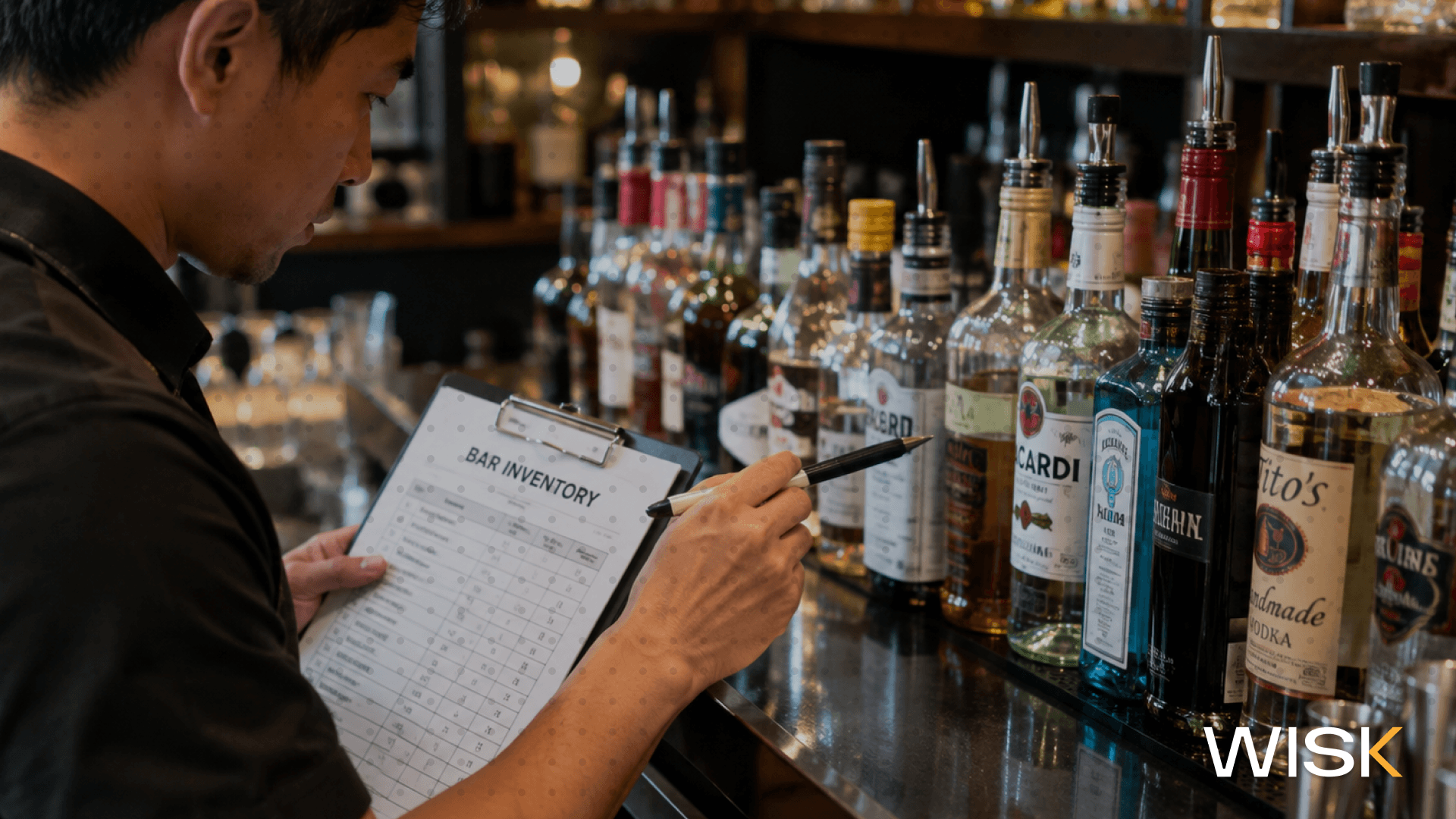
Hacer un inventario con un portapapeles al final del mes es básicamente realizar una autopsia de sus ganancias. Cuando el día 31 te das cuenta de que falta una caja de tequila de pozo, el dinero ya se ha agotado, el personal que trabajaba en esos turnos ya no está y el camino está completamente frío. Tienes que ser proactivo, no reactivo, empezando por medición precisa de botellas de licor durante cada recuento.
- Responsabilidad diaria: Seguimiento automatizado del agotamiento conecta tus datos de ventas directamente a tu base de datos de inventario. En lugar de esperar treinta días, puedes elaborar un informe de varianza el domingo por la mañana para ver exactamente lo que se perdió el sábado por la noche, especialmente si se combina con un informe disciplinado procesos de control de inventario de bares.
- Cambiando la cultura de los bares: Este nivel de supervisión cambia profundamente el comportamiento del personal. Cuando su equipo sabe que el software rastrea exactamente lo que debe contener cada botella de pozo, especialmente cuando cuenta con el respaldo de un escala de inventario de licores, las composiciones fantasmas y el robo descarado caen por un precipicio de inmediato.
- Entrenamiento específico: Te permite acercarte a un camarero y decirle: «Anoche servimos 40 onzas de buen ron, pero solo pedimos 25». Convierte una acusación vaga en una conversación de formación basada en datos y te ayuda a corregir la problemas de gestión de inventario de bares que están erosionando silenciosamente las ganancias.
¿Cuál es la forma más rápida de identificar los errores en los precios de las bebidas alcohólicas de pozo?
La configuración de alertas automatizadas de discrepancias en el inventario permite a los operadores identificar los errores de precios de los proveedores y las variaciones en los cambios en los precios en el momento en que se escanea una entrega, lo que permite detectar las fugas de margen hasta 30 días más rápido que las auditorías manuales tradicionales.
Piense en la frecuencia con la que un distribuidor aumenta discretamente el precio de su ginebra de pozo unos pocos dólares por caja. Si su sistema no lo detecta de inmediato, de repente estará operando a un costo de venta del 21%, en lugar del 16% que se había fijado como objetivo. Estás subvencionando la subida de precios del proveedor de tu propio bolsillo sin siquiera darte cuenta.
- Notificación instantánea: Alertas de discrepancias de inventario notifique a la gerencia automáticamente si el inventario teórico se desvía del inventario real o si el precio recibido en una factura supera un umbral porcentual establecido.
- Provocando revisiones del menú: Estas alertas avisan cuando el precio de compra real cambia, lo que obliga a revisar inmediatamente los precios de los menús. Si la botella Well sube 2 dólares, el precio de la bebida Well tiene que subir 0,50 dólares.
- Finalizar la búsqueda de facturas: Ya no tendrá que buscar manualmente entre montones de facturas en papel grasientas en la oficina administrativa para averiguar por qué han bajado sus márgenes; el sistema lo dirige directamente a la botella infractora.
¿Cuándo se deben ajustar los precios de las bebidas en función de los costos de los proveedores?
Los operadores deben ajustar bien los precios de las bebidas o cambiar de proveedor inmediatamente siempre que los aumentos de los costos mayoristas hagan que el costo de servicio del artículo supere un límite máximo del 18%, preservando la rentabilidad de referencia.
La lealtad a una marca específica de bebidas alcohólicas es excelente, pero no si eso arruina su programa de bebidas. Su pozo está diseñado para ser una empresa de servicios públicos altamente confiable y con altos márgenes. Si su distribuidor sube los precios y se niega a negociar descuentos por volumen, debe cambiar de opinión. No puedes absorber el coste de los artículos por volumen.
- Actualizaciones dinámicas de costos: Necesita un sistema que actualice los costos de las botellas de forma dinámica cada vez que se procese una nueva factura, lo que le brinde los datos en tiempo real necesarios para negociar con sus representantes.
- Sustitución estratégica: Si aumentar el precio minorista no es una opción viable (por ejemplo, en mercados de happy hour altamente competitivos en los que se espera una bebida de 5 dólares), debes sustituir la marca Well por una opción comparable y más rentable.
- Optimización del pivote: Para mantener el bar completamente surtido durante las transiciones de proveedores sin realizar pedidos excesivos accidentalmente, confíe en órdenes de compra automatizadas que se generan en función de lo establecido niveles de par y los precios de proveedores recientemente actualizados.
¿Cómo mejora el seguimiento del inventario en tiempo real los precios de los pozos en varias ubicaciones?
El seguimiento del inventario en tiempo real agrega datos a todos los establecimientos, lo que permite a los operadores de múltiples ubicaciones estandarizar los buenos precios a nivel mundial y, al mismo tiempo, aislar las ubicaciones específicas que tienen un margen de hasta un 10% inferior.
Si dirige cinco sedes diferentes, gestionar los costos de los pozos en hojas de cálculo separadas es una pesadilla operativa. Puede que la sala A esté llenando a raudales, mientras que la distribuidora se está quedando sin plazas para la sala B. No puede gestionar lo que no puede ver y necesita una visión global y de alto nivel de toda su operación, incluso si sigue confiando en una estructura hoja de cálculo de inventario de bares como punto de partida.
- A vista de pájaro: Seguimiento de inventario en tiempo real significa que un director de bebidas puede coger su portátil y ver la varianza exacta de bebidas alcohólicas para cada propiedad en este momento, comparándolas una al lado de la otra y haciendo cumplir la normativa hábitos de control de existencias en bares en todo el grupo.
- Aprovechamiento del volumen: Le permite utilizar su poder adquisitivo real. Si sabe exactamente cuántas cajas de vodka de pozo se están consumiendo en las cinco ubicaciones en conjunto, puede llevar esos datos al proveedor y exigir mejores precios al por mayor.
- Estandarización de la experiencia de los huéspedes: Gestión de las operaciones en varios restaurantes requiere coherencia. El seguimiento de las recetas en la nube garantiza que preparar un buen whisky sour le cueste exactamente lo mismo y que sepa exactamente igual para el huésped, ya sea que lo sirva en su tienda insignia del centro o en un puesto de avanzada suburbano.
Comparación de la gestión manual de bebidas con WISK
Escultura e investigación hotelera demuestra que el desbordamiento por sí solo puede acabar con ese objetivo si no se controla. BATIDOR cierra ambas brechas sin añadir personal ni complejidad.
La matemática de la hospitalidad es implacable, pero no tiene por qué ser misteriosa. Al tratar sus bebidas saludables con el mismo rigor analítico que su inventario de primera calidad, protege la salud financiera fundamental de su bar, especialmente cuando actúa con disciplina estrategias de precios de bebidas alcohólicas para cócteles y más amplio tácticas para aumentar las ventas de bares.