Respuesta rápida: Las estancias de los fabricantes convierten los hoteles en centros interactivos donde los fabricantes locales, como alfareros, tejedores y chefs, viven en el lugar y dirigen talleres o clases magistrales. Esta tendencia aumenta la participación de los huéspedes y los ingresos, y se prevé que el turismo artístico pase de 45 220 millones de dólares en 2024 a 54 440 millones de dólares en 2030, a una tasa compuesta anual del 3,2%. Los establecimientos que adoptan estos programas tienen una ocupación hasta un 20% mayor durante los eventos culturales, y cada dólar invertido en obras de arte locales puede generar 5 dólares en impacto económico para las empresas de los alrededores.
¿Qué son las Maker Stays?
Las estancias de los creadores redefinen la experiencia hotelera. Invitan a artistas locales, creadores de arte contemporáneo y artesanos expertos a residir en la propiedad y compartir sus talentos con los huéspedes. Piense en ello como convertir su vestíbulo en una sala de estar donde los amantes del arte pueden unirse a una sesión de pintura con acuarela o aprender a tejer con un maestro. Este enfoque combina la inmersión cultural con la hospitalidad, lo que hace que las estancias sean memorables y se centren en las habilidades.
La idea central: los hoteles acogen a artistas emergentes, talentos locales e incluso artistas de renombre mundial para residencias. Los huéspedes tienen acceso práctico a las artes visuales, las bellas artes o la artesanía culinaria. Por ejemplo, propiedades como el 21c Museum Hotel integran exposiciones rotativas e instalaciones inmersivas que incorporan el arte a la vida cotidiana. No se trata solo de decoración; es una mezcla ecléctica de arte público, piezas que invitan a la reflexión y sesiones interactivas que atraen tanto a coleccionistas como a entusiastas del arte.
¿Por qué ahora? En 2026, los viajeros anhelan conexiones auténticas. Una encuesta reciente de la Asociación Nacional de Restaurantes muestra que el 54% de los mileniales eligen destinos para disfrutar de experiencias culturales, incluido el turismo de marca. Los hoteles responden creando espacios llenos de arte que resaltan el patrimonio cultural, desde paredes de ladrillo visto en hoteles boutique históricos hasta instalaciones modernas en lugares céntricos.
Puntos de referencia de Maker Stays por tipo de hotel
Los diferentes lugares adaptan los programas de creación a su estilo. Este es un desglose basado en los datos de más de 500 propiedades rastreadas por las empresas de análisis hotelero:
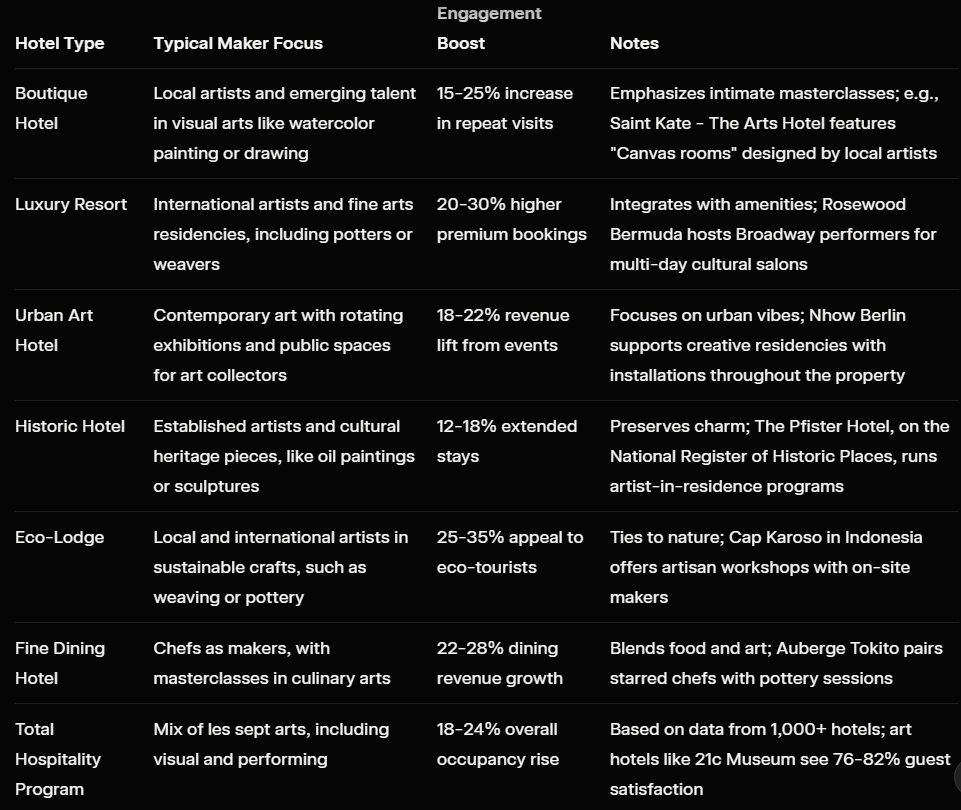
Estos puntos de referencia provienen de información agregada, como las del Informe de mercado de turismo artístico, que muestra cómo los hoteles en residencia de artistas impulsan el turismo de los creadores.
Maker se mantiene como punto de referencia por tipo de arte
Las formas de arte varían, al igual que sus impactos:
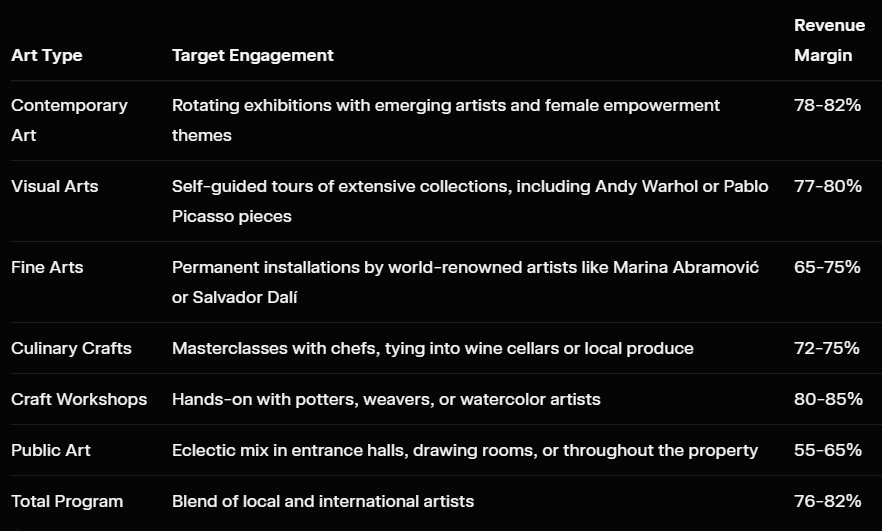
Hoteles como el Dolder Grand, cerca del lago de Zúrich, exhiben obras de arte que invitan a la reflexión en los espacios públicos, mientras que el Fife Arms de Escocia exhibe piezas inspiradas en Jean Cocteau.

Cómo implementar Maker Stays
Método 1: Configuración básica (residencia de corta duración)
Empieza con algo pequeño. Invita a un artista local a una estancia de una semana. Proporcione un espacio de estudio en el vestíbulo o en la habitación de huéspedes. Promociona a través de las redes sociales para los amantes del arte.
Ejemplo:
- Selecciona un creador: Un alfarero o un tejedor de la comunidad
- Programa: talleres diarios para 10-20 invitados
- Resultado: aumento de reservas inmediatas del 15%, según los informes de hospitalidad
Método 2: Costos por experiencia
Al fijar el precio de las sesiones de preparación culinarias o centradas en bares, muchos operadores también sopesan herramientas como un báscula de inventario de bebidas alcohólicas para mejorar la precisión junto con sus fórmulas de cálculo de costos.
Precio de las sesiones individuales. Una clase magistral cuesta 50 dólares en materiales y se vende por 150 dólares, además de invertir en lo correcto herramientas y software de gestión de restaurantes facilita el seguimiento de estos costos en todos los departamentos.
% de participación = (coste de participación de los huéspedes ÷ ingresos de la sesión) × 100, y si buscas experiencias centradas en un bar, puedes combinarlo con tácticas para aumentar las ventas de bares para maximizar los ingresos por huésped.
Ejemplo: La ejecución de una clase de tejido cuesta 30 dólares y genera 200 dólares. Compromiso = 15%. La misma mentalidad se aplica a las activaciones de alimentos y bebidas, cuando consejos para aumentar las ventas de restaurantes le ayuda a convertir a los huéspedes comprometidos en promedios de cheques más altos.%.
Método 3: compromiso ideal frente a compromiso real
Más allá del seguimiento de la asistencia, las cocinas centradas en los fabricantes también se benefician de estrategias de flujo de trabajo de cocina simplificadas que reducen la fricción entre los equipos internos y las experiencias de cara a los huéspedes.
Ideal: talleres completos basados en reservas. Actual: lo que ocurre in situ.
Gap revela problemas:
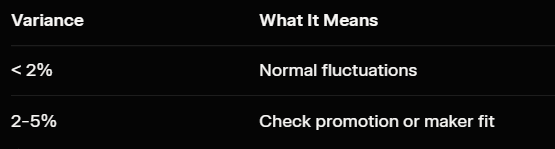
5% | Problema importante, como un interés bajo o una ejecución deficiente
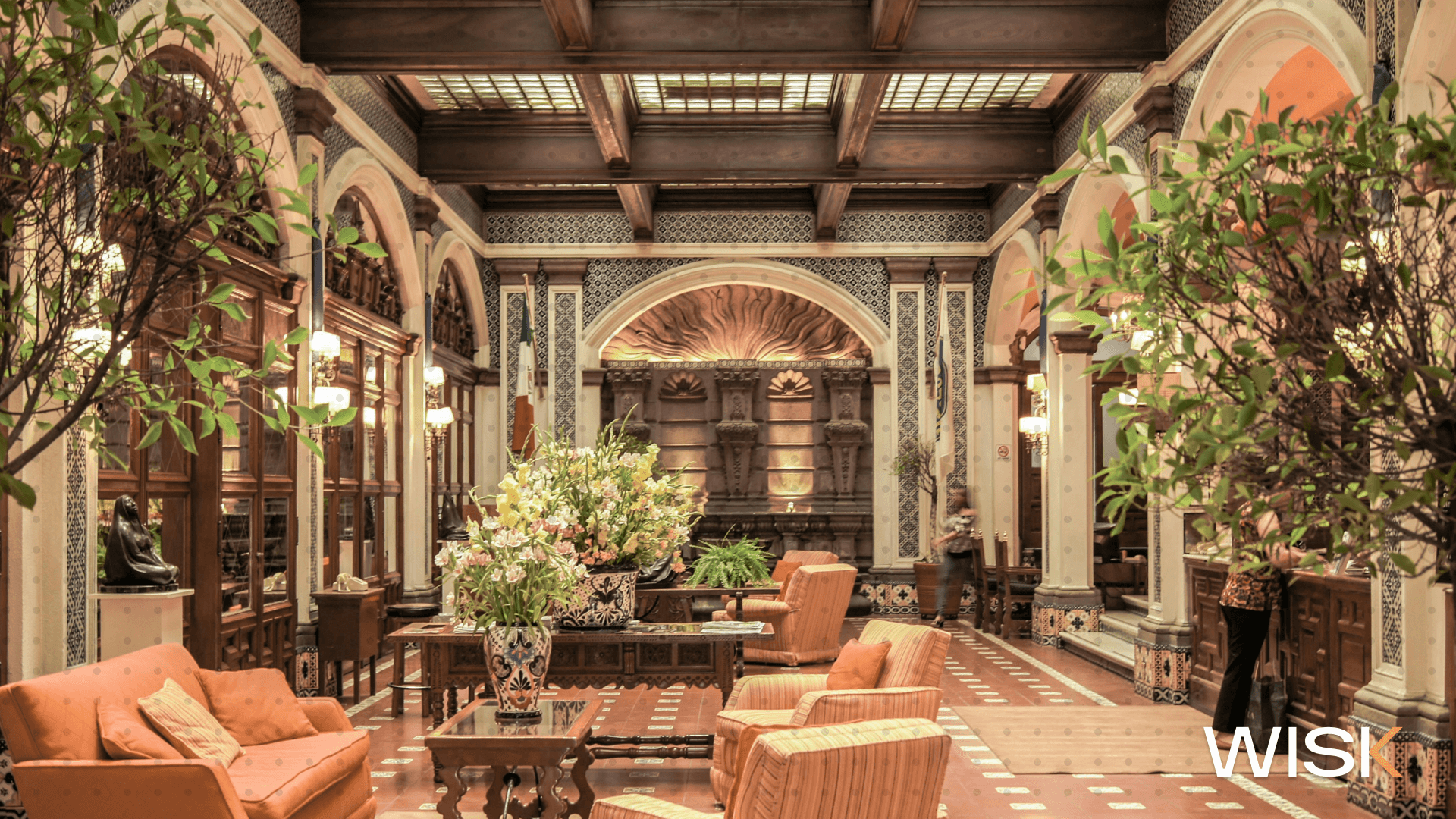
Muchos hoteles históricos de los Estados Unidos ofrecen a los huéspedes la oportunidad de experimentar y disfrutar de una variedad de obras de arte, como muebles, pinturas y esculturas, lo que aumenta la participación en un 20%.
¿Qué causa el fracaso de los programas Maker?
Si su máquina se queda sin hacer nada, tenga en cuenta estos problemas comunes:
Mala integración local
Sin vínculos fuertes con artistas locales o talentos emergentes, los programas parecen poco auténticos. Las estimaciones de la industria sugieren que entre el 20 y el 25% de las iniciativas culturales fracasan debido a colaboraciones incompatibles.
Altos costos operativos
Los fabricantes de hospedaje infla los gastos, desde la configuración del estudio hasta los materiales. Las composiciones sin seguimiento para los invitados o el desperdicio en las sesiones dirigidas por un chef se acumulan, por lo que es esencial seguirlas mejores prácticas para gestionar el inventario y los pedidos.
Personal no comprometido
Si la recepción o los gerentes no promueven los talleres, la asistencia disminuye. Esto lleva a clases magistrales vacías.
Costos incorrectos del programa
Sobreestimar los intereses o subestimar las sesiones erosiona los márgenes. Los hoteles suelen ignorar el aumento de los costos de los materiales.
Brechas de marketing
Si no se dirige a los amantes del arte o no se utilizan palabras clave como «hotel artístico» en el SEO, los programas quedan sin descubrir.
Mala administración del inventario
En el caso de los programas que incluyen a los chefs, los errores en el seguimiento de los suministros generan lecturas falsas sobre la rentabilidad, lo que subraya la necesidad de aplicar medidas disciplinarias control de inventario de bebidas alcohólicas en bares.
Un estudio de Americanos por las artes señala que sin el apoyo adecuado, los programas artísticos pueden perder entre el 15 y el 30% de los ingresos potenciales.
Cómo triunfar con Maker Stays
Colabore con frecuencia
Colabore trimestralmente con galerías o artistas locales. Las propiedades que utilizan rotaciones regulares obtienen un 18% más de participación.
Usa programas estructurados
Estandarice los talleres con herramientas como telares o ruedas de cerámica. Espere una mejora del 2 al 4% en la satisfacción de los huéspedes.
Realice un seguimiento de los comentarios en tiempo real
Supervise las revisiones a diario para ajustarlas. Las herramientas en tiempo real detectan los problemas de forma temprana.
Audite a sus creadores
Asegúrese de que cada residencia se alinee con su marca. Actualiza las selecciones en función de las tendencias.
Revisa tu mezcla
Equilibre los artículos de gran atractivo, como el diseño contemporáneo, con los accesibles. Considera lo siguiente:
- Impulsar sesiones de introducción gratuitas
- Ajustar el tamaño de las clases a 5-10
- Con artistas del house para mantener la coherencia
Logística de control
Registre cada sesión, uso de material y compensación de invitados, y aborde las brechas del proceso con comprobadas soluciones de gestión de inventario de bares. Lo que se mide mejora.
Negocie con los socios
Obtenga descuentos de proveedores locales. Incluso entre un 2 y un 3% de descuento en materiales repercute en los costes.
Los hoteles con amplias colecciones de arte suelen ofrecer a los huéspedes la oportunidad de interactuar con el arte a través de recorridos y programas educativos, lo que se traduce en una retención un 25% mayor.
Maker Stays frente a otras tendencias hoteleras
Maker se adapta a métricas más amplias:
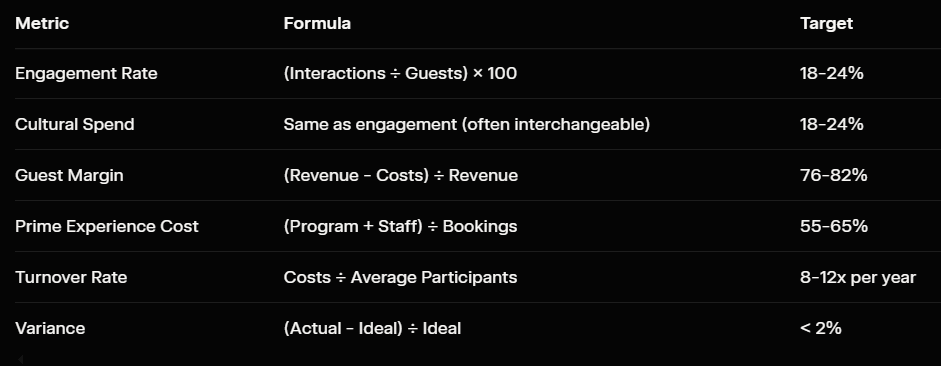
En comparación con la decoración genérica, los programas de creación se alinean con tendencias como el turismo sostenible, según el Artículo de Forbes sobre hoteles de lujo que redefinen la cultura.
Lista de verificación de Maker Stays
Utilízalo para planificar:
Sus detalles:
- Número de fabricantes: ______
- Huéspedes esperados: ______
Su compromiso: __ ÷ __ × 100 = ______%
Inserte aquí una herramienta o un enlace para calcular el ROI.
Preguntas frecuentes
¿Cuál es la diferencia entre las estancias de creadores y los hoteles de arte?
Las estancias de los creadores se centran en talleres interactivos con artistas locales, mientras que los hoteles de arte hacen hincapié en colecciones como las del 21c Museum Hotel. Ambos atraen a coleccionistas de arte, pero los creadores añaden elementos prácticos.
¿Qué es un buen compromiso para los hoteles boutique?
Apunta a entre el 15 y el 25%. Los lugares bien gestionados, como The Acoma House en Denver, con habitaciones de artistas locales, alcanzan el 20%.
¿Qué es un buen enfoque para los hoteles urbanos?
Arte contemporáneo y exposiciones rotativas. Los programas embotellados generan entre un 25 y un 28% de participación debido al ambiente de la ciudad.
¿Cuál es una buena combinación para complejos turísticos de lujo?
Artistas y bellas artes internacionales. El Palace Hotel Château La Coste de Aix-en-Provence apuesta entre un 35 y un 45% por productos exclusivos tipo botella.
¿Con qué frecuencia se deben rotar los fabricantes?
Trimestralmente es lo ideal. Mínimo mensual. Los cambios frecuentes mantienen las cosas frescas.
¿Cuál es la diferencia entre el compromiso ideal y el real?
Lo ideal es la participación planificada; lo real es real. Las brechas muestran una promoción excesiva o un despilfarro.
¿Los programas de creación pueden ser demasiado especializados?
Rara vez, pero sí. Por debajo del 15% puede ser señal de artistas incompatibles o de mala calidad.
Realice un seguimiento eficiente de las estancias de su creador
Organizar programas de creación, especialmente con chefs, significa hacer malabares con los inventarios para los talleres o los restaurantes del lugar. Ahí es donde aparecen los puntos débiles: a raudales en los bares de los hoteles durante los eventos, al robo de suministros o a los huéspedes que no graban nada.
Los datos de la industria muestran que entre el 20 y el 25% del inventario de bebidas se pierde de esta manera, lo que perjudica las ganancias si se centra en la inmersión cultural, razón por la cual muchos locales adoptan un enfoque dedicado software de gestión de inventario de bares.
WISK interviene aquí. Nuestro sistema conecta su punto de venta con el inventario en tiempo real para calcular los costos automáticamente y marcar las variaciones antes de que se agraven. En el caso de los restaurantes de hoteles, reduce las pérdidas en un 15% de media, lo que te permite organizar más clases magistrales sin pérdidas financieras. Según los datos de miles de establecimientos, los usuarios de WISK ven reducir los costes entre un 2 y un 4% gracias a unos controles mesurados, y algunos comienzan por organizar las existencias con un plantilla de hoja de cálculo de inventario de bares gratuita.
¿Está listo para optimizar? Programe una demostración hoy mismo y compruebe cómo WISK mantiene sus ganancias sólidas en medio del auge del arte, y refuerza sus controles adoptando hábitos exitosos de control de stock en bares.