Réponse rapide : Les séjours de créateurs transforment les hôtels en centres interactifs où des créateurs locaux tels que des potiers, des tisserands et des chefs vivent sur place et organisent des ateliers ou des masterclasses. Cette tendance stimule l'engagement des clients et les revenus, le tourisme artistique devant passer de 45,22 milliards de dollars en 2024 à 54,44 milliards de dollars d'ici 2030, à un TCAC de 3,2 %. Les propriétés qui adoptent ces programmes enregistrent un taux d'occupation jusqu'à 20 % plus élevé lors d'événements culturels, et chaque dollar investi dans les arts locaux peut générer un impact économique de 5 dollars pour les entreprises environnantes.
Que sont les Maker Stays ?
Les séjours Maker redéfinissent l'expérience hôtelière. Ils invitent des artistes locaux, des créateurs d'art contemporain et des artisans qualifiés à résider sur place et à partager leurs talents avec les invités. Imaginez-le comme si vous transformiez votre hall d'entrée en un studio de vie où les amateurs d'art peuvent participer à une séance de peinture à l'aquarelle ou apprendre le tissage auprès d'un maître. Cette approche allie immersion culturelle et hospitalité, rendant les séjours mémorables et axés sur les compétences.
L'idée de base : les hôtels accueillent des artistes émergents, des talents locaux et même des artistes de renommée mondiale pour des résidences. Les clients ont un accès pratique aux arts visuels, aux beaux-arts ou à l'artisanat culinaire. Par exemple, des établissements tels que le 21c Museum Hotel intègrent des expositions tournantes et des installations immersives qui intègrent l'art à la vie quotidienne. Il ne s'agit pas seulement de décoration ; c'est un mélange éclectique d'art public, d'œuvres qui suscitent la réflexion et de sessions interactives qui attirent à la fois les passionnés d'art et les collectionneurs.
Pourquoi maintenant ? En 2026, les voyageurs recherchent des liens authentiques. Une récente enquête de la National Restaurant Association montre que 54 % des milléniaux choisissent des destinations pour leurs expériences culturelles, y compris le tourisme créatif. Les hôtels réagissent en créant des espaces artistiques qui mettent en valeur le patrimoine culturel, qu'il s'agisse de murs en briques apparentes dans les hôtels de charme historiques ou d'installations modernes dans les centres-villes.
Points de référence de Maker Stays par type d'hôtel
Différents lieux adaptent les programmes des makers à leur style. Voici une ventilation basée sur les données de plus de 500 propriétés suivies par des sociétés d'analyse hôtelière :
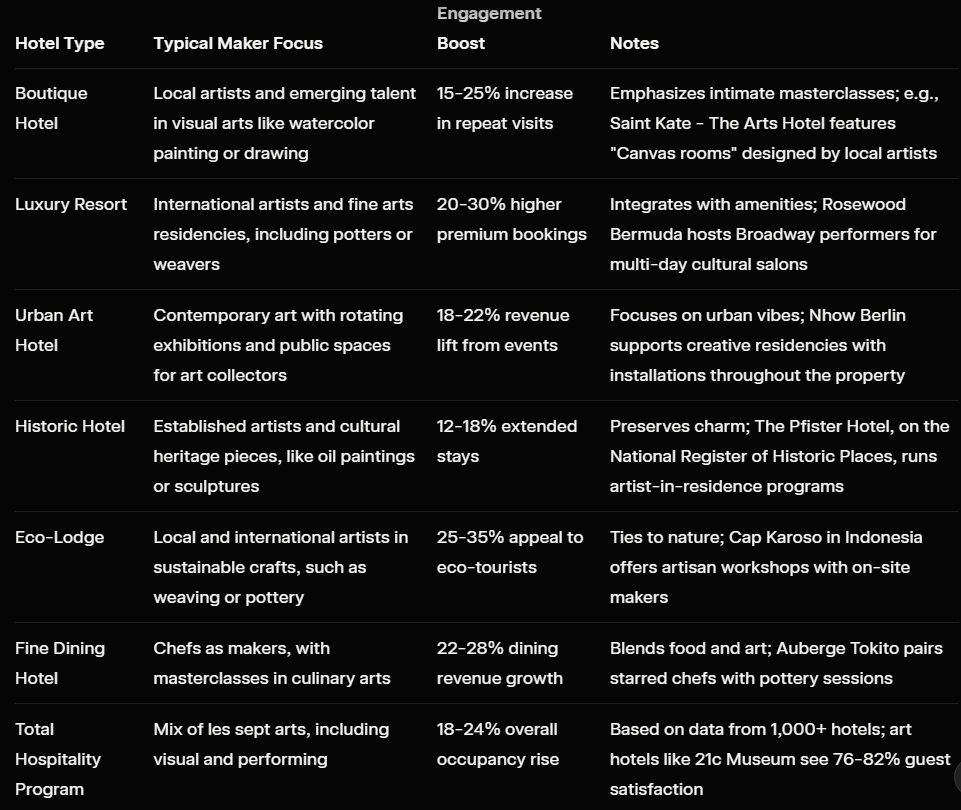
Ces points de référence proviennent d'informations agrégées, comme celles du Rapport sur le marché du tourisme artistique, qui montre comment les hôtels en résidence d'artistes stimulent le tourisme des créateurs.
Maker Stays est une référence par type d'art
Les formes d'art varient, tout comme leurs impacts :
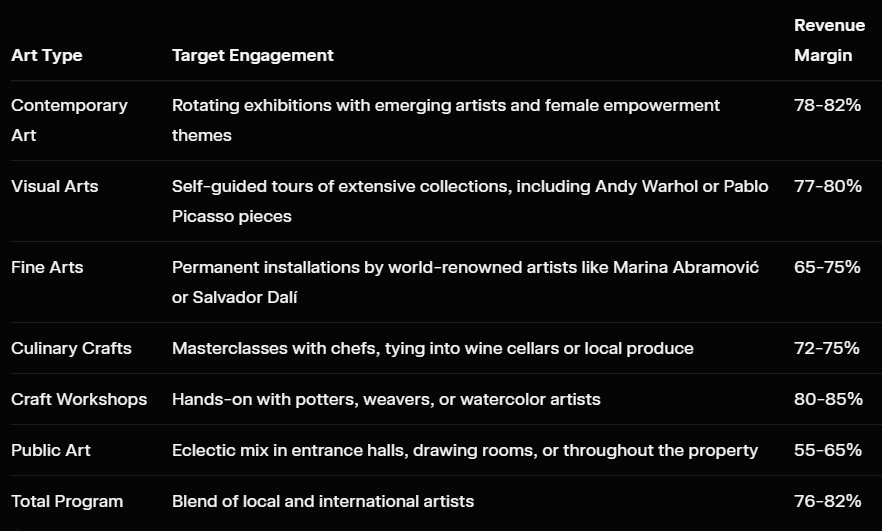
Des hôtels tels que le Dolder Grand, près du lac de Zurich, présentent des œuvres d'art qui suscitent la réflexion dans les espaces publics, tandis que le Fife Arms en Écosse présente des œuvres inspirées de Jean Cocteau.

Comment mettre en œuvre Maker Stays
Méthode 1 : Configuration de base (résidence de courte durée)
Commencez petit. Invitez un artiste local pour un séjour d'une semaine. Prévoyez un espace studio dans le hall ou dans la chambre. Faites de la promotion via les réseaux sociaux pour les amateurs d'art.
Exemple :
- Créateur sélectionné : un potier ou un tisserand de la communauté
- Programme : ateliers quotidiens pour 10 à 20 personnes
- Résultat : hausse immédiate de 15 % des réservations, selon les rapports sur l'accueil
Méthode 2 : calcul des coûts par expérience
Lorsqu'ils fixent les prix des sessions culinaires ou axées sur les bars, de nombreux opérateurs évaluent également des outils tels qu'un échelle d'inventaire des boissons alcoolisées pour améliorer la précision parallèlement à leurs formules de calcul des coûts.
Prix des séances individuelles. Une masterclass coûte 50 dollars en matériel et se vend 150 dollars, et il faut investir dans le bon outils et logiciels de gestion de restaurants facilite le suivi de ces coûts dans tous les services.
% d'engagement = (Coût de participation des invités ÷ recettes de la session) × 100, et pour les expériences centrées sur les bars, vous pouvez l'associer à tactiques pour augmenter les ventes de bars afin de maximiser les revenus par client.
Exemple : un cours de tissage coûte 30 dollars et génère 200 dollars. Engagement = 15 %. Le même état d'esprit s'applique aux activations de restauration, où la candidature conseils pour augmenter les ventes des restaurants vous aide à convertir les clients engagés en moyennes de chèques plus élevées. %.
Méthode 3 : engagement idéal ou engagement réel
Au-delà du suivi des présences, les cuisines axées sur les fabricants bénéficient également de stratégies de flux de travail rationalisées en cuisine qui réduisent les frictions entre les équipes de back-office et les expériences destinées aux clients.
Idéal : ateliers complets sur réservation. Actuel : Que se passe-t-il sur place ?
Gap révèle des problèmes :
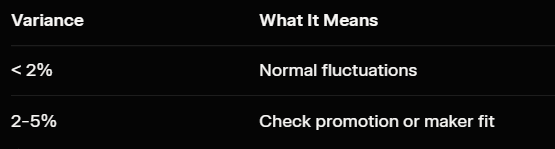
5 % | Problème majeur, comme un faible taux d'intérêt ou une mauvaise exécution
De nombreux hôtels historiques à travers les États-Unis offrent à leurs clients la possibilité de découvrir et d'apprécier une variété d'œuvres d'art, notamment des meubles, des peintures et des sculptures, augmentant ainsi l'engagement de 20 %.
Quelles sont les causes de l'échec des programmes Maker ?
Si votre appareil reste à plat, examinez les problèmes courants suivants :
Faible intégration locale
Sans liens étroits avec les artistes locaux ou les talents émergents, les programmes semblent inauthentiques. Les estimations de l'industrie indiquent que 20 à 25 % des initiatives culturelles échouent en raison de collaborations incompatibles.
Coûts opérationnels élevés
Les hébergeurs gonflent les dépenses, qu'il s'agisse de la configuration des studios ou du matériel. Les compositions non suivies pour les invités ou le gaspillage lors des sessions dirigées par un chef s'additionnent, ce qui rend essentiel le suivi meilleures pratiques pour la gestion des stocks et des commandes.
Personnel non engagé
Si la réception ou les responsables ne font pas la promotion des ateliers, la participation diminue. Cela conduit à des masterclasses vides.
Coûts de programme incorrects
La surestimation des intérêts ou la sous-évaluation des séances érodent les marges. Les hôtels ignorent souvent la hausse des coûts des matériaux.
Lacunes commerciales
Le fait de ne pas cibler les amateurs d'art ou d'utiliser des mots clés tels que « hôtel artistique » dans le référencement ne permet pas de découvrir les programmes.
Mauvaise gestion des stocks
Pour les programmes faisant appel à des chefs, les erreurs de suivi des fournitures entraînent de fausses évaluations de la rentabilité, ce qui souligne la nécessité de contrôle de l'inventaire des bars pour les stocks d'alcool.
Une étude réalisée par Américains pour les arts note que sans soutien approprié, les programmes artistiques peuvent perdre de 15 à 30 % de leurs recettes potentielles.
Comment réussir avec Maker Stays
Partenaire fréquent
Collaborez avec des galeries ou des artistes locaux tous les trimestres. Les propriétés utilisant des rotations régulières enregistrent un engagement 18 % plus élevé.
Utiliser des programmes structurés
Standardisez les ateliers avec des outils tels que des métiers à tisser ou des tours de poterie. Attendez-vous à une amélioration de 2 à 4 % de la satisfaction des clients.
Suivez les commentaires en temps réel
Surveillez les évaluations tous les jours pour vous adapter. Les outils en temps réel détectent les problèmes rapidement.
Auditez vos créateurs
Assurez-vous que chaque résidence correspond à votre marque. Mettez à jour les sélections en fonction des tendances.
Donnez votre avis sur votre mix
Trouvez l'équilibre entre des articles haut de gamme tels que le design contemporain et des articles accessibles. Envisagez :
- Propulser des sessions d'introduction gratuites
- Ajuster la taille des classes à 5 à 10
- Mettant en vedette des artistes maison pour plus de cohérence
Logistique de contrôle
Enregistrez chaque session, chaque utilisation de matériel et la composition des invités, et corrigez les lacunes des processus grâce à des méthodes éprouvées solutions de gestion des stocks de bars. Ce qui est mesuré s'améliore.
Négocier avec les partenaires
Bénéficiez de remises auprès de fournisseurs locaux. Même 2 à 3 % de réduction sur les matériaux ont un impact sur les coûts.
Les hôtels dotés de vastes collections d'art offrent souvent aux clients la possibilité de s'intéresser à l'art par le biais de visites et de programmes éducatifs, ce qui permet de fidéliser les clients de 25 %.
Les séjours entre les fabricants et les autres tendances de l'hôtellerie
Maker reste en ligne avec des indicateurs plus larges :
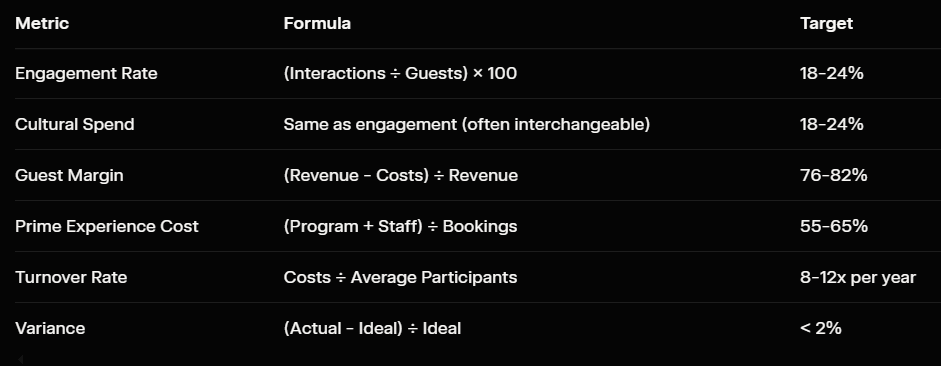
Par rapport à la décoration générique, les programmes de création s'alignent sur des tendances telles que le tourisme durable, selon le Article de Forbes sur les hôtels de luxe qui redéfinissent la culture.
Liste de contrôle Maker Stays
Utilisez-le pour planifier :
Vos coordonnées :
- Nombre de fabricants : ______
- Invités attendus : ______
Votre engagement : __ ÷ __ × 100 = ______%
Intégrez un outil ou un lien pour calculer le retour sur investissement ici.
Questions fréquemment posées
Quelle est la différence entre les séjours réservés aux créateurs et les hôtels d'art ?
Les séjours des créateurs se concentrent sur des ateliers interactifs avec des artistes locaux, tandis que les hôtels d'art mettent en valeur des collections comme celles du 21c Museum Hotel. Les deux attirent les collectionneurs d'art, mais les créateurs y ajoutent des éléments pratiques.
Qu'est-ce qu'un bon engagement pour les hôtels de charme ?
Visez 15 à 25 %. Les lieux bien gérés comme The Acoma House à Denver, où les chambres sont créées par des artistes locaux, ont atteint 20 %.
Quelles sont les bonnes priorités pour les hôtels urbains ?
Art contemporain et expositions tournantes. Les programmes en bouteille génèrent un engagement de 25 à 28 % en raison de l'ambiance urbaine.
Qu'est-ce qu'une bonne combinaison pour les complexes de luxe ?
Artistes internationaux et beaux-arts. Le Palace Hotel Château La Coste d'Aix-en-Provence vise 35 à 45 % d'exclusivités similaires à des bouteilles.
À quelle fréquence devez-vous alterner les fabricants ?
Une fois par trimestre, c'est idéal. Minimum mensuel Les changements fréquents permettent de garder les choses fraîches.
Quelle est la différence entre un engagement idéal et un engagement réel ?
L'idéal est la participation planifiée ; la participation réelle est réelle. Les lacunes témoignent d'une promotion excessive ou d'un gaspillage.
Les programmes destinés aux créateurs peuvent-ils être trop spécialisés ?
Rarement, mais oui. Moins de 15 % peuvent indiquer des artistes différents ou une qualité médiocre.
Suivez efficacement les séjours de votre créateur
La gestion de programmes de création, en particulier pour les chefs, implique de jongler avec les inventaires pour les ateliers ou les repas sur place. C'est là que les problèmes se posent : l'affluence dans les bars des hôtels pendant les événements, le vol de fournitures ou la réception de messages non enregistrés pour les clients.
Les données du secteur montrent que 20 à 25 % des stocks de boissons sont perdus de cette façon, ce qui nuit aux profits alors que vous vous concentrez sur l'immersion culturelle. C'est pourquoi de nombreux sites adoptent des logiciel de gestion de l'inventaire des bars.
WISK intervient ici. Notre système connecte votre point de vente à un inventaire en temps réel pour calculer les coûts automatiquement, en signalant les écarts avant qu'ils ne s'aggravent. Pour les restaurants des hôtels, cela réduit le rétrécissement de 15 % en moyenne, ce qui vous permet d'organiser davantage de masterclasses sans fuites financières. Sur la base de données provenant de milliers de sites, les utilisateurs de WISK constatent une baisse des coûts de 2 à 4 % grâce à des contrôles mesurés, et certains commencent par organiser le stock avec un modèle de feuille de calcul d'inventaire de bar gratuit.
Prêt à optimiser ? Planifiez une démonstration dès aujourd'hui et découvrez comment WISK maintient vos résultats financiers solides en période de boom artistique, et renforcez vos contrôles en adoptant habitudes de contrôle des stocks de bars efficaces.