¿Conoces esa sensación cuando se te eriza el pelo de los brazos porque una notificación acaba de arruinar tus planes para el fin de semana? Suele ocurrir un viernes a las 16:00 horas. Un invitado acaba de publicar un vídeo en 4K de una infestación de chinches en la habitación 402, y ya está ganando popularidad en TikTok. Al cabo de una hora, tu teléfono está repleto de preguntas sobre las picaduras de chinches y tu equipo te mira como si el barco se estuviera hundiendo.
Cuando una historia de chinches llega a las redes sociales, se propaga más rápido que la propia infestación. Una publicación de invitado se convierte en capturas de pantalla, luego en comentarios y, por último, en un resultado de búsqueda de Google que no puedes superar. Las reservas son lentas. Los teléfonos suenan con preguntas incómodas. Su equipo de recepción se siente como si estuviera parado en medio de una tormenta sin paraguas.
Pero esto es lo que saben los gerentes con experiencia: una crisis viral no es una sentencia de muerte. Es un obstáculo operativo predecible que puede contenerse e incluso revertirse si se actúa con la suficiente rapidez. En 2026, la velocidad de la información será su mayor enemigo, pero los sistemas de gestión hotelera son su mejor defensa. Si puedes demostrar que eres el adulto que interviene en la habitación y no el propietario que pone excusas, puedes salir de esto con una marca que parezca más confiable que antes.
Vamos a analizar el manual exacto para convertir un posible caso de chinches en una clase magistral sobre la recuperación de la reputación. Hablaremos sobre cómo encontrar chinches, qué decirle a un huésped que tiene ronchas que le pican y cómo documentar todo para que una demanda por chinches ni siquiera llegue a buen puerto.
La primera hora: la clasificación y la regla de «no crear imágenes fantasma»
Cuando un huésped encuentra pequeños insectos en su habitación de hotel, su primer instinto es el pánico, que rápidamente se convierte en un deseo de justicia. Quieren saber que están siendo escuchados. Si los ignoras, encontrarán una audiencia en otro lugar.
El primer paso es el aislamiento inmediato. Traslada al huésped a una habitación nueva que esté al menos a dos pisos de distancia y que no haya sido compartida por el mismo equipo de limpieza esa mañana. No se limite a entregarles una llave; entrégueles un plan claro y por escrito.
Qué decir (El guion de la crisis)
«Lamentamos muchísimo que esta sea tu experiencia. Nos tomamos muy en serio nuestra obligación legal de proporcionar alojamientos seguros y habitables. Ya nos hemos puesto en contacto con una empresa profesional de control de plagas para que inspeccione la habitación y nos ocuparemos de inmediato del tratamiento de sus pertenencias infestadas».
En esta etapa, debe ofrecerse a lavar toda su ropa y objetos personales con agua caliente y secarlos a fuego alto. Bríndeles una bolsa de plástico para sus demás pertenencias y ofrézcales un armario temporal si se quedan por negocios. No se trata solo de ser amable, sino de prevenir la propagación de las chinches al resto del hotel.
The Deep Dive: Cómo encontrar chinches y documentar la verdad
No puedes arreglar lo que no puedes ver. Las chinches son notoriamente buenas para esconderse. Estos bichos tienen aproximadamente el tamaño de una semilla de manzana, de color marrón rojizo, y les encanta vivir a menos de ocho pies de donde duermen las personas. Durante la búsqueda, recuerda que las pulgas suelen encontrarse en las alfombras o en las mascotas, mientras que las chinches prefieren camas y muebles tapizados.
Para protegerte de una reclamación por negligencia, necesitas una misión documentada de «Buscar y destruir». Según los expertos de Revista LODGING, hasta el 85% de las chinches se encuentran en un radio de cinco pies de la cama. Tu equipo debe buscar:
- Manchas fecales: excrementos pequeños, oscuros y parecidos a la arena en las costuras del somier o del colchón.
- Manchas de sangre: pequeñas manchas en las sábanas donde las chinches adultas fueron aplastadas durante la noche.
- Patrón en zigzag: así es como suelen aparecer las picaduras de chinches en la piel, que es un identificador clave en comparación con las picaduras de mosquitos o pulgas. Las picaduras de chinches suelen aparecer en grupos o líneas, mientras que las picaduras de pulgas suelen aparecer en la parte inferior de las piernas y los tobillos y pueden estar rodeadas de un halo rojo. Las pulgas prefieren esconderse en las alfombras o en las mascotas, a diferencia de las chinches. Otras picaduras de insectos, como las picaduras de arañas, tienden a ser aisladas, pueden curarse más lentamente y, en ocasiones, pueden presentar mayores riesgos para la salud, por lo que puede ser necesario un tratamiento médico.
- Olor a humedad: un fuerte olor agridulce que generalmente indica una infestación mayor.
Una chinche hembra puede poner de 200 a 500 huevos durante su vida, lo que significa que un pequeño problema se convierte en una infestación de chinches en solo unas pocas semanas. Debe pedirle a su socio de control de plagas que presente un informe formal. Si no encuentran nada, usted tiene su defensa. Si encuentran algo, tienes tu plan de remediación.
Impacto en la salud: lo que experimentan sus huéspedes
Cuando las chinches invaden una habitación de hotel, el impacto en los huéspedes va mucho más allá de unas cuantas ronchas que pican. Las picaduras de chinches pueden provocar diversos problemas de salud, desde una irritación leve hasta reacciones alérgicas graves. La mayoría de las picaduras aparecen como marcas rojas en relieve, con frecuencia en forma de zigzag, que dejan a los huéspedes con una picazón persistente e incómoda. En algunos casos, estas picaduras de insectos pueden convertirse en infecciones de la piel si se rascan en exceso y, en raras ocasiones, las personas pueden experimentar dificultades para respirar u otras reacciones alérgicas graves que requieren atención médica inmediata.
Pero los efectos físicos son solo una parte de la historia. La angustia emocional de descubrir una infestación de chinches en un lugar destinado al descanso puede ser abrumadora. Los huéspedes pueden perder el sueño, sentirse ansiosos por su salud y preocuparse por llevarse las chinches a casa en su equipaje o ropa. Esta carga emocional puede convertir rápidamente un incidente menor en una gran crisis de reputación para tu hotel.
Por eso es crucial tratar las infestaciones de chinches con prontitud y con un cuidado genuino. Atender las necesidades físicas y emocionales de tus huéspedes no solo protege su salud, sino que también demuestra tu compromiso con su bienestar, lo que ayuda a restablecer la confianza incluso después de una experiencia difícil.

Compensación justa por las chinches en las estadías de hotel
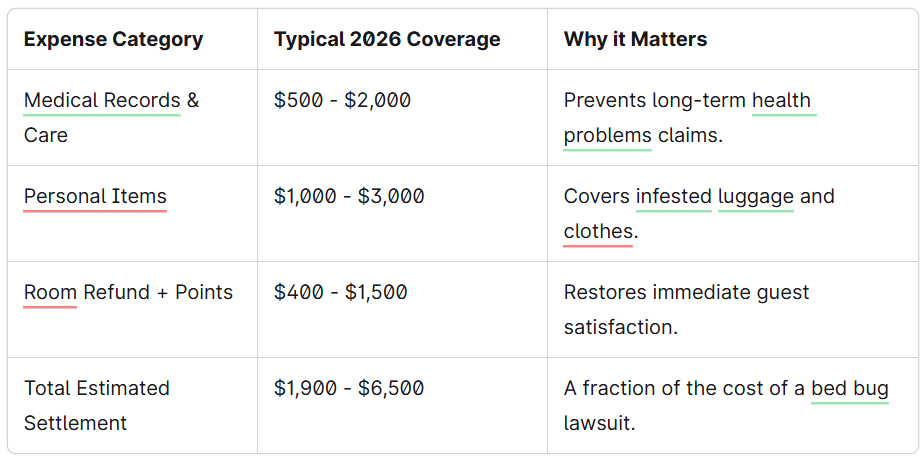
En 2026, los viajeros expertos conocen sus derechos legales. Lo saben la mayoría de las reclamaciones por chinches se resuelven por menos de 20.000 dólares, que cubre los gastos médicos, los daños a la propiedad y la pérdida de ingresos. Su objetivo es resolver este problema internamente antes de que llegue a un proveedor médico o a un abogado que le ofrezca una consulta gratuita.
Cuando hables de una compensación justa por las chinches en los hoteles, sé transparente en cuanto a lo que estás cubriendo:
- Costos médicos: Si el huésped tiene reacciones alérgicas graves o infecciones cutáneas y necesita atención médica, ofrézcale cubrir el tratamiento médico directamente. Esto incluye las cremas de venta libre para las marcas de mordeduras o las recetas para las dificultades respiratorias, en raras ocasiones.
- Reemplazo de propiedad: si sus muebles tapizados (como una maleta) o su equipaje están infestados, pague por el reemplazo. Es más barato que una demanda.
- Angustia emocional: Reconocer la angustia emocional de tener bichos arrastrándose sobre ti mientras duermes ayuda mucho. Un reembolso completo más una estancia futura (en una propiedad hermana diferente) a menudo satisface la necesidad de «justicia» del huésped.
Tratamiento de las infestaciones de chinches: rápido, minucioso y centrado en los huéspedes
Cuando se trata de infestaciones de chinches, la velocidad y la minuciosidad son tus mejores aliados. En el momento en que un huésped denuncie la picadura de chinches o detecte pequeños insectos en su habitación, tu respuesta debe ser inmediata y centrada en el huésped. Empieza por reubicar al huésped y aislar la zona afectada para evitar que los bichos se propaguen a otras habitaciones.
Luego, llame a una empresa profesional de control de plagas para evaluar la situación e implementar un plan de tratamiento integral. Esto a menudo implica tratamientos con altas temperaturas, insecticidas selectivos y una limpieza meticulosa para garantizar que se eliminen hasta la última chinche. No te olvides de cuidar los muebles tapizados, los somieres y otros posibles escondites: las chinches son expertas en encontrar nuevos lugares donde esconderse.
Mientras el equipo de control de plagas se encarga de la infestación, asegúrate de que tus huéspedes reciban la atención que necesitan. Ofrece remedios de venta libre para las ronchas que pican y las reacciones alérgicas, y prepárate para cubrir cualquier gasto médico en caso de que surjan síntomas más graves. Brindar atención médica inmediata y una comunicación clara sobre las medidas que estás tomando pueden ayudar a aliviar la angustia emocional y prevenir las críticas negativas.
Al actuar con rapidez y anteponer la salud y la comodidad de sus huéspedes, no solo minimiza la pérdida de ingresos y los daños a la propiedad, sino que también demuestra que su hotel se toma en serio todos los casos de chinches, lo que convierte una posible crisis en una oportunidad para demostrar su compromiso con la satisfacción de los huéspedes.
Prevención de las infestaciones de chinches: creación de una defensa proactiva
La mejor manera de controlar las chinches es detenerlas antes de que se registren. La creación de una defensa proactiva contra las infestaciones de chinches comienza con inspecciones periódicas y detalladas de cada habitación del hotel, especialmente después de que un huésped informe de picaduras de bichos o marcas sospechosas.
Entrene a su personal para detectar las señales reveladoras: insectos diminutos del tamaño de una semilla de manzana, manchas fecales oscuras a lo largo de las costuras de los colchones y ese inconfundible olor a humedad que indica una infestación mayor.
Capacite a su equipo para que actúe con rapidez. Anímelos a que informen inmediatamente a la dirección del hotel sobre cualquier señal de chinches y asegúrese de que todos conozcan el protocolo para aislar las habitaciones y pertenencias infestadas. También informa a tus huéspedes: dales consejos sobre cómo usar los portaequipajes, revisar su ropa y objetos personales y denunciar cualquier picadura o avistamiento lo antes posible.
La prevención también significa mantener el entorno del hotel hostil a las chinches. Lave la ropa de cama, los colchones y los somieres con regularidad en agua caliente y séquelos a altas temperaturas. Sella las grietas y hendiduras, usa fundas para colchones y mantén las habitaciones despejadas para limitar los lugares donde se esconden.
Al hacer de la prevención parte de tu rutina diaria, proteges la salud de tus huéspedes, salvaguardas tu reputación y te aseguras de que tu hotel siga siendo un lugar seguro y acogedor para dormir, independientemente de las historias que se hagan virales en Internet.
Reconstruir el muro digital
Una vez que la sala física se deshaga de la infestación, tienes que arreglar Internet. Una sola valoración de 1 estrella que mencione «chinches» puede reducir la ocupación entre un 10 y un 15% durante meses. Datos de The Percentage Company muestra que un aumento de un punto en la puntuación de las reseñas puede generar un aumento del 5 al 9% en los ingresos.
No borres los comentarios negativos en las redes sociales. En su lugar, responde con una «actualización correctiva».
- Sea específico: «Hemos completado un tratamiento térmico de 120 °F en la zona afectada y hemos pasado una inspección externa».
- Mostrar prueba: publique una versión redactada del certificado de autorización de su empresa de control de plagas.
- Destaque la prevención: mencione que su servicio de limpieza ahora usa portaequipajes y revisa las costuras de los muebles durante cada rotación.
Los puntos débiles de la administración manual
La razón por la que estas historias se vuelven virales no es solo por los errores. Es por la incoherencia. Si su hotel no tiene una lista de verificación interdepartamental, las cosas se pasan desapercibidas. El personal de limpieza se olvida de revisar el somier o la recepción no sabe que el huésped se quejó de picaduras de arañas o pulgas el día anterior.
Aquí es donde muchas empresas de hostelería tienen dificultades. Son excelentes en el «panorama general», pero fallan en los detalles basados en datos. Gestionas docenas de habitaciones, una cocina y un bar. Si sigues usando portapapeles para hacer un seguimiento de tu ritmo de facturación o de tu tiempo en la cocina, te estás exponiendo a una crisis.
Cuando parece que tu ubicación se está descontrolando, por lo general, se debe a que tu inventario y tus sistemas operativos no se comunican entre sí. Es posible que puedas tratar las picaduras de chinches, pero ¿puedes tratar un sistema averiado?
Por qué son importantes los sistemas: introduzca WISK
Si bien una crisis de chinches es un problema ambiental, la recuperación es un problema de gestión. La misma disciplina que se necesita para prevenir las chinches es la disciplina que se necesita para administrar una empresa rentable, bar o restaurante de alto rendimiento dentro de su hotel.
Aquí es donde entra en juego WISK. Hemos visto cómo errores manuales en la cocina o detrás de la barra provocan una pérdida de ingresos y problemas de salud relacionados con la misma rapidez que un problema de plagas. Si tu equipo está haciendo conjeturas sobre el inventario o no cumple con los requisitos de tiempo de la cocina, la experiencia de tus huéspedes ya se está viendo afectada incluso antes de que lleguen a su habitación.
WISK elimina las conjeturas de la parte operativa de su negocio. Mediante el uso de información basada en datos para administrar su Inventario de alimentos y bebidas y con listas de verificación interdepartamentales, se crea una cultura de responsabilidad. Cuando se hace un seguimiento de cada botella y se cronometra cada facturación, su personal se centra más en los detalles. Esa atención al detalle es lo que capta las manchas fecales del colchón antes de que lo haga un huésped.
Cómo apoya WISK su recuperación:
- Eficiencia entre departamentos: asegúrese de que las operaciones de su restaurante y hotel estén perfectamente sincronizadas, reduciendo el «factor de caos» que provoca la omisión de inspecciones.
- Protección de ingresos: utilice datos en tiempo real para detener la pérdida de ingresos por despilfarro o robo, lo que le brinda el colchón financiero necesario para gestionar una factura de emergencia de control de plagas sin pestañear.
- Ritmo predecible: del mismo modo que necesitas un cronograma para la eliminación de las chinches, también necesitas un cronograma para tu cocina. WISK te ayuda a alcanzar esas marcas en todo momento.
La última palabra sobre la confianza
Un huésped que se encuentra con picaduras de chinches es un mal día, pero un gerente que no tiene datos, plan ni sistema es un mal negocio. En 2026, tu reputación se basará en la forma en que gestiones el 1% de las veces cuando las cosas van mal.
Al documentar tu tratamiento, ofrecer una compensación justa y demostrar que has mejorado tus sistemas internos (ya sea un nuevo contrato de control de plagas o una empresa con un inventario potente como WISK), demuestras a tus huéspedes que su salud y su sueño son sus principales prioridades.
¿Está listo para llevar el mismo nivel de control y transparencia a sus operaciones de alimentos y bebidas? No dejes que los errores manuales y las «sensaciones instintivas» determinen tus márgenes de beneficio o tu reputación. Permítanos mostrarle cómo un enfoque basado en datos puede hacer que su gestión sea tan elegante como su marca.
Reserve una demostración gratuita con WISK hoy mismo y tome el control de sus operaciones.