

What's inside?
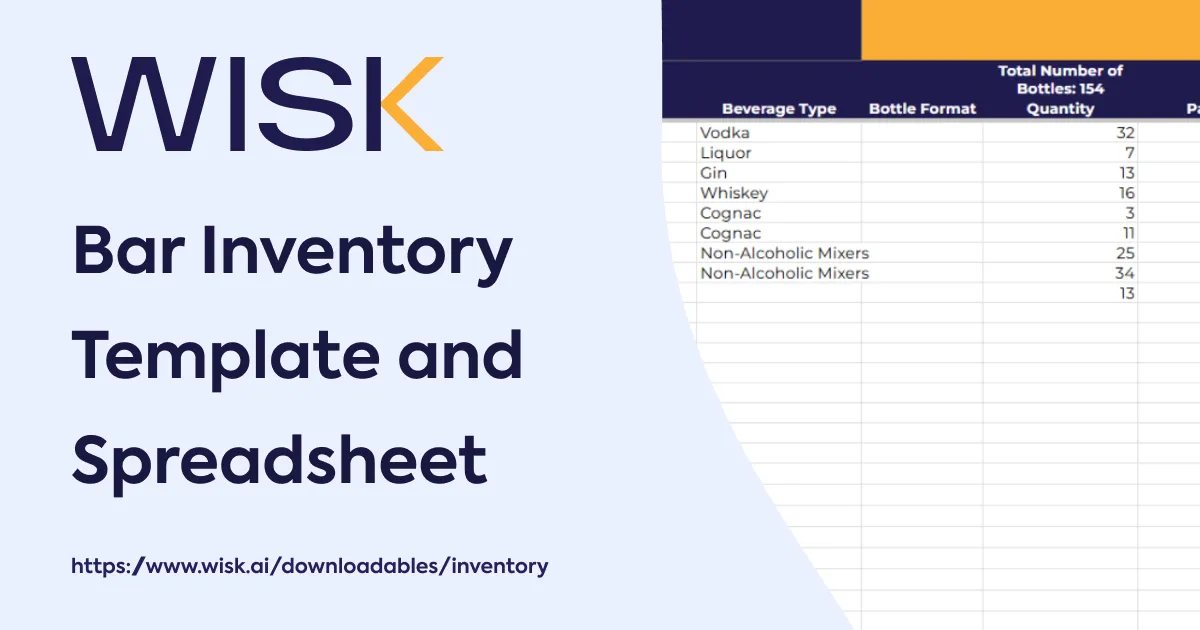
- A single ordering sheet with a row for every item — Item Name, Product Type, Supplier, Supplier Code / SKU, Inventory Quantity, Par, and Order Quantity — plus a period field and running totals for number of SKUs and total bottles.
Count and Order in One Pass
A bar ordering sheet is a structured list that pairs each item's current count with its par, so the amount to order is obvious: the gap between what you have and what you need. Capturing the supplier and SKU alongside it turns that count directly into a placeable order.
Ordering from memory is where stockouts and over-buys begin. A written sheet removes the guesswork — order the difference between par and on-hand, no more and no less — and because it records supplier and SKU, anyone on the team can run the same order the same way, even when the usual person is off.
How Do I Build an Order That's Ready to Place?
Work one row at a time, item by item:
- Inventory Quantity — count what's on hand as you walk the bar.
- Par — the level that carries that item to the next delivery.
- Order Quantity — the gap between them: exactly what to order.
- Supplier & SKU — who you're ordering from and the precise code, so nothing gets mis-ordered.
Fill the period at the top and the totals at the bottom — number of SKUs and total bottles — and you have a dated, repeatable ordering record. Keep the completed sheets and you build a paper trail of what you ordered, when, and from whom.
An order built from memory is an order built to be wrong. Count against par and write the gap — that is the difference between reordering by routine and reordering by guess.


.svg)