La conclusión: Los hoteles inteligentes realizan sus pedidos de vino para las fiestas en agosto porque la asignación, los precios y los plazos de envío favorecen al comprador meses antes de que la demanda alcance su punto máximo. Para noviembre, las mejores etiquetas se agotan, los precios suben y los gastos de envío urgente reducen silenciosamente el margen. Pedir con antelación asegura tanto el suministro como el coste, y el sistema de previsión de ventas y gestión de inventario de WISK convierte el consumo real de la temporada pasada en un pedido de compra preciso para agosto en cuestión de minutos, en lugar de basarse en suposiciones.
¿Por qué agosto es el mes más inteligente para asegurar el vino de las fiestas?
Pedir en agosto garantiza la asignación antes de que desaparezca y congela los precios antes de los aumentos del cuarto trimestre, una diferencia que alcanza el 10-15% por botella en etiquetas asignadas e importadas una vez que la demanda alcanza su punto máximo.
Esto es lo que la mayoría de los compradores pasan por alto: el vino que usted quiere en diciembre es objeto de disputa mucho antes de diciembre. El champán, los espumosos premium y los tintos destacados alcanzan su mayor demanda estacional del año en noviembre y diciembre, y la asignación es lo primero que desaparece. Para cuando llama a su representante después de Halloween, las botellas que hacen especial su carta ya están comprometidas con alguien que hizo el pedido a finales del verano.
- Los precios juegan en su contra si espera. El arancel estadounidense del 15% introducido en 2025 hizo que muchos champanes sin añada pasaran de aproximadamente 45 a 60 dólares ; los compradores tardíos absorben esos aumentos, mientras que los que fijaron el precio en agosto no.
- El suministro se reduce justo cuando más lo necesita. Los observadores del sector señalan constantemente el champán, el tequila y el coñac como las categorías con mayor probabilidad de escasez de cara a las fiestas.
- El transporte es más tranquilo en agosto. La misma caja que se envía con un calendario normal en verano requiere transporte urgente en diciembre, cuando las redes de transporte están saturadas.
Para Directores de Alimentos y Bebidas de hoteles y compradores de vino, hacer los pedidos en agosto marca la diferencia entre servir la carta que diseñaron y tener que improvisar con lo que quede en el almacén, y todo empieza por crear una carta de vinos bien seleccionada que se ajuste a la demanda de la temporada festiva. Los hoteles sufren esto más que los restaurantes independientes porque su mes de diciembre está cerrado por contrato con mucha antelación: banquetes, bodas, fiestas corporativas y galas de fin de año se reservan meses antes, cada uno con un paquete de bebidas que ya han prometido. No se le puede decir a una pareja en diciembre que su brindis con espumoso "no está disponible". Comprar en agosto es la forma de cumplir la promesa que vendieron en verano.

¿Cuánto pierde realmente un hotel por esperar hasta noviembre?
Un establecimiento que compra 80.000 dólares en vino para las fiestas en noviembre en lugar de en agosto puede terminar pagando entre 8.000 y 12.000 dólares de más al sumar sobreprecios, envíos urgentes y sustituciones forzadas, antes incluso de descorchar la primera botella.
Ninguno de estos costes aparece en una partida clara, que es precisamente por lo que pasan desapercibidos. Se esconden en cuatro áreas:
- Sobreprecio en referencias asignadas y festivas que ya han subido de precio por la temporada.
- Envío urgente para cumplir con los plazos de banquetes y Nochevieja, algo que los pedidos de agosto nunca requieren.
- Coste de sustitución : cuando su primera opción se agota, o bien tiene que cambiar a una botella más cara o perder la venta por completo.
- Variación inflada por pedidos de pánico y una recepción desordenada en diciembre. El estándar de la industria para la variación es de solo un 1-2%, pero muchos bares y restaurantes operan entre un 5% y un 25%, y un ciclo de compras navideñas caótico le empuja rápidamente hacia el extremo equivocado de ese rango, especialmente si los factores subyacentes problemas de gestión de inventario en bares quedan sin resolver.
Haz tus propios cálculos a continuación: ajusta la cantidad de botellas, el precio y la prima para que coincidan con tu programa y descubre lo que realmente te cuesta esperar hasta noviembre.
¿Cómo saber exactamente cuánto vino pedir en agosto para las fiestas?
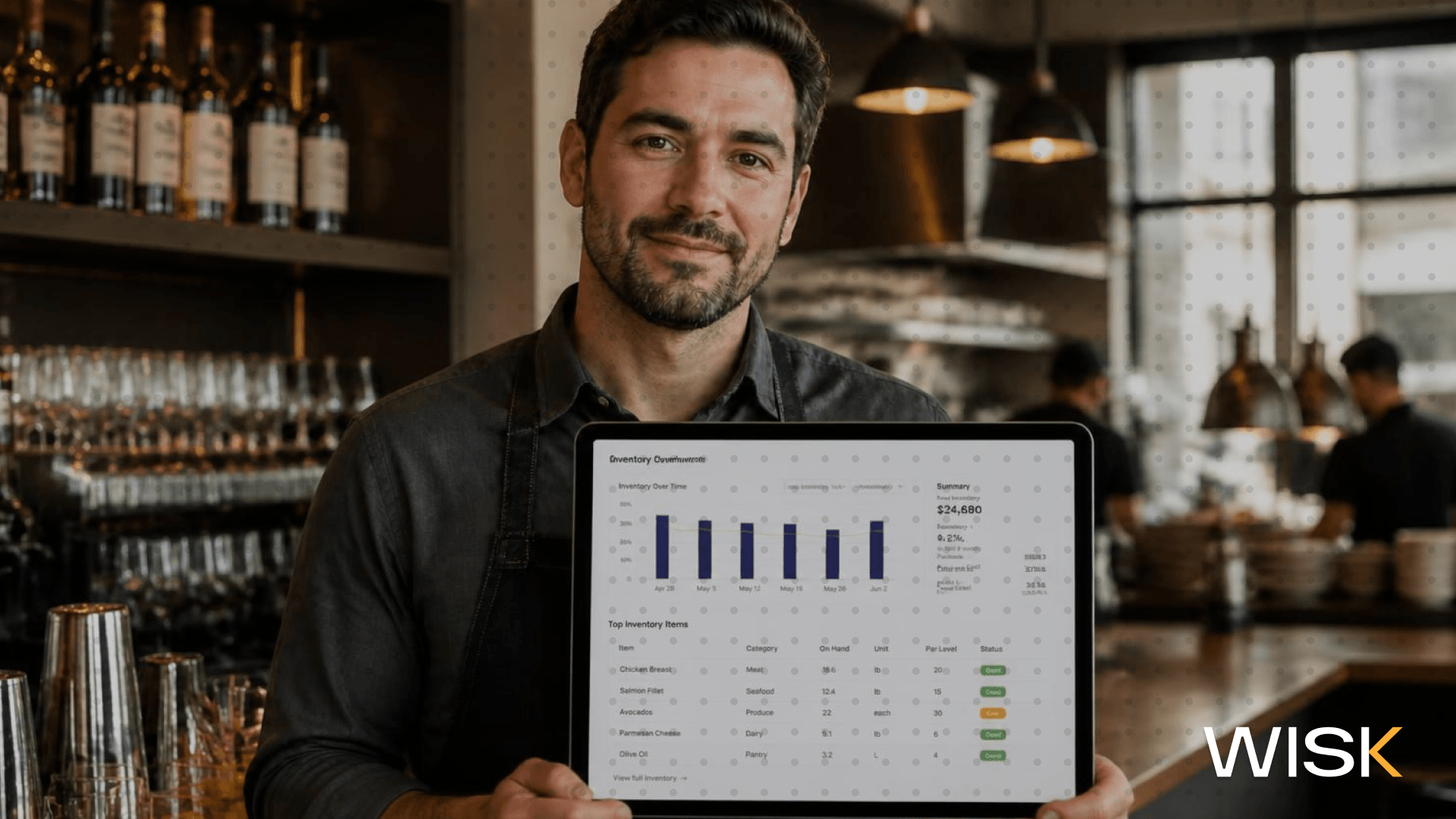
La previsión de ventas de WISK analiza tu TPV y el consumo del año anterior para proyectar la demanda navideña SKU por SKU, de modo que tu pedido de agosto se base en los datos reales de consumo del pasado diciembre, y no en la memoria de un gerente.
La previsión es lo que asusta a la hora de hacer pedidos anticipados: "¿Cómo voy a comprometerme en agosto si no sé lo que venderé en diciembre?". Ya lo sabes: los datos están en las cifras del año pasado. WISK hace la conexión por ti:
- Se integra con más de 60 sistemas TPV y sincroniza las ventas en tiempo real, para que la previsión refleje lo que tus clientes realmente consumen.
- Utiliza una base de datos precargada de más de dos millones de artículos, por lo que cada botella se costea y rastrea desde el primer día.
- Establece niveles de stock y genera recomendaciones de pedido automáticas, creando la orden de compra y enviándola directamente a tus proveedores.
La previsión también se vuelve más inteligente cada año. Cada temporada que gestionas con WISK añade otra capa de datos de consumo real, por lo que tu pedido de agosto pasa de ser una estimación fundamentada a una precisa: las suposiciones disminuyen y la confianza aumenta a medida que tu software de gestión de inventario para bares y restaurantes se convierte en el eje de tus compras.
Para Compradores de vino, Sumilleres, y Gerentes de operaciones de complejos turísticos que gestionan múltiples puntos de venta, contratos de banquetes y eventos de fin de año, pronosticar la demanda por establecimiento es lo que evita tanto el estante vacío el 23 de diciembre como el exceso de existencias en enero que nadie quiere explicar. Un complejo turístico con un bar en el vestíbulo, un restaurante de alta cocina, un bar en la piscina y un servicio de banquetes no realiza un solo pedido para las fiestas, sino cuatro, cada uno con su propio perfil de consumo, y una simple hoja de cálculo oculta esos matices en cuanto las cosas se ponen ajetreadas, incluso si utiliza una hoja de cálculo básica de inventario de bar para mantenerse al día.
¿Qué sucede en enero con el vino de las fiestas que pidió en exceso?
Si pide de más, su dinero se queda estancado en la bodega durante un primer trimestre lento; los informes de varianza y las funciones de gestión de costes de WISK detectan el exceso de existencias, las mermas y los productos de baja rotación para que pueda convertir el inventario muerto en margen de beneficio.
Hacer pedidos en agosto no es una licencia para comprar de más, sino una razón para comprar con precisión, siguiendo las mejores prácticas para gestionar el inventario y los pedidos para que cada caja que reciba tenga un camino claro hacia el cliente. El mismo sistema que le ayuda a pedir con antelación le mantiene bajo control después:
- Los informes de varianza comparan el consumo real con los datos de ventas para detectar el exceso de vertido, los robos y los derrames: las fugas que convierten una buena compra en un mal trimestre.
- La documentación automatizada significa que las facturas escaneadas por IA y las órdenes de compra registradas crean un rastro documental limpio y listo para auditorías, una victoria directa para Responsables de compras y Gerentes de compras hoteleras que rinden cuentas por cada centavo.
- La integración de listas de verificación estandariza la recepción y el conteo, para que nada se registre incorrectamente en el muelle de carga durante las semanas más ocupadas del año; además, combinarla con una báscula para inventario de licores hace que cada conteo sea más rápido y preciso.
Pedidos manuales para las fiestas frente al método WISK: ¿cuál es la verdadera diferencia?
Los pedidos manuales para el cuarto trimestre dependen de hojas de cálculo y de la memoria; WISK los reemplaza con compras basadas en pronósticos, documentadas y con verificación de variaciones, reduciendo un conteo semanal que tomaba de 1 a 2 horas a solo unos 20 minutos.
La brecha no es sutil cuando comparas ambos enfoques. Uno reacciona a las fiestas; el otro las planifica, y lo hace con herramientas esenciales que todo gerente de restaurante necesita disponibles durante todo el año.
¿Cómo hace WISK para que los pedidos de vino de agosto sean sencillos?
WISK ofrece a los directores de alimentos y bebidas, los compradores de vino, los responsables de comprasy los gerentes de operaciones de resorts un sistema de gestión de inventario que pronostica la demanda de las fiestas, genera la orden de compra de agosto, documenta cada factura automáticamente y rastrea las variaciones durante toda la temporada. Así, usted compra con antelación, compra de forma inteligente y protege su margen en lugar de intentar recuperarlo en diciembre, con planes de precios que recompensan las suscripciones anuales cuando se compromete con el proceso. Deje de reaccionar ante las fiestas y empiece a planificarlas: descubra cuánto podría ahorrar en su próximo pedido de temporada con WISK.