If you operate multiple restaurant or bar locations, you already know the painful truth: a 5% liquor variance at one location is an annoyance, but a 5% variance across five locations is tens of thousands of dollars leaking from your bottom line every single month.
The Bottom Line Up Front: To permanently reduce liquor variance across multiple venues, you must abandon manual visual counting, or “tenth-ing,” and transition to Actual vs. Theoretical (AvsT) tracking. By integrating Bluetooth scales with your POS systems, you can instantly compare what was sold against what was actually poured, which pinpoints exact variances down to the fraction of an ounce before the weekend is even over. Implementing a comprehensive bar inventory process, a multi-step system involving inventory counts, invoice and sales integration, error analysis, and management systems, is essential for multi-location operations. Establishing a reliable schedule for taking liquor inventory is crucial; counts should be conducted at least once a month, or more frequently for high-volume bars, to maintain accurate stock levels and prevent losses.
Here is the exact framework multi-unit operators use to eliminate overpouring, stop shrinkage, and recover up to 10% of lost inventory in their first month.
Introduction to Reducing Liquor Variance
Reducing liquor variance is one of the most important aspects of effective bar inventory management, as it has a direct impact on a bar’s profitability and operational efficiency. Liquor variance refers to the gap between the amount of liquor a bar should have sold, based on inventory data and sales records, and the amount actually consumed from stock. This difference can be caused by over pouring, theft, spillage, or simple human error, and even small discrepancies can add up to significant losses over time.
To maximize profits and keep your bar running smoothly, it’s essential to implement robust bar inventory control strategies. Modern bar and restaurant inventory management software is a powerful tool in this process, allowing you to accurately track inventory, monitor usage, and identify areas where waste or loss is occurring. By leveraging the right inventory software and tools, bar owners and managers can take control of their inventory, reduce unnecessary losses, and ensure that every ounce of liquor is accounted for. Ultimately, tracking and managing liquor variance isn’t just about preventing loss, it’s about creating a more profitable and sustainable bar business.
Why Traditional Multi-Unit Inventory Fails
When you scale a hospitality business, the “old way” of managing beverage inventory breaks down fast. If your location managers are still walking the stockroom with a clipboard and guessing that a bottle of premium tequila is “about 0.7 full,” you are using the traditional method of liquor inventory. This traditional method is outdated, relying on manual, subjective estimates that are prone to error.
Traditional inventory fails at scale because of three fatal flaws:
- The “Tenth-ing” Guesswork: Visual estimations are subjective. What one manager calls 0.6, another calls 0.8. When multiplied across hundreds of bottles and multiple venues, this margin of error completely masks real theft and overpouring.
- Data Delays: By the time Friday night’s manual counts are calculated, cross-referenced with vendor invoices, and compiled into a spreadsheet on Wednesday, the data is too old to act on.
- Disjointed Systems: If your POS doesn’t talk directly to your inventory tracker, finding the variance requires exporting CSVs and running complex pivot tables.
Manual counting is both time consuming and a tedious task for managers, especially when they don’t follow a clear step-by-step process for measuring liquor bottles. The average bar loses at least 20% of its liquor inventory, primarily due to waste and theft, which can significantly impact profitability.
How to Calculate Actual vs. Theoretical (AvsT) Inventory
The only way to truly stop profit leakage is to master the Actual vs. Theoretical variance formula and use the right bar and restaurant inventory software to support it.
- Theoretical Inventory: What you should have consumed based on the exact recipes sold through your POS. (e.g., You sold 25 Margaritas at 2 oz of Tequila each = 50 oz of Theoretical Consumption).
- Actual Inventory: What was physically depleted from your bottles based on a precise physical count and recent invoices. To accurately measure your remaining liquor, you must include the ending inventory for each product during the physical count.
- The Variance: Actual Consumption (65 oz) - Theoretical Consumption (50 oz) = 15 oz of Variance.
Generating variance reports allows managers to compare usage between what was sold (from POS data) and what was actually consumed, helping to identify discrepancies, reduce waste, and improve profitability. Key steps in liquor inventory management include maintaining organized storage using the FIFO method, setting par levels, and comparing physical inventory counts to POS sales data.
That 15 oz is pure lost profit—whether from heavy pours, spilled drinks, or unauthorized comps.

Benefits of Inventory Software
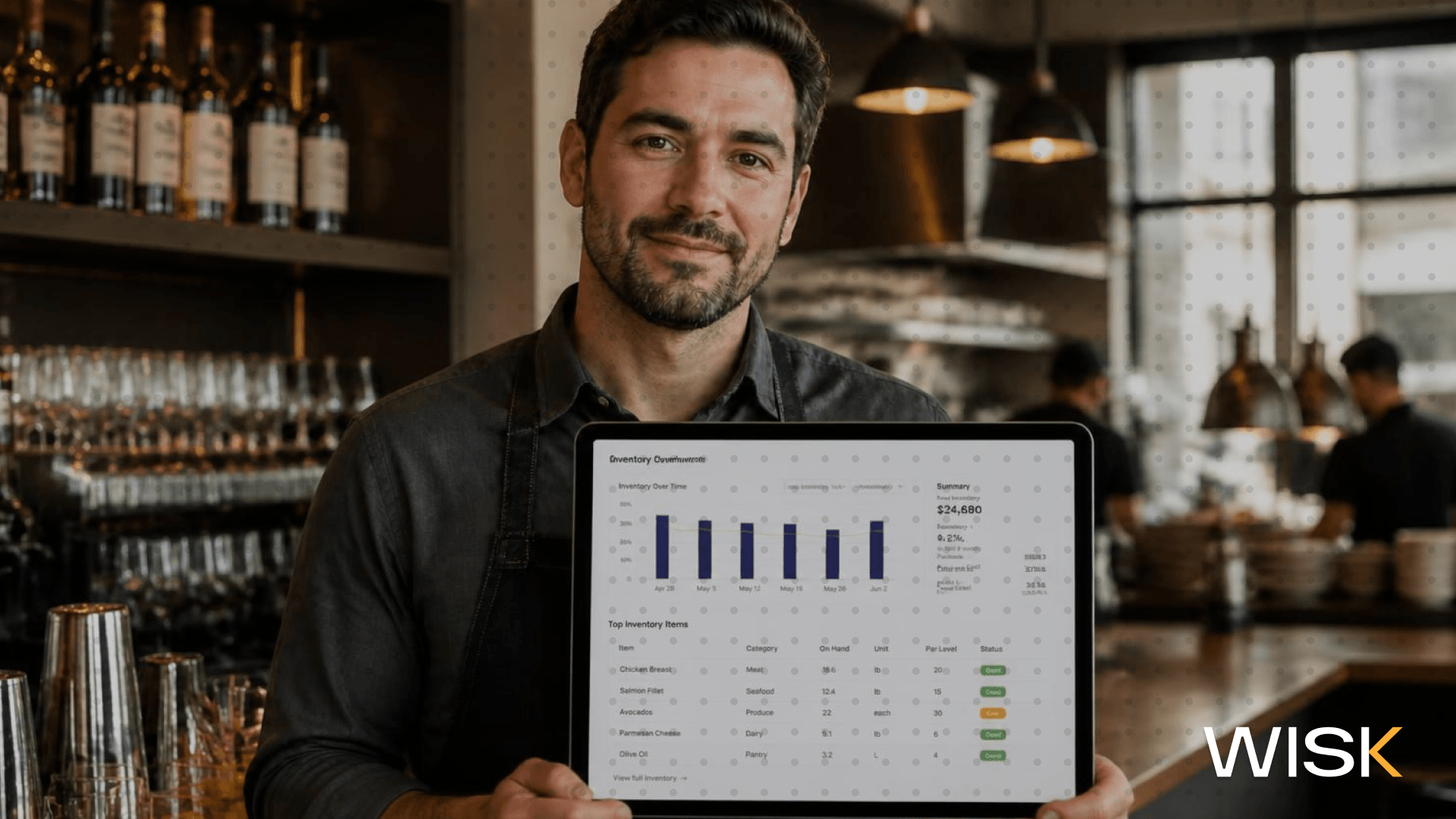
WISK bar inventory software is a true game changer for the bar industry, revolutionizing the way bars manage their inventory process. With the right inventory software, bars can easily track inventory levels in real time, monitor sales trends, and quickly identify areas where product usage doesn’t match up with sales. This level of insight into inventory data allows bar managers to take inventory more efficiently and accurately, drastically reducing the time and effort spent on inventory counts.
By automating the inventory process, bar inventory management software for high-volume venues helps bars make more informed decisions about ordering and stock management, minimizing the risk of overstocking or running out of key products. The ability to analyze sales and inventory data side by side means bars can spot red flags early, reduce waste, and ultimately increase profits. With streamlined inventory management, bars can focus on delivering great service while saving money and maximizing the value of every bottle on the shelf. For any bar looking to stay competitive and profitable, investing in bar inventory software is an essential step forward.
3 Steps to Standardize Variance Tracking Across All Locations
To stop the bleeding, you need to standardize your liquor inventory process across every venue and different locations in your portfolio by adopting consistent bar stock control habits. Systems like bar patrol can help streamline and standardize inventory tracking, making it easier to manage inventory in multiple storage areas or venues. Involving the entire team in the inventory process and training them to recognize potential inventory risks, such as over-pouring and theft, enhances accountability and reduces discrepancies. Here is how top F&B Directors are doing it with WISK.ai.
1. Eliminate Human Error with Bluetooth Scales
You cannot manage what you do not measure accurately, which is why investing in a dedicated liquor inventory scale can transform your counting process. Instead of guessing, managers simply place a liquor bottle, whether full or open, on a Bluetooth scale and scan it with the WISK mobile app. The system references a global database of over 1.5 million ingredients and instantly calculates the remaining liquid weight down to the milliliter. The measurement process may vary based on bottle size and the type of liquor bottles, ensuring accurate results for all inventory. This not only guarantees 99.7% accuracy, and it reduces inventory counting time by up to 80%.
2. Automate POS Integration
Your sales data and your inventory data must live in the same ecosystem. Automating POS integration with WISK significantly reduces inventory time and increases efficiency, allowing staff to focus on other important tasks. WISK integrates seamlessly with over 60+ POS systems (including Toast, Lightspeed, and TouchBistro). The moment a drink is rung in, the system updates your theoretical inventory. Automated inventory systems also provide real-time data on liquor usage, helping bars identify patterns in over-pouring, theft, and waste, which can lead to significant cost savings. No manual entry required.
3. Track Item-Level Variance in Real-Time
You shouldn’t have to wait for an end-of-month report to find out the Lobby Bar is missing three bottles of Casamigos. With an automated system, you receive instant variance alerts and variance reports, which are essential for evaluating the bar's performance and identifying discrepancies in ordering or pouring processes. WISK calculates the Variance Cost (at wholesale) and the Variance Retail (lost sales revenue), allowing F&B Directors to sort by the highest financial impact and address the issue with the specific bartender or location manager immediately. Tracking item-level variance also helps managers set appropriate par levels for each product, optimizing ordering and reducing waste. Regular inventory counts help identify discrepancies in ordering or pouring processes, which can prevent losses due to theft or over-pouring, ultimately aiding in maintaining profitability.
Best Practices for Bar Inventory
To keep your bar running smoothly and maintain tight control over your inventory, it’s crucial to follow best practices for bar inventory management. One of the most effective strategies is to take inventory on a regular, bi-weekly basis. Frequent inventory counts help you catch discrepancies early, adjust your ordering habits, and ensure your inventory data is always up to date.
Using a consistent method for tracking inventory, such as a dedicated bar inventory app or a comprehensive bar inventory system—ensures that your records are accurate and reliable. This consistency is key for making informed decisions about purchasing and stock levels. Additionally, implementing a system for tracking partial bottles is essential for reducing waste and minimizing liquor variance. By accurately measuring and recording the contents of open bottles, you can better manage product usage and prevent unnecessary loss.
Ultimately, a well-organized inventory system, supported by the right tools and regular processes, empowers your team to manage inventory more effectively, reduce costs, and keep your bar’s performance at its peak.
Turn Variance Data into Profit
Right now, the average bar loses at least 20% of its liquor inventory, with most of that loss occurring at retail value. Shrinkage in liquor inventory can cost bars between 15% and 25% of their inventory each month due to over-pouring, spills, or theft. Effective selling and ordering strategies, including timely ordering of new stock, can help reduce waste and optimize profit margins. Tracking pour costs is essential for maximizing profitability. You don’t need to drive more foot traffic to increase your profit margin; you just need to keep the money that is already inside your building.
By moving from manual counts to an automated, scale-based bar management system like WISK.ai, high-volume operators typically recover $1,500 to $3,000 per month, per location, and can choose from pricing plans that include discounts for annual subscriptions.
Ready to stop playing defense with your beverage program? [Book a customized demo of WISK.ai today] and see exactly how much profit you can reclaim in your first 30 days.
Conclusion
In conclusion, effective bar inventory management is the foundation of a successful and profitable bar. Regularly taking inventory, using a consistent and accurate inventory system, and tracking partial bottles are all essential steps in maintaining control over your stock and preventing lost profits.
With the right bar inventory management software and a streamlined inventory process, bars can create a more efficient and accurate inventory system, make better-informed decisions, and manage their business with confidence. Investing in these tools and strategies not only reduces costs and increases profits, but also sets your bar up for long-term success in a competitive industry. Take control of your inventory today and watch your bar thrive.