The Bottom Line: Roughly one in eight U.S. adults now takes a GLP-1 medication, and 93% of them have changed how they order — smaller portions, more protein, less alcohol and dessert. They haven't stopped eating out (they buy from restaurants 7.6 times a week versus 5.1 for non-users), so the real risk isn't lost traffic, it's lost margin on plates that were costed for a bigger appetite. WISK gives restaurant owners, menu developers, and culinary directors the recipe costing, portion control, menu engineering, and sales analytics to re-spec and re-price those plates before the margin quietly disappears.
How many of my guests are actually on a GLP-1?
About one in eight U.S. adults currently takes a GLP-1 medication, and 29% of non-users say they'd start if it were more affordable and accessible — which puts the realistic ceiling near four in ten adults.
Run the math on your own room. At 1,000 covers a week, roughly 125 of those guests are on the drug right now. That's not a niche menu section you get to defer to next year — it's already a meaningful share of your Friday night.
The National Restaurant Association's GLP-1 consumer survey polled 1,400 adults, 509 of them current users. Adoption is still climbing as insurance coverage widens, and nobody announces it when they sit down. They just order differently.
Are GLP-1 guests actually spending less at my restaurant?
No — they come in more often. GLP-1 users bought a restaurant meal, snack, or beverage 7.6 times in the prior week versus 5.1 times for non-users, and 71% call restaurants essential to their lifestyle compared with 61% of all adults.
Here's the nuance worth sitting with: about half say they've cut back on dining out since starting, but one in four go out more. The net effect on the industry is small. Analysts told Restaurant Business Online that even a doubling of GLP-1 use over five years would dent industry sales growth by under 1% and traffic by roughly 5%.
So traffic is fine. What changes is the composition of the check — and that's where your P&L lives.

What are GLP-1 guests ordering differently?
93% of GLP-1 users have modified their orders: 49% choose smaller portions, 43% order more high-protein items, 41% more vegetables, 38% fewer sugary items, 38% fewer indulgent dishes like dessert, and 28% of legal-drinking-age users order less alcohol.
Read that list again as a margin problem, not a nutrition trend:
- The two categories being cut are your best ones. Alcohol and dessert carry the fattest margins on most menus. Losing a $16 cocktail and a $12 dessert off a table of four hurts more than losing volume.
- The category in demand is your most expensive. Protein is the priciest line on nearly every spec sheet, and 43% of these guests want more of it.
- But they'll pay for it. More than nine in ten say they'd order items built for their preferences, and 76% say they'd pay a premium for them. That's genuine pricing power — if you know what the plate actually costs.
How do I price a half portion without giving away my margin?
A half portion almost never costs half as much to produce, because plate, sauce, garnish, bundled sides, and labor don't shrink with the protein. Price a "half" at 50% of full and you can hand back double-digit gross profit per cover — most operators land nearer 65–75%.
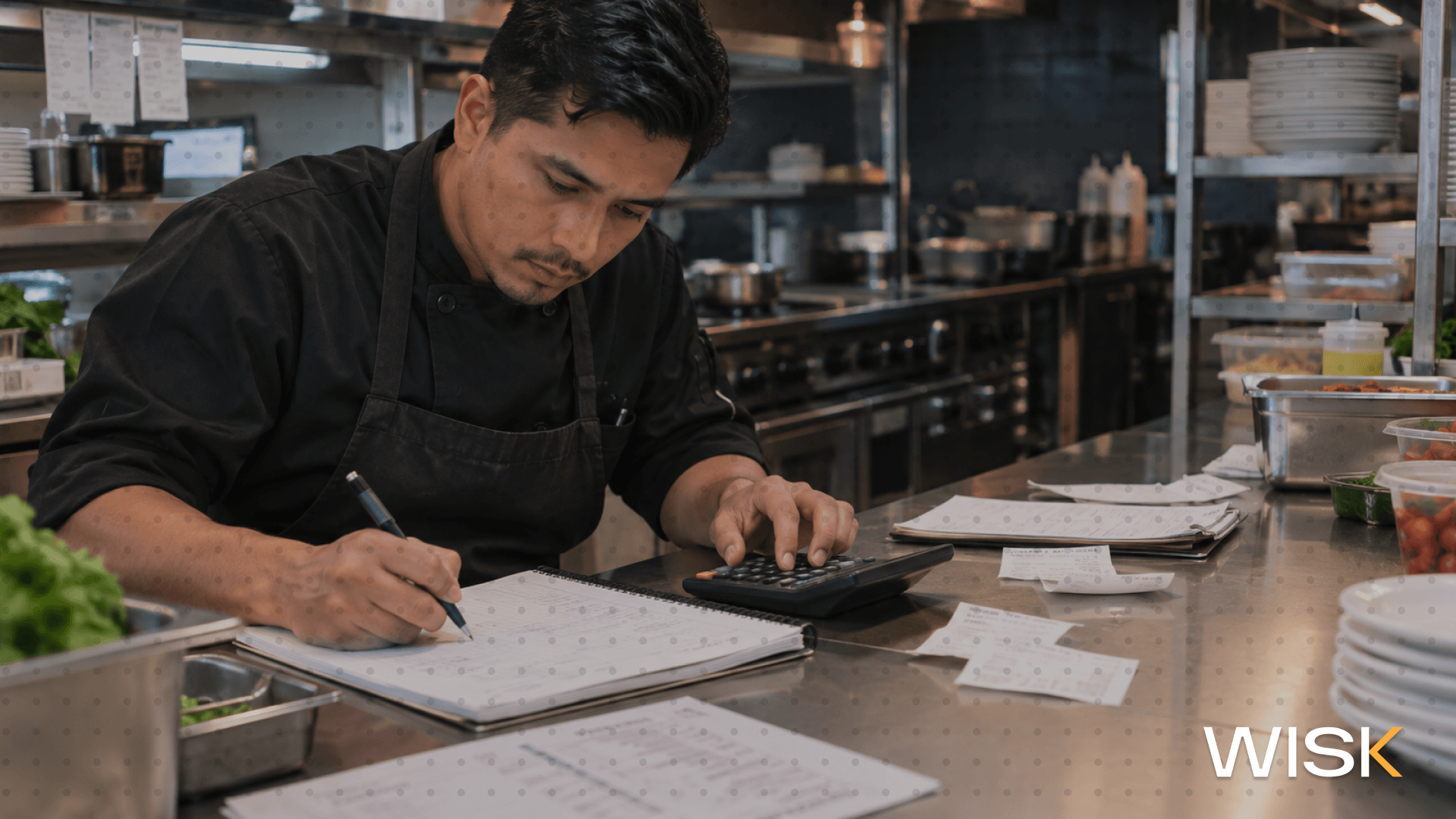
This is the single most common costing mistake we see when a culinary director rolls out a lighter menu. The protein drops 50%, the total plate cost drops maybe 40%, and the price drops 50%. The gap comes straight out of profit.
Play with the numbers below using your own dish before you commit anything to print.
Two things usually fall out of that exercise. First, the breakeven price for a half portion is higher than instinct suggests — often 80%+ of the full price. Second, if the numbers refuse to work, the fix belongs in the recipe rather than the price: trim the things that never scaled down in the first place.
Why has portion control become a margin issue instead of a consistency issue?
Only about 20% of restaurants measure front-of-house plate waste, and food waste costs the U.S. restaurant industry roughly $162 billion a year. With University of Arkansas and Oklahoma State researchers estimating GLP-1 users cut 720 to 990 calories a day, your default portion is now the cheapest margin lever on the menu.
Georgetown's Portion Balance Coalition analyzed 70 major chains for its plate waste white paper and found only 43% offer any form of portion customization, and just 18% offer adult build-your-own options.
- Every scraped plate is food you already paid full price to buy, store, prep, and cook. Once it leaves the pass, that cost is sunk.
- The repeat offenders are predictable: fries and starchy sides, bread, side salads, garnishes. Mostly defaults nobody chose.
- Making those items opt-in — "would you like the side, or skip it?" — cuts cost per cover without touching a single menu price.
Which menu items should I cut, keep, or re-engineer?
Sort every item by contribution margin in dollars against unit velocity over a rolling 90 days, then re-engineer anything with high volume and thin margin. WISK pulls that sales data automatically from 60+ POS integrations, so menu engineering runs on actual item-level performance instead of last quarter's assumptions.
For menu developers, the useful questions are narrow:
- Which items are being ordered less since portion behavior shifted — and are they earning their space?
- Where can a protein-forward small plate replace a carb-heavy loss leader at a better margin?
- Which items get shared? Shared entrées mean fewer covers ordering, and menu engineering built on cover counts will miss it entirely.
One more thing worth flagging to your beverage team: with 28% of these guests drinking less, the answer usually isn't fewer cocktails on the list — it's smaller and lower-ABV formats, zero-proof builds with real cost discipline, and a hard look at which pours are still earning their shelf space. Same logic as the food menu. Cost it, price it, then watch what sells.
What does adapting a menu look like manually versus in WISK?
Doing this in spreadsheets takes weeks and is stale by the time it's finished. Restaurants running it in WISK report profit margins up 3–7%, shrinkage down as much as 80%, and 20+ labor hours back per month.
How does WISK help you build a GLP-1-ready menu?
WISK connects recipe costing, portion control, menu engineering, and sales analytics in one platform, so restaurant owners, menu developers, and culinary directors can spec a smaller plate, see its true cost instantly, price it to protect margin, and watch how it actually sells.
You don't need to predict how far this trend goes. You need to know what every plate costs at the portion you're serving today, and which items your guests are actually choosing — then move faster than the shift does. Book a free WISK demo and bring your three highest-volume entrées. We'll cost the half portions with you.