The Bottom Line: Football season can lift bar alcohol sales by 6% on a typical NFL Sunday and 20–30% on big matchups, but the bars that actually profit are the ones that count fast, reorder on real data, and stop draft waste before kickoff. WISK.ai is the inventory management system that gets sports bars, breweries, and beverage teams game-ready — pairing Bluetooth scales, a 200,000+ bottle database, real-time stock alerts, and variance reports so every tap keeps flowing and every margin stays protected.
Why does football season hit your bar's inventory harder than any other time of year?
Football season crams a month of demand into a handful of three-hour windows, and sports bar visitation climbs sharply during the NFL season — running out of your best-selling beer at kickoff means losing the whole table, not just one round.
Here's the thing most operators feel but don't plan for: the rush isn't spread out. It lands on specific days, at specific hours, and a stock level that's comfortable on a Tuesday can be gone by halftime on Sunday. According to CGA's on-premise tracking, sports bars see visitation rise faster than any other venue type once the season starts.
- Sports bar owners and bar managers feel it first at the taps — draft beer moves fastest, spoils quickest, and is the hardest category to count by eye, which is why adopting successful bar stock control habits matters most during football season.
- Beverage directors running multiple locations multiply the risk. One shaky forecast doesn't stay in one venue; it repeats across every bar in the portfolio.
- Brewery taproom managers face a different squeeze: game day is a discovery moment, and a flagship that's flat or blown out on a Sunday costs you the regular that first-timer could have become.
How much do bar sales actually go up during football season?
Restaurants and bars in NFL cities see alcohol sales jump about 6% on in-season Sundays versus the off-season, with individual game-day spikes reaching 20–30% — and chicken wings alone climb 25%.
That lift is real money, but only if you can pour it. Demand you can't serve is demand the bar down the street serves for you. Toast's analysis of sales in NFL cities found alcohol items sold rise 6% on football Sundays, and the biggest jumps cluster around rivalry games, home openers, and playoff weekends.
- The spike is predictable by matchup, so your order should flex week to week instead of sitting flat. A divisional rivalry needs a different stock plan than a Thursday-night blowout.
- Food and drink move together. If wings are up 25%, the beer that pairs with them is moving too — plan the bar and the kitchen as one game plan.
- For beverage directors, the season is also your data-collection window. What you learn about game-day demand this month is what makes next month's order accurate.

What's the most expensive inventory mistake sports bars make on game day?
Draft beer waste — bars lose an estimated 8–10% of every keg to foam, overpouring, and poorly maintained lines, and that leak widens exactly when volume peaks on football Sundays.
Overpouring during a rush is invisible without measurement. A half-ounce over on every pint across a packed Sunday doesn't add up to ounces — it adds up to whole kegs. Bar-i's audits across hundreds of bars put avoidable draft loss at 8–10% of product on average, and that's before you count what walks out the door.
- Running dry is the flip side of the same problem: a tap that kicks at kickoff is lost revenue plus a guest experience that shows up in your reviews Monday morning.
- Both failures trace back to one root cause — not knowing your true, real-time stock and consumption. You can't fix a leak you can't see.
- Bar managers who only count monthly are effectively flying blind through the busiest stretch of the year. Game day punishes guesswork.
Here's how the manual approach stacks up against doing it with WISK:
How do you count beer inventory fast enough to keep up with a game-day rush?
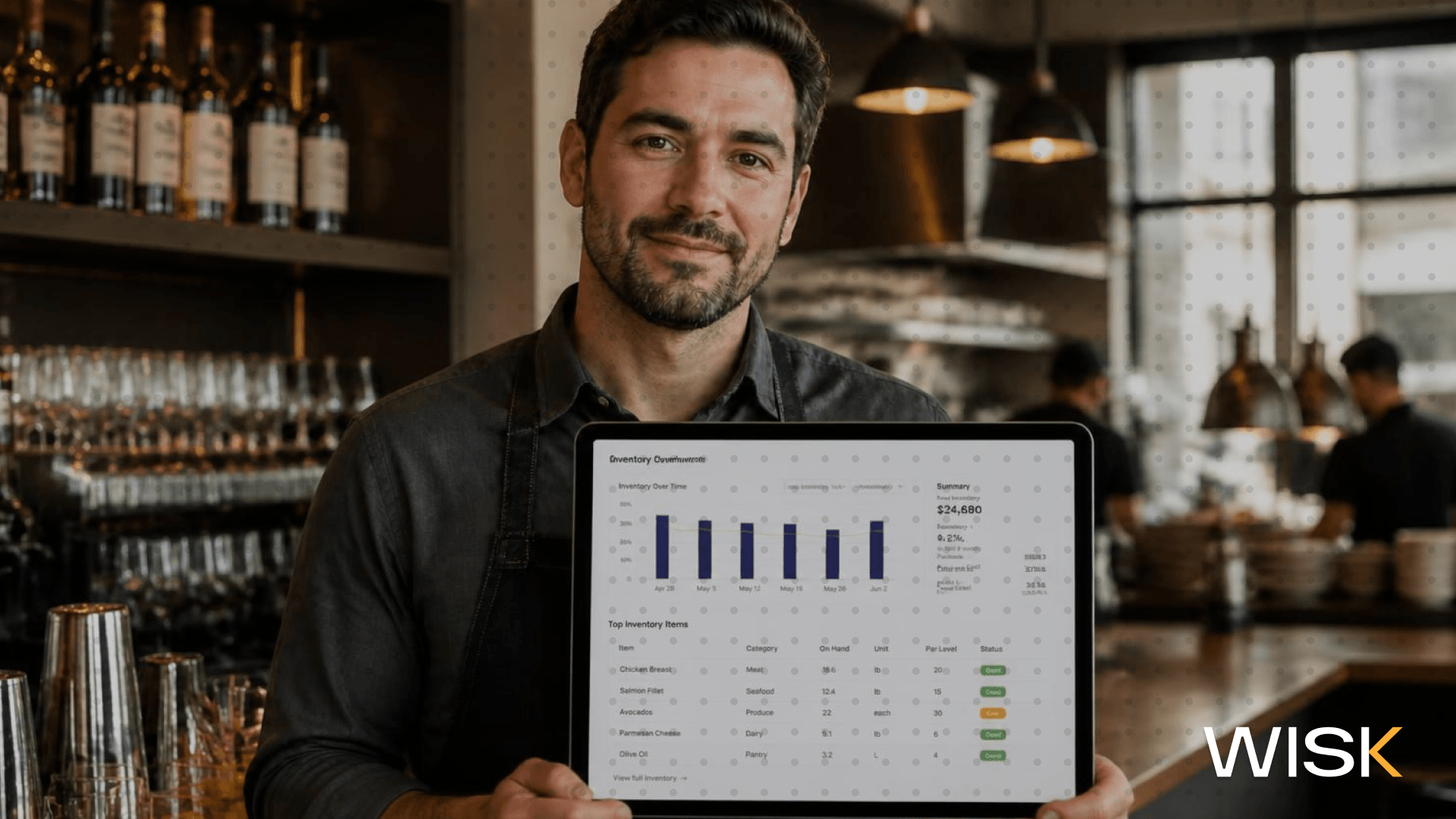
WISK.ai lets bar teams count inventory up to 5x faster at 99.7% accuracy using Bluetooth scale integration and AI image recognition, so a full pre-weekend count takes a fraction of the time and gives you numbers you can trust.
If your team is still doing partial pours by sight, a structured 10-step guide to measuring liquor bottles can tighten up the process.
Speed matters here because the count only helps if it's done before the doors open. WISK is built mobile-first for exactly that reason, but even operators not ready for software yet can benefit from a free bar inventory spreadsheet template to standardize their counts.
- Weigh open kegs and bottles on a Bluetooth scale and WISK captures the exact remaining volume — no more logging "about half."
- Snap a photo of your shelves and WISK's image recognition identifies products and counts quantities automatically, matched against a database of over 200,000 bottles.
- Multiple staff can count different sections at the same time, and it works offline in the cooler where there's no signal — so prep never stalls waiting on a bar count.
How do variance reports and real-time stock alerts protect your margins during the season?
WISK's variance reports compare what your POS says you sold against what you actually poured, flagging shrinkage from overpouring, spillage, or theft, while real-time stock alerts warn you before a keg runs out.
Variance is where the money hides. If your POS shows 100 pints sold but your inventory says you burned through 118 pints' worth of product, that 18-pint gap is pure loss — and WISK puts a dollar figure on it, item by item. Understanding how many ounces or shots are in a 750ml bottle makes those variances easier to calculate and compare.
- Real-time stock alerts mean the manager gets a heads-up that the IPA is running low in the first quarter, not after it's already empty in the third.
- Beverage directors get the same variance view across every location, so a problem at one bar doesn't hide inside the portfolio average.
- Venues using WISK commonly report cutting waste and over-ordering for savings in the range of 2–5% — often the difference between a good football Sunday and a great one.
How do you forecast how much beer to order for each game?
By feeding real consumption data and POS sales history into WISK, you can build game-day par levels and sales forecasting that tell you exactly how much to order for each matchup — not a flat number that leaves you short or overstocked.
Guessing costs you twice: order light and you run dry mid-game; order heavy and you tie up cash in beer that goes stale before the next home stand. WISK closes that gap by tying usage directly to sales through its inventory management software for bars and restaurants.
- See how a comparable home game drained your inventory last month, then order to match this week's matchup.
- Automated ordering and invoice scanning turn that forecast into purchase orders in minutes and keep vendor pricing honest.
- Cost management features let you set par levels per item, so the system flags the reorder point instead of you eyeballing the walk-in on a Saturday night.
Not sure how much extra to stock this weekend? Use the calculator below to get a starting number — and see what your draft waste is quietly costing you across the season.
What are the best sports bar decoration ideas to keep fans watching longer?
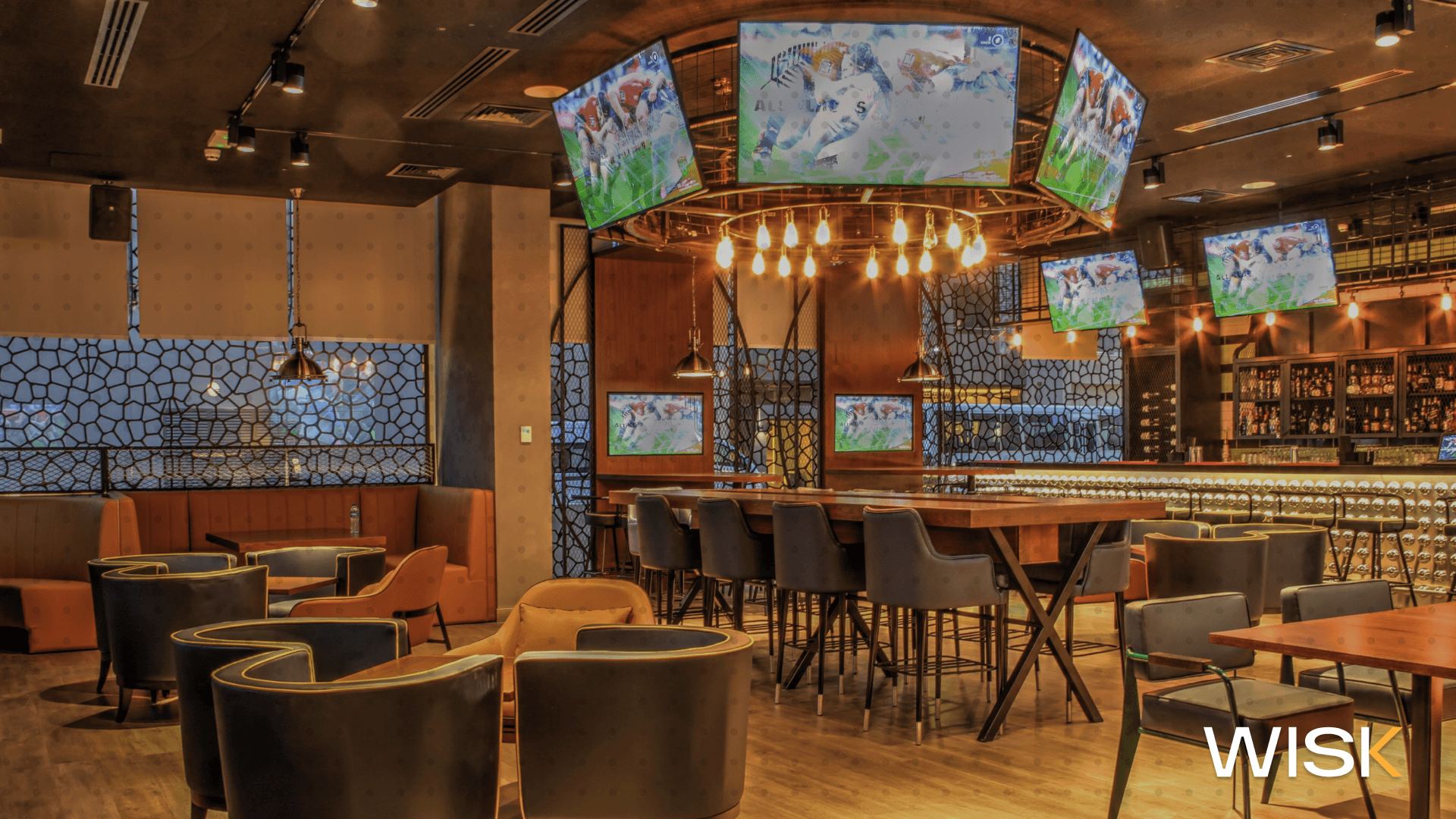
A successful sports bar is designed around sight lines: run 6–12 TVs so each customer can see at least 3 screens at all times, and arrange your bar seating strategically to improve customer flow by up to 30%. Smart sports bar design turns game day into a venue die-hard sports fans don't want to leave — and guests who stay longer spend more money.
Use these sports bar decoration ideas for inspiration to create a space and atmosphere fans search out for the big games:
- Screens, lighting and sound: Mount large screens at different heights — or an ultra-HD LED wall — for unobstructed, visible views. Keep ambient light low so the big-screen TVs stand out, then layer in dynamic lighting and accent lighting that react to game-day events and team colors to enhance the energy. A quality sound system with separate audio zones — plus highlight videos between plays — immerses the crowd in real stadium atmosphere.
- Seating and layout: Mix bar stools and high-top tables near the bar for casual mingling with comfortable seating and booths for groups settling in inside for the whole game. Add outdoor seating to grow capacity and comfort; in tight spaces, use wall space and a dedicated area to keep the main floor and sight lines open during busy periods and major events.
- Memorabilia and theme: Signed jerseys, historic photographs, trophy replicas, pennants, flags, banners, neon signs, and framed soccer balls turn empty walls into local sports history and nostalgia that define your brand. Display cases for ticket stubs and trading cards, pool tables to play, and a themed photo zone with QR codes give patrons more to do — and, for example, generate word-of-mouth.
Every décor choice contributes to the same job as your inventory — it gets fans to gather, stay, and order another round of drinks and food. A better customer experience drives higher game-day demand, which is why your stock has to keep up, supported by the right essential tools every restaurant manager needs to run the operation smoothly.
How does WISK.ai get your bar ready for kickoff?
WISK.ai gives sports bar owners, bar managers, beverage directors, and brewery taproom managers one inventory management system to count faster, forecast game-day demand, cut draft waste, and protect every margin all season long.
Instead of clipboards and guesswork, you walk into kickoff weekend knowing every tap, bottle, and keg is accounted for — book a free WISK demo today and get your bar game-ready before the first whistle.