You sit down with your numbers at the end of another strong week, and the NA section shows solid ring-ins, highlighting the importance of non alcoholic beverage inventory management. Guests love those zero-proof spritzes laced with adaptogens, the house-fermented shrubs that pair perfectly with dinner, and the premium non-alcoholic spirits that command cocktail-list prices. Yet when you peel back the layers, something feels off. Bottles linger past their peak. Small batches turn before they sell through. And those high-cost ingredients quietly drain your margins in ways your whiskey program never does.
Non-alcoholic beverages include a variety of options such as wines, spirits, cocktails, and beers. This is the sober-curious reality in 2026. The movement has moved far beyond January experiments. It now drives consistent, high-margin traffic across bars, hotels, and restaurants. But success demands you treat your NA Beverage Inventory with the same discipline you apply to top-shelf pours. Otherwise, silent spoilage eats the very profits the trend delivers.
Market Trends
The numbers tell a clear story. Nearly half of Americans, 49 percent, plan to drink less alcohol this year, according to this Circana study. That figure jumped 44 percent since 2023. Gen Z leads with 65 percent cutting back, and 58 percent of them cite mental health as the driver.
Meanwhile, the global non-alcoholic drinks market sits at $1,209.8 billion in 2026 and is projected to reach $2,100.4 billion by 2033, growing at an 8.2 percent CAGR, reports Persistence Market Research. Non-alcoholic beer alone climbs from $22.1 billion in 2026 to $43.9 billion by 2036 at 7.9 percent annual growth, fueled by the same wellness shift, per Future Market Insights.
Your guests want options that feel elevated and functional. They will pay for them. The catch? Those products spoil faster and cost more per ounce than traditional spirits. House-made ferments last days or weeks. Opened premium zero-proof bottles hold flavor for one to three months at best, often less if they contain fresh botanicals or nootropics. Low-volume SKUs move in fits and starts. Without tight data, you overbuy to avoid stockouts and watch money evaporate in the walk-in.
Transition: As demand grows, understanding the operational challenges of NA inventory becomes essential for profitability.
Inventory Challenges
The Shift No Bar Can Afford to Miss
Sober curious did not appear overnight. It built quietly through Dry January challenges and Sober October experiments. Early adopters tested moderation, then made it a lifestyle. Today it powers year-round demand in every service style, from quick hotel lobby drinks to multi-course restaurant pairings.
Revenue Potential and Common Pitfalls
Guests order NA not as a compromise but as a deliberate choice that matches their mood, health goals, and wallet. This creates real revenue potential. A well-engineered zero-proof menu often delivers higher margins than many alcoholic cocktails because the ingredient cost, while elevated, comes without excise taxes or high pour costs.
Yet many operators still treat NA as an afterthought. They stock a few bottles, mix a couple signatures, and hope for the best. Demand spikes on weekends or during wellness events, then drops midweek. The result mirrors many common bar inventory management issues: inconsistent turnover that turns premium product into expensive loss.
Hotel-Specific Inventory Pressures
Hotels feel this pressure especially hard. Multi-outlet operations, shift changes, and guest mix that varies by season all complicate visibility. A luxury property might carry 15 to 20 NA SKUs across the lobby bar, poolside, and in-room service. Each carries a higher landed cost than standard mixers.
When one slow week leaves three bottles of an adaptogen-forward spirit past optimal freshness, the write-off stings more than a comparable volume of vodka ever would. Multiply that across properties or months, and you face thousands in preventable loss while still trying to meet wellness-guest expectations.
Transition: To address these challenges, it’s crucial to understand why NA inventory plays by different rules than traditional spirits.
Why NA Inventory Plays by Different Rules
Think of your traditional spirits like a sturdy oak barrel. They sit patiently, improving or at least holding steady for years. Now picture your NA program like a garden of fresh herbs and delicate produce. It needs daily attention, precise rotation, and quick decisions. One missed check and the whole patch wilts.
Understanding NA Product Shelf Life
Premium non-alcoholic products often include real juices, botanicals, or functional compounds that oxidize or separate faster without alcohol as preservative. House ferments, popular for their fresh appeal and storytelling value, might last only 10 to 14 days refrigerated. Opened bottles of zero-proof gin or aperitif-style drinks start to lose vibrancy after three to six weeks for many brands. Contrast that with whiskey that laughs at time.
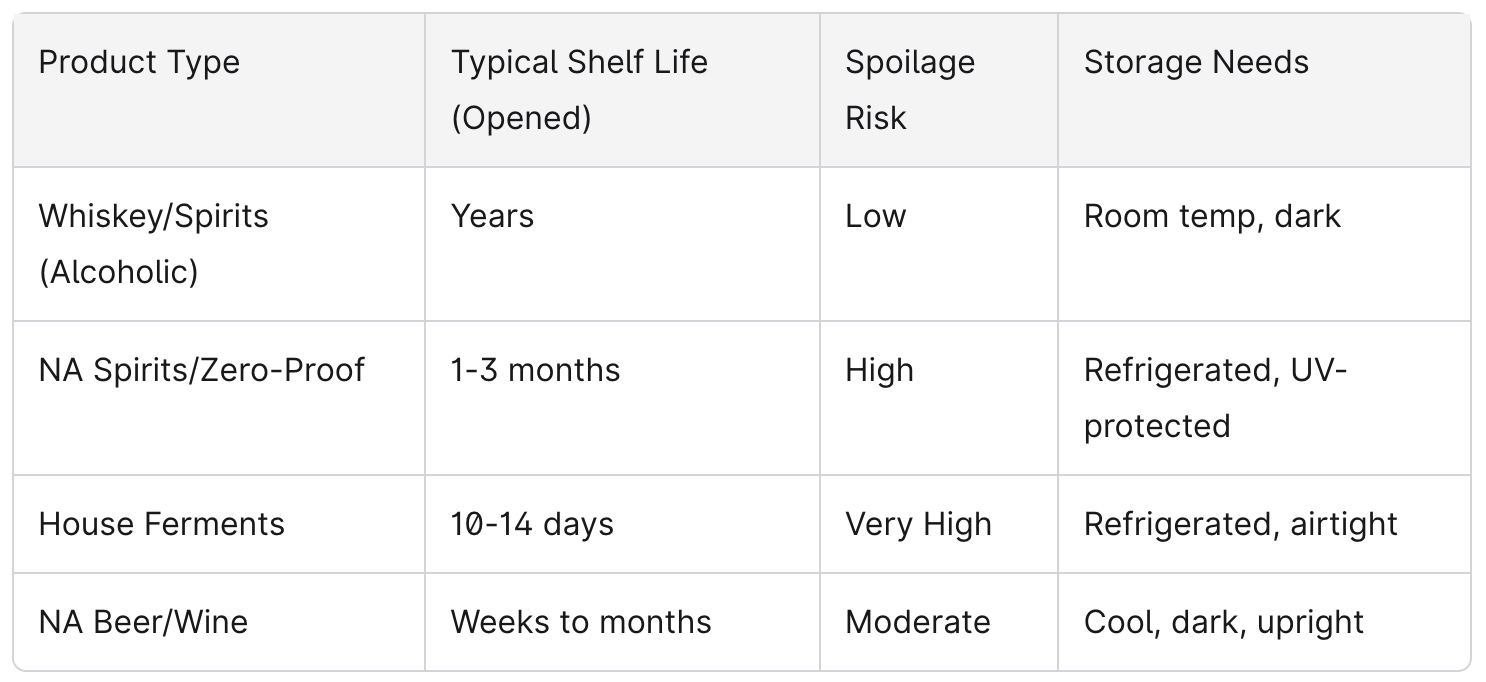
Non-alcoholic products are often perishable or have shorter shelf lives than liquor, making spoilage prevention critical. NA beverages lack preservatives, making them more susceptible to spoilage compared to alcoholic beverages.
Managing Inventory Turnover
Low volume per SKU adds another layer. You might sell only two or three units of a particular craft NA spirit per shift on average, yet guests expect it always available. Order too little and you disappoint. Order too much and you tie up capital while racing the clock on shelf life. Traditional par levels built for high-turn spirits simply do not translate, which is why mastering bar inventory control step-by-step becomes essential.
Set Par Levels to define a minimum quantity required on hand to satisfy demand between deliveries.
The cost structure magnifies every misstep. Functional ingredients push cost-per-ounce higher, sometimes double or triple standard mixers. A single spoiled liter can erase the profit from several sales. When waste creeps into the 15 to 25 percent range, common across bar inventory overall, your NA section can flip from profit center to drag on the entire beverage program.
Transition: Understanding these unique challenges sets the stage for practical solutions to protect your profits.

Spotting Trouble Before It Hits the Bottom Line
You do not need fancy dashboards to start catching issues early. Simple habits and consistent checks deliver immediate protection. Here is what works in practice:
- Rotate every NA item using strict FIFO, and label open dates boldly on every bottle.
- Conduct quick daily spot-checks on high-value or short-life products rather than waiting for weekly full counts, using a consistent 10-step guide to measuring bottles so your counts stay accurate.
- Track usage by daypart and by outlet so you spot patterns like slow Tuesday movement on ferments.
- Set dynamic pars that adjust weekly based on actual sales velocity instead of static guesses.
- Train staff to flag near-expiry items during every shift change and move them into featured drinks immediately.
These steps alone cut waste noticeably. When paired with real data, they turn reactive scrambling into confident ordering.
Transition: With these foundational habits in place, let’s look at a comprehensive checklist for best practices in non alcoholic beverage inventory management.
Best Practices for Non Alcoholic Beverage Inventory Management
Implementing best practices ensures your NA beverage program remains profitable and efficient. Use this checklist to optimize your operations:
- FIFO Rotation: Implement First In, First Out to ensure oldest items are used first and reduce spoilage.
- Regular Stocktakes: Conduct regular stocktakes, ideally weekly or bi-weekly, to maintain accurate inventory levels.
- Waste Logs: Establish waste logs to monitor spoiled or expired items, adjust purchasing, and identify loss causes.
- Set Par Levels: Define a minimum quantity required on hand to satisfy demand between deliveries.
- Barcode Scanners/Mobile Apps: Use barcode scanners or mobile apps to improve the accuracy of inventory counts.
- Monitor Inventory Turnover: Track how quickly products move; high turnover indicates effective management.
- Proper Storage: Store non-alcoholic beverages in a cool, dark, and dry place (50°F–70°F) to prevent degradation.
- Digital Tracking Tools: Use digital tools to track starting inventory, received items, and ending inventory.
- Grouping and Labeling: Group items by type and frequency of use, and maintain clear labeling to speed up counts.
- POS Integration: Integrate inventory management software with POS systems to automate tracking processes.
- Spreadsheets: Use specialized spreadsheets to track inventory management and calculations automatically.
- Spoilage Checks: Conduct spoilage checks for signs like bulging cans or cloudy bottles, indicating spoilage in preservative-free beverages.
- UV Protection: Protect sensitive non-alcoholic liquids from UV rays by using dark storage areas or opaque bins.
- Storage Layout: Store high-turnover items in easily accessible areas, keeping slower-moving items further away.
Transition: With best practices in place, you can now focus on engineering profits and optimizing your NA beverage menu.
Engineering Profits One Zero-Proof Pour at a Time
Profitable non-alcoholic menu engineering for bars starts with the same rigor you apply to your cocktail list, only with tighter guardrails on cost and freshness.
Menu Engineering Strategies
Group your NA offerings into clear roles: hero signatures that drive traffic, supporting classics that pair with food, and seasonal or limited items that create buzz without overcommitting stock. Make sure your team understands how many ounces are in each bottle size so portioning and costing stay tight.
Price with intention. Guests happily pay $12 to $18 for a thoughtfully built zero-proof drink when it matches the experience of an alcoholic counterpart. Build recipes that highlight premium elements without waste, batching bases where possible while keeping fresh accents for final service. Feature a “zero-proof flight” or pairing option on the menu to increase average check and expose more SKUs to trial without large pours.
Monitoring and Adjusting for Profit
Monitor contribution margin per item weekly. Some functional NA spirits deliver strong returns despite higher cost because they command premium pricing and low pour volume. Others move slowly and need promotion or removal. Data reveals which ones earn their shelf space, especially when you pair it with the right essential tools every restaurant manager needs to keep everything connected.
Transition: As you refine your menu and inventory, it’s important to understand evolving consumer preferences and regulatory requirements.
Understanding Consumer Preferences in the Sober-Curious Era
The sober-curious movement has transformed what guests expect from their beverage experience. Today’s customers are not just looking for a substitute for alcohol—they want non alcoholic drinks that deliver the same complexity, flavor, and sense of occasion as their favorite cocktails or wines.
Meeting Guest Expectations
This shift has fueled demand for non alcoholic beverages that showcase unique ingredients like blood orange, stone fruit, and other vibrant fruit profiles, elevating the sensory experience far beyond simple sodas or juices.
For operators, this means curating a non alcoholic home bar or menu that rivals the creativity of any traditional bar. Stocking a diverse range of non alcoholic wines, beers, and spirits allows you to craft na cocktails that surprise and delight, offering perfect pairings for every dish and moment. Guests are increasingly seeking beverages that align with their health and wellness goals, so offering options that are low in sugar, full of flavor, and visually appealing is key.
To meet this demand, consider rotating seasonal fruit infusions, experimenting with bold flavors like blood orange or stone fruit, and creating signature non alcoholic drinks that become a talking point for your bar. By understanding and anticipating these evolving preferences, you can create a beverage program that not only satisfies the sober curious but also attracts new customers looking for a sophisticated, alcohol-free experience.
Transition: As you expand your NA offerings, staying compliant with regulations is essential for long-term success.
Compliance: Navigating Regulation and Compliance for NA Offerings
As the non alcoholic drinks category grows, so does the importance of navigating the regulatory landscape. Non alcoholic wines, beers, and spirits must adhere to strict labeling and packaging requirements, which can vary by region and product type.
Regulatory Considerations
For example, the distinction between “non alcoholic,” “zero proof,” and “alcohol removed” is more than just marketing—these terms are regulated and must accurately reflect the product’s alcohol content and production process.
Wine directors and beverage managers need to stay informed about the latest industry standards to ensure their NA offerings are compliant. This includes verifying that ingredient lists are transparent, nutritional information is accurate, and all claims about being non alcoholic or alcohol removed are substantiated. Proper compliance not only protects your business from regulatory issues but also builds trust with customers who are seeking clarity and honesty in what they consume.
By prioritizing regulatory diligence, you position your bar or restaurant as a leader in the non alcoholic industry, reassuring guests that your NA beers, wines, and zero proof cocktails meet the highest standards of quality and safety.
Transition: Beyond compliance, sustainability and social responsibility are now key differentiators for NA programs.
Sustainability: Social Responsibility and the New Standard for NA Programs
Sustainability and social responsibility are quickly becoming non-negotiable for successful non alcoholic programs. Today’s guests want to know that their non alcoholic drinks are not only delicious but also created with care for the environment and community.
Sustainable Practices
From non alcoholic spirits to citrus-forward cocktails, every step—from ingredient sourcing to packaging—offers an opportunity to make a positive impact.
Operators can lead the way by choosing eco-friendly packaging, minimizing waste, and sourcing ingredients like citrus peels, edible flowers, and fresh botanicals from local producers.
Reducing sugar and calorie content in non alcoholic beverages not only appeals to health-conscious customers but also supports broader wellness goals. Incorporating natural elements such as edible flowers and fresh citrus into your NA cocktails adds both visual appeal and a story of sustainability that resonates with guests.
Transition: Leveraging technology can further streamline your NA beverage inventory management and boost profitability.
Technology Solutions: The Tool Built for Exactly This Moment
Systems designed for traditional spirits fall short when shelf life shrinks and variety grows. That is where WISK changes the equation. This inventory management platform gives bars and restaurants real-time visibility across every beverage category, including the most perishable NA items.
Leveraging Digital Tools
It integrates directly with your POS, tracks usage down to the ounce, and flags items approaching their optimal window so you can promote or rotate them before value slips away.
WISK automates par suggestions based on actual sales velocity, not guesses. It generates variance reports that highlight discrepancies fast. Operators report cutting beverage costs by several percentage points and reclaiming hours each week that used to disappear into manual counts and spreadsheets.
When your NA program grows alongside the sober-curious wave, WISK keeps the data clean and actionable. You protect high-margin sales, reduce waste on premium ingredients, and confidently scale the offerings your guests now expect.
Ready to stop leaving money on the shelf? Visit WISK and book a short demo tailored to your operation. See exactly how real-time tracking and smart alerts turn your NA Beverage Inventory from a potential drain into one of the strongest contributors on your menu. The sober-curious wave is here to stay. Make sure your data rides it all the way to higher profits.