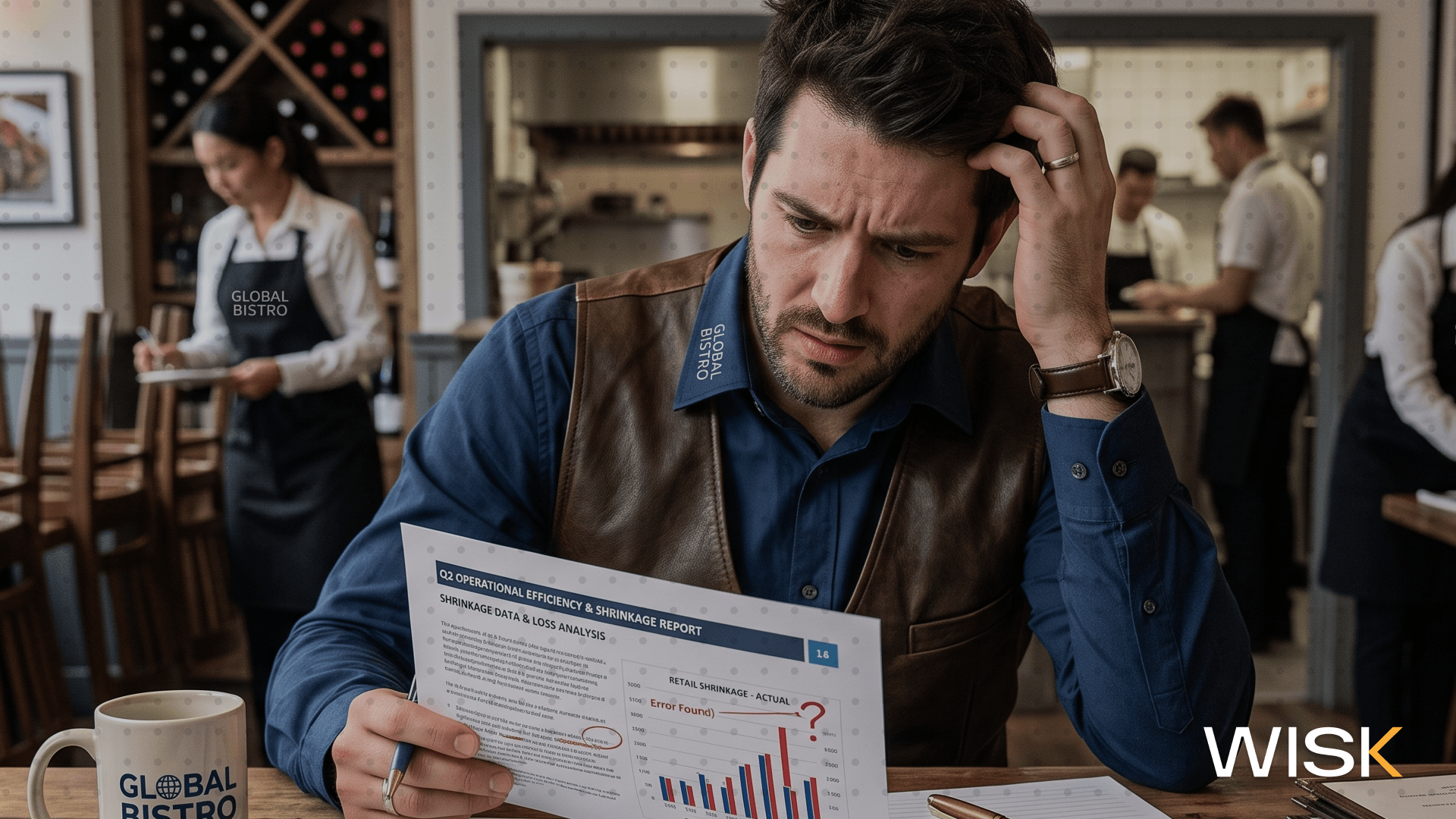
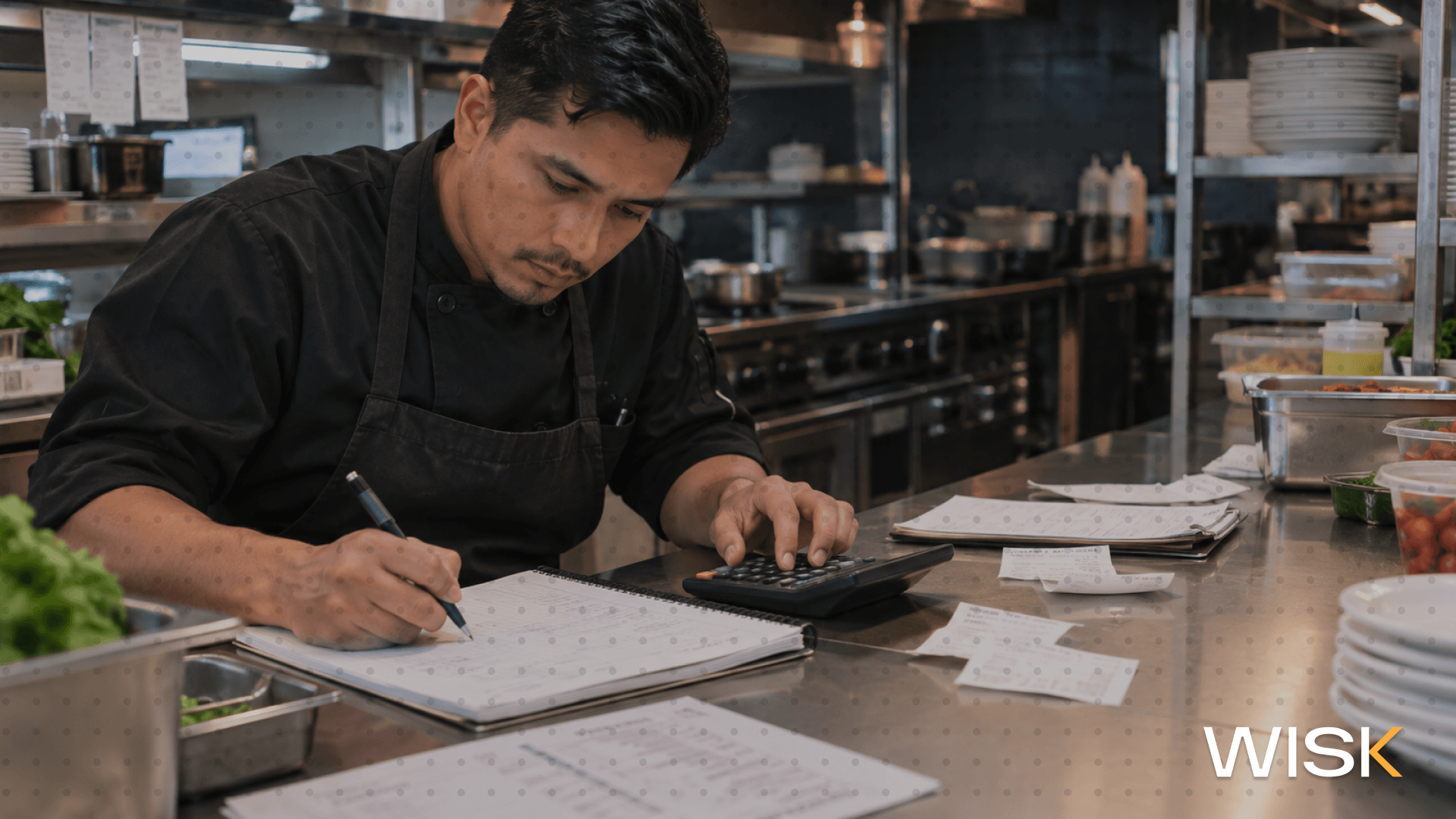
L'essentiel : Vous ne pouvez pas contrôler la politique douanière — elle a changé quatre fois au cours des six derniers mois — mais vous pouvez contrôler la rapidité avec laquelle vous identifiez l'impact sur vos factures. Les propriétaires de restaurants, contrôleurs de gestion et responsables F&B qui suivent les prix fournisseurs article par article, recalculent le coût des marchandises vendues (COGS) en fonction des factures actuelles et génèrent des rapports d'écart hebdomadaires détectent les répercussions tarifaires en quelques jours, plutôt qu'à la fin du mois, une fois qu'une période entière de marge a déjà été perdue. WISK est conçu pour cela : suivi des achats et des prix fournisseurs, calcul du coût des marchandises vendues en temps réel et rapports d'écart distinguant l'inflation des prix des pertes liées à l'utilisation.
De combien les droits de douane ont-ils réellement augmenté les coûts des produits alimentaires et des boissons en restauration ?
Plus des deux tiers des exploitants (68 %) ont déclaré que les droits de douane avaient fait grimper leurs coûts d'approvisionnement en 2025, et 87 % ont signalé de nouvelles hausses au cours du premier semestre 2026. Les coûts alimentaires moyens sont désormais supérieurs de plus de 35 % aux niveaux d'avant la pandémie.
L'ampleur du phénomène mérite que l'on s'y attarde. Selon le rapport 2026 sur l'état de l'industrie de la National Restaurant Association, 82 % des exploitants ont constaté une hausse de leurs coûts alimentaires moyens l'an dernier, et seuls 42 % ont réalisé des bénéfices. L'enquête semestrielle de Restaurant365 auprès de plus de 420 exploitants révèle que 78 % d'entre eux s'attendent à ce que les coûts continuent d'augmenter jusqu'à la fin de l'année.
Pour un contrôleur de gestion, cette combinaison résume tout le problème en deux chiffres : des coûts en hausse presque partout et une rentabilité qui concerne moins de la moitié des exploitants. Il ne reste plus aucune marge de manœuvre pour absorber les imprévus.
Quelles catégories sont les plus durement touchées actuellement ?
Le bœuf, le café, le vin importé, les produits de la mer, les produits agricoles mexicains et tout ce qui est conditionné en canette d'aluminium subissent la plus forte pression ; le café seul affiche une hausse d'environ 20 % par rapport aux prix de l'année dernière. Avant les exemptions de novembre 2025, la Tax Foundation estimait que 74 % des 221 milliards de dollars d'importations alimentaires américaines étaient soumis à des droits de douane, les spiritueux, liqueurs, café, poissons et bières figurant parmi les produits les plus touchés.
Voici l'impact concret sur un guide de commande :
- Le bœuf est pris en étau entre une offre nationale limitée et les perturbations commerciales ; par conséquent, un allègement des droits de douane ne se traduit pas automatiquement par une baisse des prix.
- Le vin importé a été le produit le plus durement touché. Les prix en rayon de certaines marques ont grimpé de 5 à 12 % en 2025, et les grossistes ne cachent pas que la pression sur les prix continue de s'accentuer à mesure que les stocks achetés avant l'instauration des droits de douane s'épuisent. Les producteurs de spiritueux disposaient d'une plus grande marge de manœuvre pour absorber ces coûts que les producteurs de vin, mais uniquement à condition de faire preuve de rigueur concernant la tarification de l'alcool et le coût de revient des cocktails.
- Les emballages et les boissons en conserve sont touchés indirectement. Les droits de douane sur l'acier et l'aluminium imposés au titre de la section 232 n'ont pas été supprimés comme les autres, ce qui maintient le coût élevé des canettes, du papier aluminium et des contenants à emporter.
- Les produits frais en provenance du Mexique et les agrumes subissent simultanément les effets des conditions météorologiques et des tensions commerciales.
Si vous gérez un établissement axé sur les boissons, c'est un poste de dépense à surveiller. Une augmentation de 10 % sur une carte des vins qui représente 30 % de vos achats n'est pas une erreur d'arrondi, surtout lorsque vous travaillez également sur des stratégies pour booster les ventes au bar.

Pourquoi les exploitants ne peuvent-ils plus simplement augmenter les prix de leur menu ?
Seuls 52 % des exploitants ont augmenté leurs prix au premier semestre 2026, contre 66 % en début d'année, soit le chiffre le plus bas depuis trois ans. Non pas parce que les coûts ont diminué, mais parce que les clients ont cessé de les absorber.
La tarification des menus a été le levier par défaut pendant quatre ans, mais elle a atteint ses limites :
- Environ 90 % des exploitants de restaurants avec service à table ont augmenté leurs prix l'an dernier. La marge de manœuvre existante a été largement épuisée.
- La fréquentation est en baisse. Augmenter les prix alors que le trafic diminue peut réduire le chiffre d'affaires au lieu de le protéger ; c'est pourquoi associer la maîtrise des coûts à des stratégies pour augmenter les ventes du restaurant est plus important que jamais.
- 55 % des exploitants ont déclaré qu'ils réduiraient leurs effectifs si la situation se dégradait davantage, ce qui montre où se portera la pression une fois que la hausse des prix ne sera plus efficace.
Les exploitants qui parviennent à maintenir leurs marges actuellement sont ceux qui misent sur la précision des coûts plutôt que sur les hausses de prix, souvent en s'appuyant sur une gamme de outils de gestion de restaurant essentiels qui renforcent le contrôle sans pénaliser le client. C'est un levier plus lent et moins gratifiant, mais c'est aussi celui qui ne vous coûte pas de clients.
Combien le répercutage des tarifs douaniers coûte-t-il réellement à votre exploitation ?
La plupart des exploitants ne peuvent pas répondre à cette question en chiffres précis, ce qui explique pourquoi le problème reste ignoré pendant des mois. Faites vos propres calculs ci-dessous ; il vous suffit de quatre chiffres issus de votre dernier récapitulatif d'achats.
Faites-le avant votre prochain entretien avec un fournisseur, pas après. Aborder une réunion avec un distributeur en sachant que votre exposition financière est de 61 000 $ par an change radicalement la donne par rapport au simple sentiment que les prix ont augmenté.
Que devriez-vous suivre plutôt que les gros titres sur les droits de douane ?
Suivez vos coûts de revient facturés chaque semaine, car les politiques évoluent plus vite que n'importe quel plan d'approvisionnement. Les tarifs IEEPA ont été annulés en février, une surtaxe mondiale temporaire les a remplacés en quelques jours, un tribunal de commerce l'a annulée en mai, elle a expiré légalement le 24 juillet, et un nouveau programme relevant de la section 301 couvrant environ 60 économies a pris le relais le jour même.
Cela représente quatre changements de régime en six mois, auxquels s'ajoute une taxe de 50 % sur les produits canadiens, notamment l'alcool et les produits laitiers, annoncée pour le 19 août. Aucun responsable F&B ne peut bâtir une stratégie d'achat sur de telles bases. Mais vos factures, elles, sont toujours à jour, ce qui en fait le seul signal fiable dont vous disposez.
Concrètement, voici ce que cela implique :
- Historique des prix par article et par fournisseur. Ne vous contentez pas d'un « les produits frais ont augmenté de 8 % » — vous devez savoir qu'un article précis provenant d'un fournisseur spécifique a augmenté de 14 % à une date donnée, et associer cela à des bonnes pratiques de gestion des stocks et des commandes pour que vous puissiez réellement agir en fonction de ce signal.
- Coût des marchandises vendues (COGS) recalculé en fonction des coûts actuels. Si vos coûts de recettes utilisent encore les prix du printemps, chaque marge que vous rapportez est fictive — c'est là que la gestion des recettes et le calcul des coûts en temps réel éliminent toute approximation de vos chiffres.
- Connaissance du pays d'origine pour vos 20 principaux postes de dépenses. Les droits de douane dépendent de l'origine, c'est donc ce qui vous indique si un changement est envisageable.
Comment les rapports d'écarts permettent-ils de détecter l'impact des tarifs douaniers avant qu'ils n'affectent votre compte de résultat ?
Un rapport d'écarts compare ce que vous auriez dû utiliser à ce que vous avez réellement consommé ; c'est le seul moyen de distinguer une hausse de prix d'un problème de dosage ou de portion. Si vous faites vos inventaires mensuellement, vous restez dans le flou pendant 30 jours et fusionnez deux problèmes distincts en un seul chiffre inexploitable.
Cette distinction est plus cruciale que jamais dans un contexte de tarifs douaniers instables. Lorsque le coût des matières premières augmente de deux points, il peut y avoir deux explications totalement différentes :
- Vos coûts ont augmenté. La solution est liée aux achats : renégocier, changer d'origine, ajuster la recette ou le prix.
- Votre consommation a augmenté. La solution est opérationnelle : reformer le personnel sur les dosages, réduire les portions, lutter contre le gaspillage ou les pertes.
Si vous traitez un problème de prix comme un problème de formation, vous frustrerez votre équipe tout en continuant à perdre de la marge. Si vous traitez un problème de consommation comme un problème de prix, vous augmenterez vos tarifs inutilement. Les rapports d'écarts de WISK séparent ces deux aspects, article par article, pour vous permettre d'agir sur le bon levier.
Quel est le plan d'action sur 30 jours pour un contrôleur de gestion ou un responsable F&B ?
Quatre étapes, dans cet ordre, sans qu'aucune ne nécessite de nouveau contrat fournisseur.
- Semaine 1 : établir la base de référence. Récupérez 90 jours de factures et classez vos 20 articles principaux par dépense totale. Cette liste représente généralement 60 à 70 % de vos achats.
- Semaine 2 : identifier les fluctuations. Relevez le coût unitaire de chacun de ces 20 articles sur la même période. Vous recherchez des changements soudains, pas des dérives progressives.
- Semaine 3 : passez chaque article en revue avec vos représentants. Demandez la raison de chaque augmentation spécifique. Renseignez-vous sur le coût des équivalents nationaux ou d'autres origines. Certaines hausses sont justifiées, d'autres sont négociables, et vous ne le saurez qu'en les pointant du doigt.
- Semaine 4 : ajustez vos prix chirurgicalement et faites vos inventaires chaque semaine. Ajustez uniquement les recettes qui ont réellement perdu en marge, puis passez à un inventaire hebdomadaire pour que le prochain changement apparaisse en quelques jours plutôt qu'à la fin du mois.
Comment WISK aide-t-il les restaurants à maintenir leurs marges face aux fluctuations des tarifs douaniers ?
WISK suit les prix des fournisseurs article par article, maintient le coût des marchandises vendues (COGS) à jour par rapport à vos factures réelles et génère des rapports d'écarts qui vous indiquent si vous avez un problème d'achat ou de gestion des stocks — particulièrement utile si vous faites face à des problèmes de gestion d'inventaire de bar en plus de la pression tarifaire. Les inventaires sont jusqu'à 80 % plus rapides, ce qui rend le suivi hebdomadaire réalisable par une seule personne. Vous pouvez également commencer avec un tableur gratuit d'inventaire de bar pour maîtriser votre processus. De plus, grâce à une base de données de plus de 200 000 articles, vous n'avez pas à reconstruire votre liste de produits à chaque fois qu'un distributeur change une référence. La politique tarifaire continuera d'évoluer. Votre visibilité sur vos coûts, elle, ne devrait pas changer.
Découvrez ce que WISK révèle lors de votre premier inventaire — réservez une démo.