What's inside?
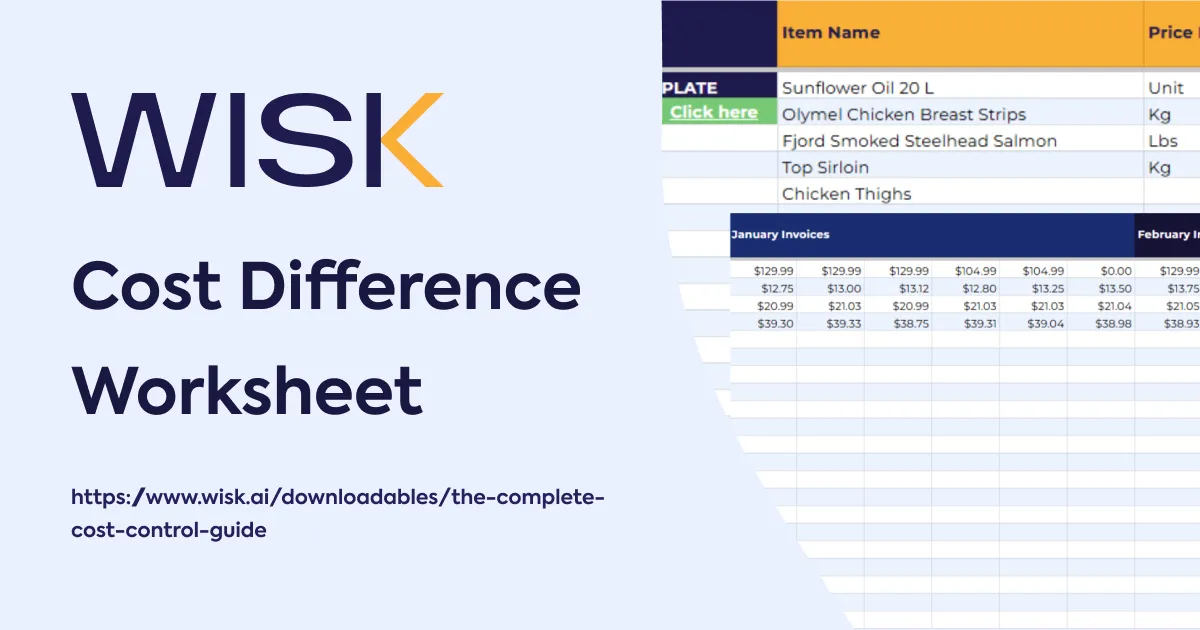
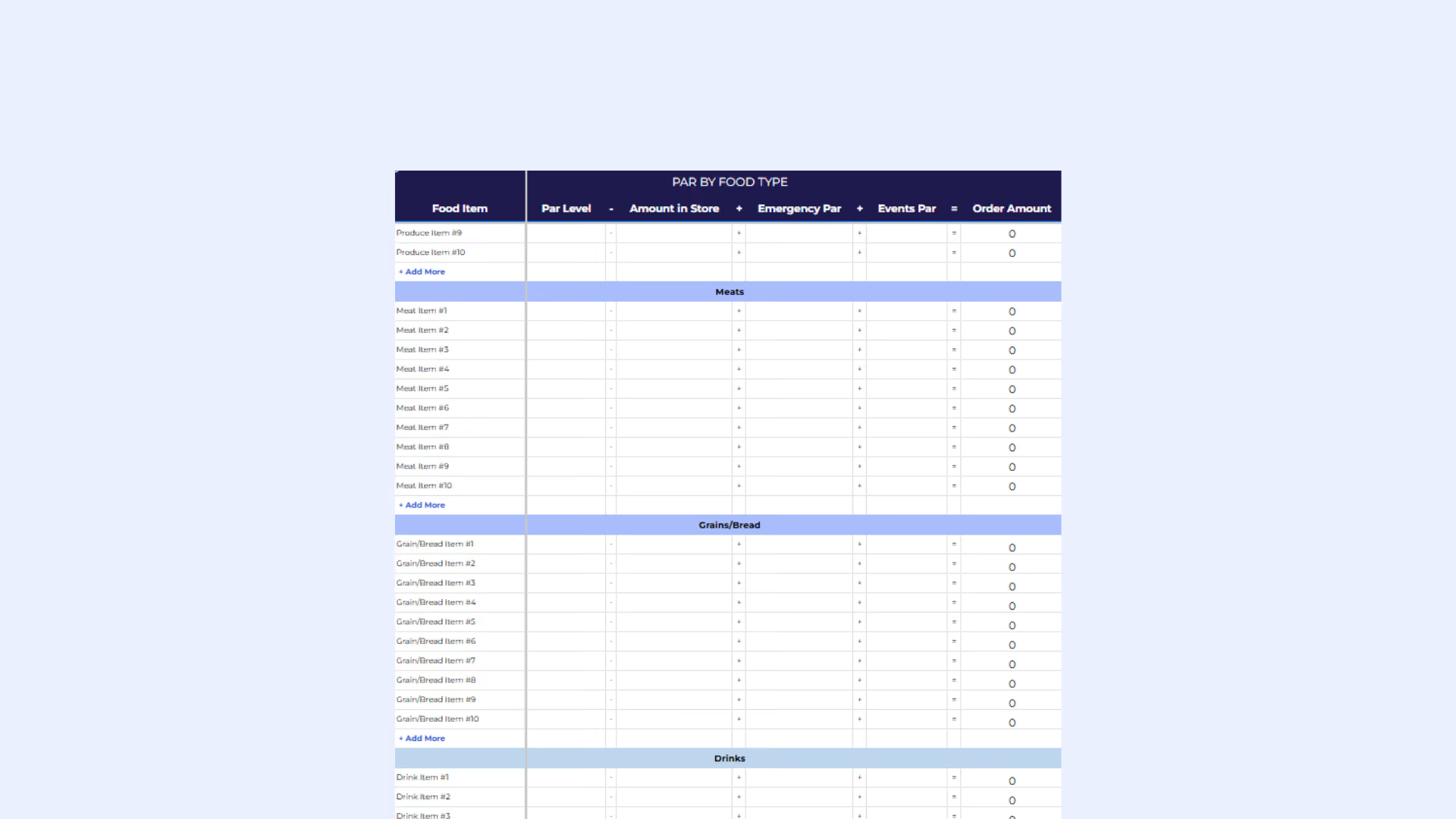
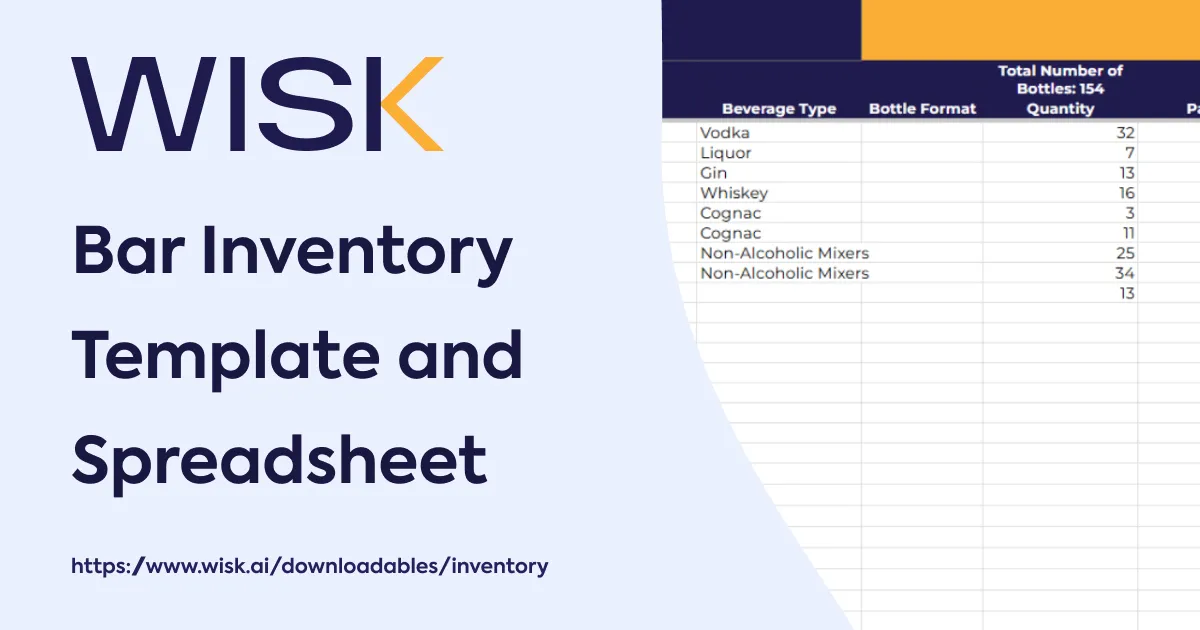
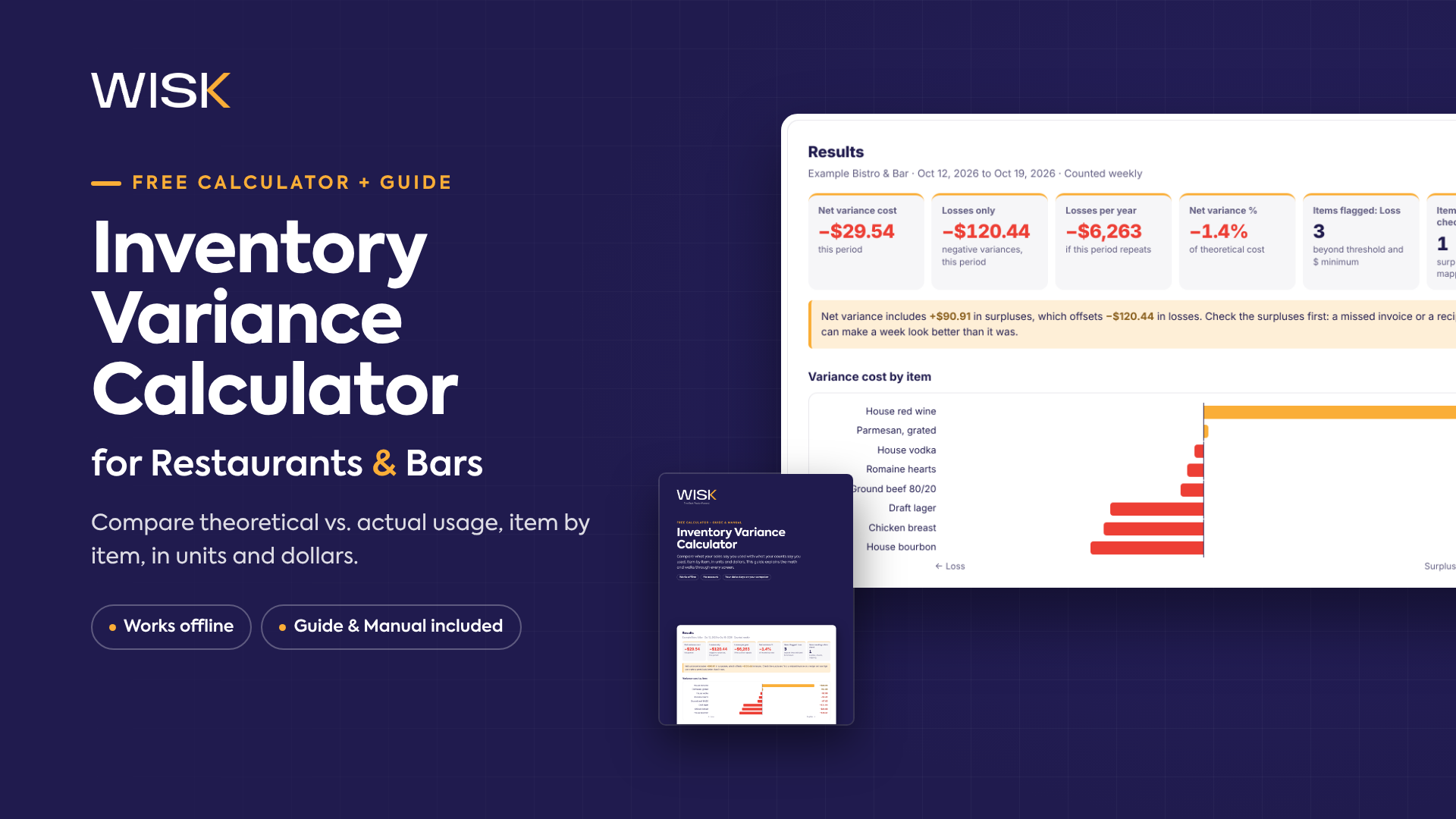
- The WISK Inventory Variance Calculator: one HTML file that opens in any browser and works offline, with no account needed. Enter your items, POS sales, recipes and counts, and it returns variance in units and dollars for every item. It also flags losses and surpluses, ranks your biggest losses, and projects the cost per year.
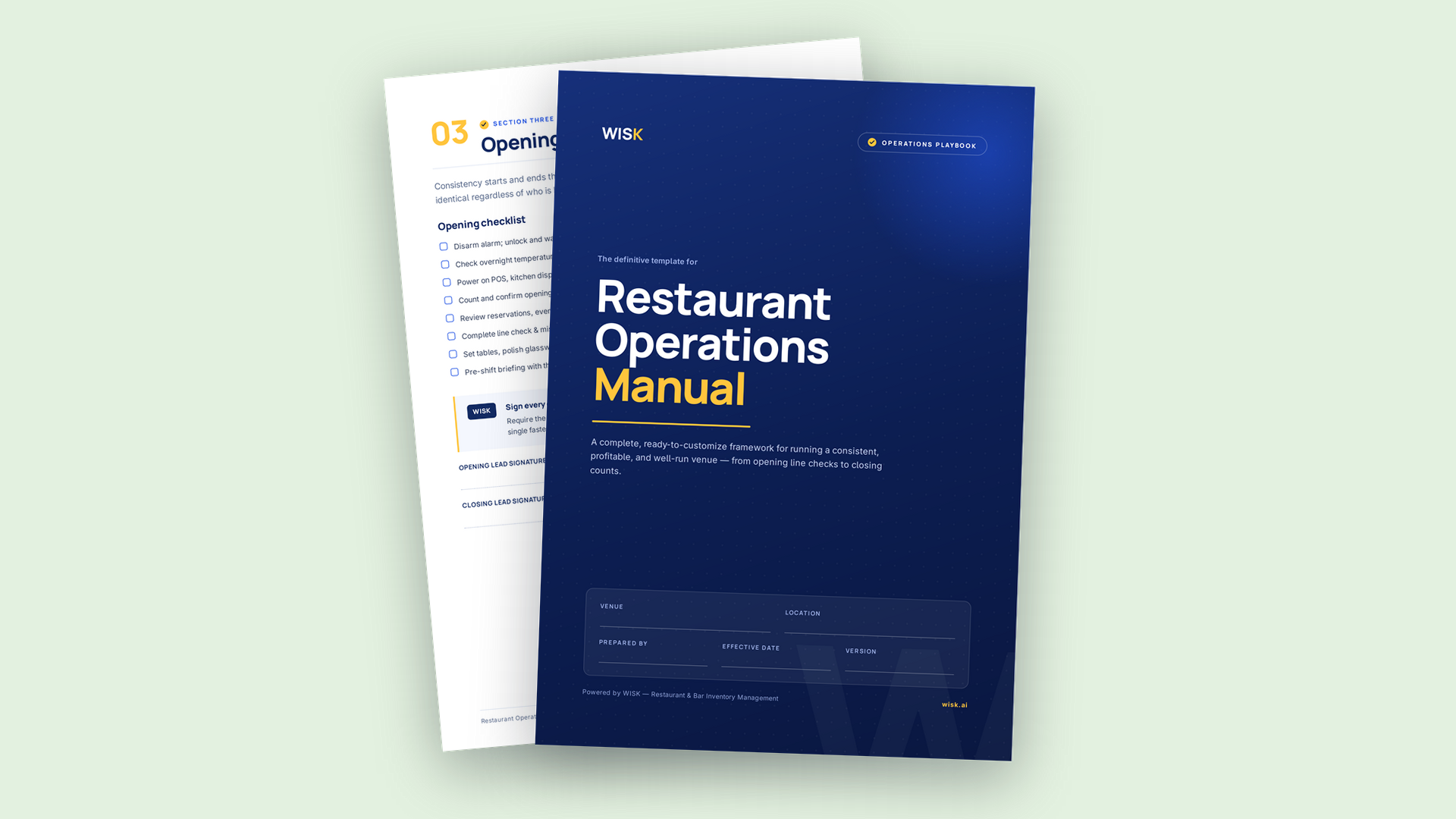
- The Guide & Manual, a 16-page PDF: how inventory variance works, a walkthrough of every screen, and what each status means. It also covers the usual causes behind a loss or a surplus, with a weekly variance review checklist.
Find What Your Sales Can't Explain With This Inventory Variance Calculator
Inventory variance is the difference between what your sales say you used and what your counts say you used. Theoretical usage comes from POS units sold multiplied by each recipe's quantity. Actual usage comes from your counts and invoices.
A food or pour cost percentage tells you the total moved, not which item moved it or why. Item-level variance does. In the calculator's example week, chicken breast shows 70 lb used against 62 lb sold: an 8 lb gap worth $34.00 that week and $1,768 a year at weekly counts.
How Do You Calculate Inventory Variance?
Inventory variance = theoretical usage − actual usage. Actual usage is beginning count + purchases − logged depletions − ending count, and theoretical usage is units sold × recipe quantity, converted to the unit you count in. A negative result is a loss; a positive result is a surplus, which usually points to a missed invoice, a recipe set too high, or a count error.
Multiply each item's variance by its cost per unit to get variance cost, then rank items by dollars, not percent. The WISK Inventory Variance Calculator does this for food and liquor in one place and flags anything beyond the threshold you set. Check net variance against losses too: in the same example week, an $88.95 wine surplus hides $120.44 in losses.
The goal isn't a perfect zero. It's knowing which five items cost you the most, and seeing them shrink at the next count.