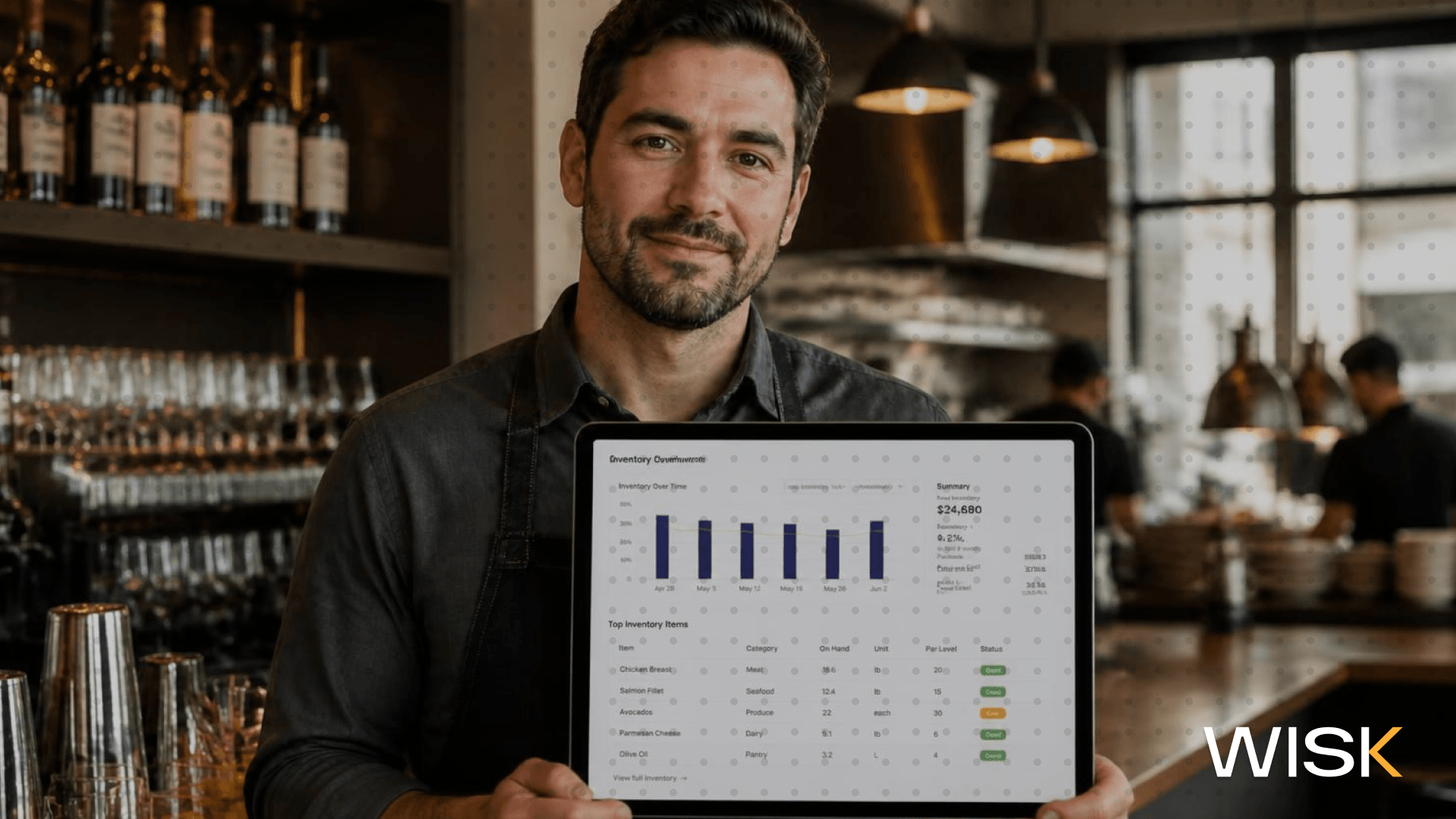
The Bottom Line: Effective hotel F&B demand forecasting requires transitioning from manual spreadsheets to automated, data-driven platforms like WISK.ai. By integrating real-time inventory tracking with historical sales analytics, hotels can reduce food waste by 15%, eliminate manual entry errors, and maintain a 99% accuracy rate in stock procurement.
Why Is Manual Hotel F&B Demand Forecasting No Longer Effective?
Manual forecasting relies on fragmented data and anecdotal evidence, leading to average variance rates of 20% or higher and significant capital tied up in "dead stock."
- Data Fragmentation: Traditional methods often involve pulling data from siloed sources—separate spreadsheets for kitchen inventory, bar stock, and POS reports—resulting in a delayed view of actual consumption.
- Human Error: Manual entry is prone to "fat-finger" errors and subjective estimates, which compound over time and distort the long-term historical sales analytics used for future purchasing.
- The Cost of Inaccuracy: Over-ordering leads to perishability losses, while under-ordering results in stockouts that directly impact guest satisfaction and high-margin revenue opportunities.
How Does Real-Time Inventory Tracking Improve Forecasting Accuracy?
Real-time inventory tracking provides an instantaneous view of "Inventory on Hand" (IOH), reducing the time required for physical counts by 80% through mobile-first scanning and Bluetooth scale integration.
- Database Depth: Utilizing a global database of over 200,000 items, WISK.ai allows F&B managers to scan any bottle or ingredient to instantly log weight and volume data without manual lookups.
- Consumption Velocity: Instead of waiting for a monthly audit, real-time tracking captures consumption velocity daily, allowing the demand forecasting engine to adjust procurement needs based on immediate trends.
- Theoretical vs. Actual: By comparing what should have been used (Theoretical) against what was actually used (Actual), hotels can pinpoint exactly when and where demand deviates from the forecast.
What Role Do Historical Sales Analytics Play in Future Inventory Planning?
Historical sales analytics identify seasonal trends, event-based spikes, and menu item popularity to automate PAR level adjustments with 95% predictive accuracy.
- Seasonality Mapping: Analytics engines process years of sales data to predict demand surges during holidays, local festivals, or peak tourist seasons, ensuring the hotel is never under-prepared.
- Menu Engineering: Data-backed insights reveal which items are "Stars" (high profit, high popularity) and which are "Dogs" (low profit, low popularity), allowing F&B directors to refine their forecasting for specific high-value ingredients.
- Lead Time Optimization: By analyzing historical consumption alongside supplier lead times, the system calculates the "Reorder Point" (ROP) for every item, ensuring orders are placed exactly when needed to minimize storage costs.
How Do Variance Reports Identify Hidden Losses in Hotel Bars and Restaurants?
Automated variance reports compare POS sales data against physical inventory usage to highlight "slippage," over-pouring, or unrecorded waste, typically reclaiming 3% to 5% of total F&B revenue.
- Theft and Pour Control: In high-volume hotel bars, variance reports identify specific shifts or stations where the "Theoretical" usage exceeds "Actual" counts, signaling a need for staff training or security intervention.
- Waste Documentation: Every ounce of wasted product is logged and categorized. This data is fed back into the demand forecasting model to adjust future orders for ingredients with high inherent waste factors.
- Real-Time Alerts: WISK.ai generates alerts when variance exceeds a predefined threshold (e.g., 2%), allowing managers to investigate discrepancies before they impact the monthly P&L statement.
How Does POS Integration Streamline the Demand Forecasting Process?
Direct integration with 50+ POS systems (including Micros, Simphony, and Toast) allows WISK.ai to automatically deduct ingredients from inventory the moment a sale is made, maintaining a "Perpetual Inventory" model.
- Granular Recipe Costing: Every menu item is broken down into its constituent ingredients (e.g., 1.5 oz of Gin, 0.5 oz of Vermouth). When a drink is sold, the POS tells WISK exactly how much of each bottle to "deplete," leveraging its recipe management and food costing software.
- Automated Depletion: This eliminates the need for daily manual counts. The demand forecasting engine uses this live depletion data to suggest purchase orders that align with current guest behavior.
Cross-Departmental Visibility: In a hotel environment, POS integration ensures that stock moved from the main cellar to the rooftop bar is tracked and accounted for in the overall demand model, and F&B leaders can complement this with essential tools every restaurant manager needs to streamline broader operations.

Can Demand Forecasting Reduce Food and Beverage Waste?
By utilizing predictive modeling, hotels can align their purchasing cycles with actual guest occupancy and banquet bookings, reducing perishable food waste by up to 20% annually.
- Banquet and Event Precision: Forecasting tools integrate with catering software to predict the exact ingredient requirements for large-scale events, preventing the over-ordering of high-cost proteins and produce.
- Dead Stock Identification: The system flags items that have not moved in 30, 60, or 90 days. This allows F&B directors to create "chef specials" or promotional cocktails to liquidate stock before it expires, supported by WISK's inventory management software for bars and restaurants.
- Sustainability Metrics: Reducing waste isn't just a financial win; it aligns with Corporate Social Responsibility (CSR) goals, as data-backed forecasting significantly lowers the carbon footprint associated with over-production.
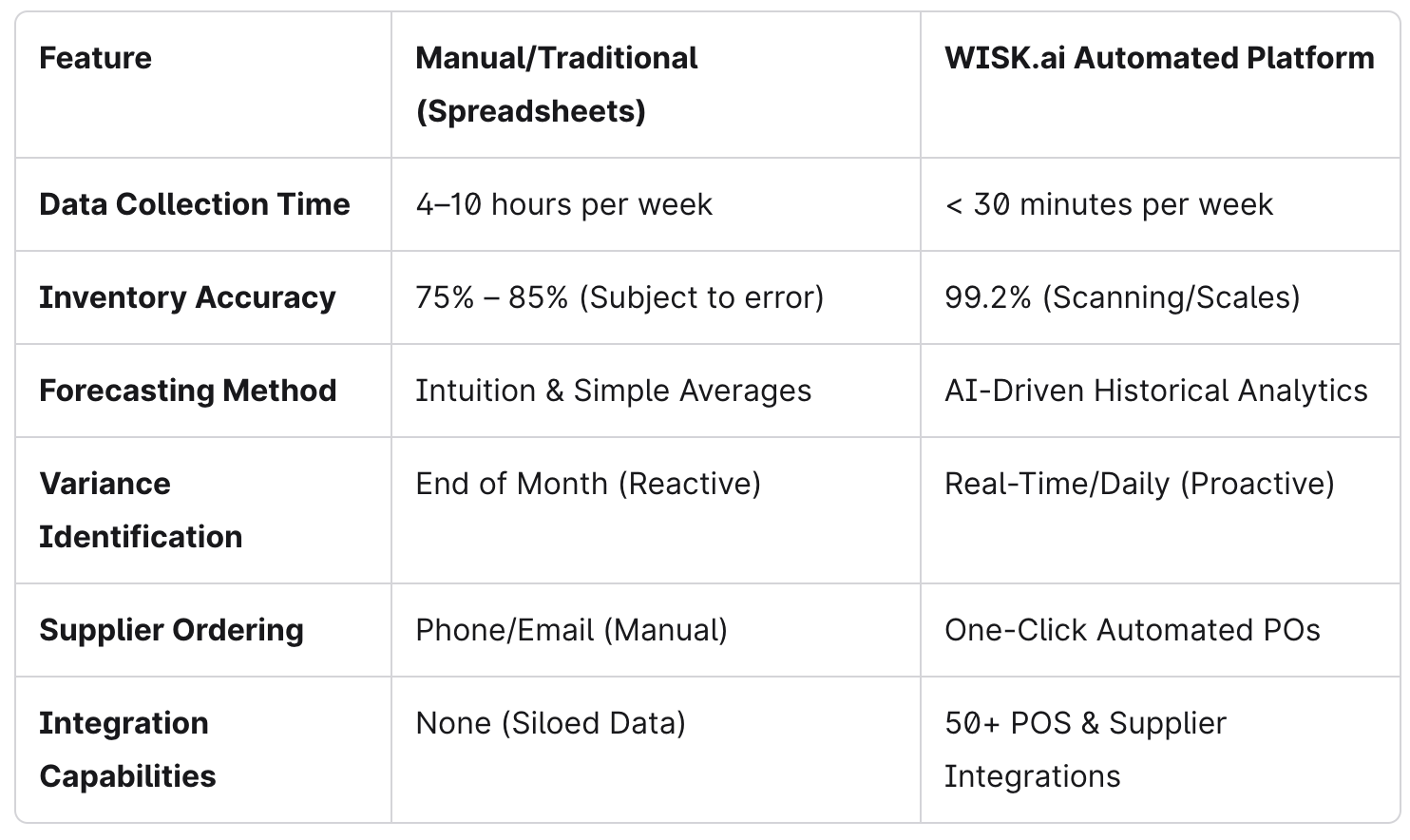
Comparison: Manual vs. WISK.ai Demand Forecasting
What is the Direct ROI of Implementing Automated Forecasting Software?
Hotels typically see a full Return on Investment (ROI) within 60 to 90 days, driven by a 2% to 4% reduction in COGS and significant labor savings in the procurement department, which aligns with WISK's pricing and subscription options designed to maximize value.
- Labor Reallocation: By automating the counting and ordering process, F&B managers can reallocate 15+ hours of administrative labor per week toward guest-facing operations and staff training.
- Lower Holding Costs: Accurate forecasting allows for "Just-In-Time" (JIT) inventory management, reducing the amount of capital tied up in warehouse or cellar storage by 10% to 15%.
- Increased Pour Margins: Through the elimination of over-pouring and unrecorded comps identified by variance reports, hotel bars often see an immediate 3% increase in their beverage profit margins.
How Do Automated Purchase Orders Prevent Stockouts?
Automated purchase orders are generated based on real-time PAR levels and forecasted demand, ensuring that high-velocity items are replenished before they reach a critical "zero-stock" state.
- Supplier Price Tracking: WISK.ai monitors invoice data to track price fluctuations from different suppliers. If a specific ingredient's cost spikes, the system alerts the manager to adjust the forecast or find an alternative source.
- One-Click Ordering: Once the demand forecast is approved, the system generates a purchase order that can be sent directly to the supplier via the platform, eliminating the risk of lost emails or miscommunicated quantities.
- Multi-Venue Management: For hotel groups, the system can manage internal transfers between venues (e.g., from the Lobby Lounge to the Pool Bar) as part of the replenishment cycle, optimizing existing stock before ordering new supplies.
How Does Demand Forecasting Support Revenue Management?
By predicting which high-margin items will be in demand during specific guest segments (e.g., business travelers vs. weekend leisure), F&B directors can optimize pricing and promotional strategies.
- Dynamic Menu Pricing: When historical data indicates a high demand for specific premium spirits during corporate buyouts, hotels can adjust their banquet packages to maximize revenue per guest.
- Upselling Opportunities: Forecasting reveals consumption patterns that can be used to train staff. For example, if data shows a high attachment rate between a specific wine and a steak dish, servers can be incentivized to push that pairing.
- Occupancy Alignment: The F&B demand model can be synced with the hotel’s Property Management System (PMS) to adjust kitchen prep levels based on the actual number of "heads in beds" for that evening.
Implementation Checklist for Hotel F&B Directors
- Audit Current Variance: Determine your current gap between Theoretical and Actual usage.
- Integrate POS: Ensure your inventory platform has a native API connection to your point-of-sale system.
- Digitize Recipes: Input full ingredient breakdowns for all menu items to enable accurate depletion tracking.
- Set Intelligent PARs: Use historical sales analytics to move away from static "minimum/maximum" levels to dynamic, demand-based PARs.
Review Daily Variance: Shift from monthly "surprises" to daily accountability sessions with bar and kitchen leads.