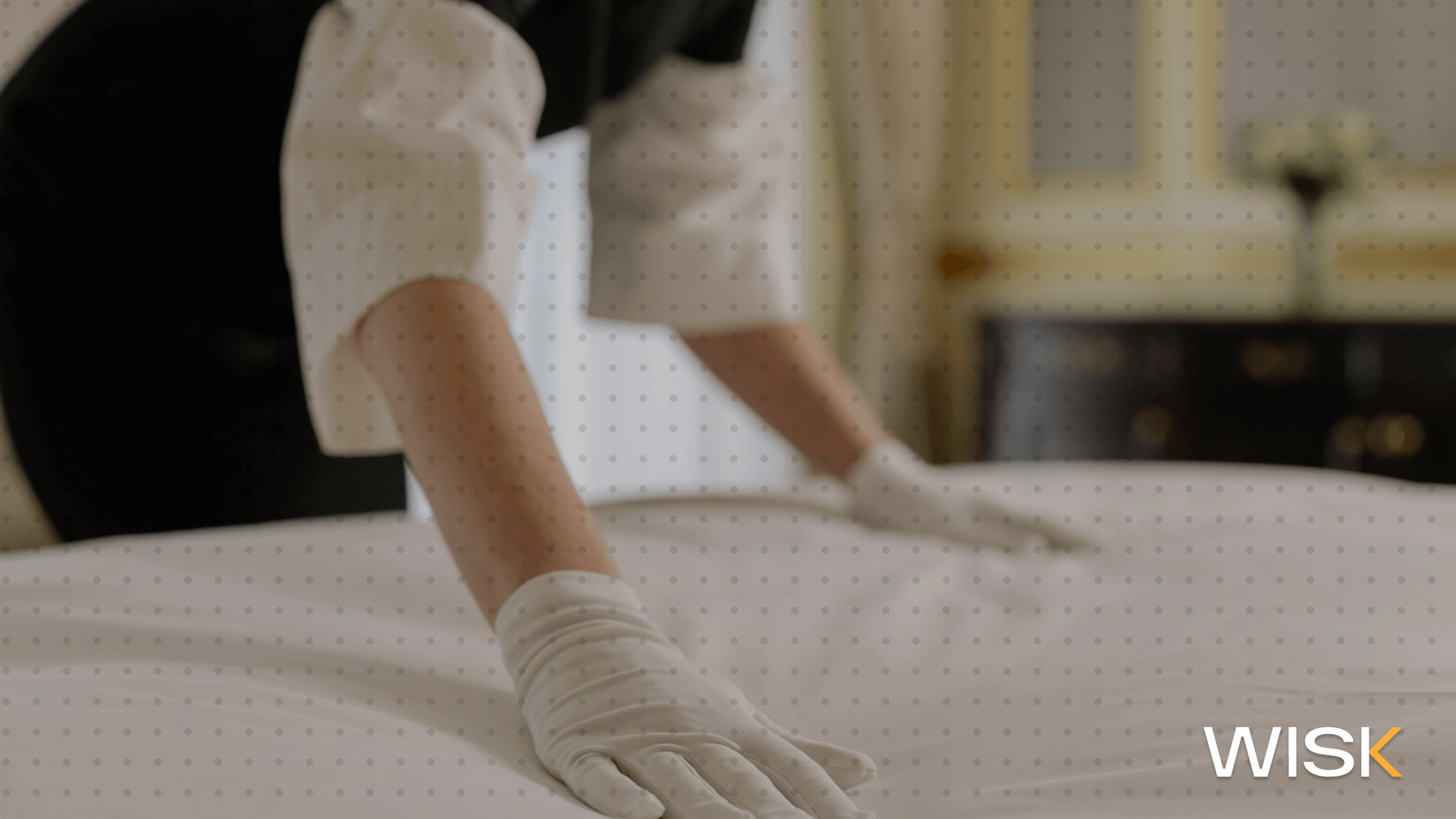
Pourquoi les draps d'hôtel sont-ils si agréables au toucher ? c'est le slogan que nous entendons toujours.
Vous souvenez-vous de la sensation ressentie lorsque vous dépliez le linge et de son confort ? Cette glisse nette et fraîche lorsque vous vous glissez entre les couches après un long vol. C'est un souvenir sensoriel qui vous reste gravé longtemps après avoir oublié la couleur des murs du hall d'entrée ou la marque du savon de la salle de bain.
Ce sentiment n'est pas accidentel. C'est un investissement calculé.
En tant qu'opérateurs hôteliers, nous consacrons énormément de budget et de ressources intellectuelles à la conception visuelle : éclairage exceptionnel, tapis coûteux et installations artistiques. Mais voici la dure vérité : vos invités peuvent passer dix minutes à admirer le décor, mais ils passeront huit à dix heures en contact physique direct avec vos draps.
Si le Wi-Fi est irrégulier, ils s'énervent. Si les draps semblent bon marché, égratignés ou sales, c'est qu'ils ne sont pas sûrs. Et ce sentiment détruit la confiance plus rapidement que n'importe quelle autre panne de service.
Les clients ne se souviennent pas des couleurs de peinture, ils se souviennent de la sensation du lit de l'hôtel
Nous vivons dans une économie d'Instagram, il est donc tentant de donner la priorité aux photos qui conviennent le mieux. Mais l'hospitalité est fondamentalement tactile.
Lorsqu'un invité entre dans une pièce, il scanne avec ses yeux, mais il juge avec ses mains. Ils passent une main sur la housse de couette. Ils vérifient l'épaisseur des serviettes. Il s'agit d'un contrôle qualité subconscient. Si les draps sont fins ou usés, le client remet immédiatement en question l'hygiène de l'ensemble de la propriété.
Les hôtels préfèrent des draps durables et confortables, tels que la percale. C'est pourquoi les clients remarquent souvent une nette différence par rapport à ce qu'ils utilisent à la maison. S'ils font des économies ici, ils pensent, où d'autre est-ce qu'ils lésinent ?
Les données le confirment. La propreté et le confort surpassent systématiquement les équipements et l'emplacement dans les commentaires des clients. Une étude sur la satisfaction des clients a révélé que la qualité du linge influait de manière significative sur la satisfaction globale, la propreté étant souvent citée comme le facteur le plus important pour déterminer la volonté d'un client de revenir (ResearchGate).
Vous pouvez avoir une vue imprenable sur les toits, mais si le draps de lit une pilule ou un piège à chaleur, cette vue n'améliorera pas l'expérience hôtelière globale du client et votre score TripAdvisor.
De nombreux clients essaient de recréer l'expérience de la literie de l'hôtel chez eux en recherchant des draps de qualité similaire.
La psychologie de la propreté et pourquoi le linge de maison a tant de poids
Les humains sont programmés pour juger de la propreté par le toucher. Une nappe fraîche est un signe d'hygiène. Une sensation rafraîchissante suggère un soin approprié et une attention aux détails.
C'est pourquoi les draps utilisés par les hôtels sont généralement blancs. Non pas parce que c'est tendance, mais parce que le blanc révèle des défauts. Cela témoigne de la confiance dans les normes de nettoyage.
Un client qui se glisse dans un lit d'hôtel pose inconsciemment une question.
Puis-je me fier à cet endroit ?
Le linge de maison répond à cette question plus rapidement que la décoration ne le pourrait jamais.
Étude publiée dans le Journal international de gestion hôtelière montre que la perception de la propreté a un impact direct sur les avis en ligne et la fidélité des clients. La literie et les serviettes sont citées bien plus souvent que le design ou les œuvres d'art du lobby.
Lorsque le linge de maison semble usé, les clients ne se plaignent pas du nombre de fils. Ils se plaignent du sommeil. Et les problèmes de sommeil se propagent rapidement dans les critiques.
Pourquoi les draps d'hôtel sont différents de ceux de la literie ordinaire
Alors, pourquoi les draps d'hôtel sont-ils si agréables par rapport à ce que les clients ont dans leur propre chambre ? Il est rare qu'il s'agisse d'atteindre le chiffre le plus élevé sur l'emballage.
Le secret réside dans le choix, la construction et l'entretien des tissus.
Les hôtels optent pour des matériaux et des procédés conçus pour une utilisation répétée, un confort constant et une durabilité. Cette combinaison crée la literie de qualité hôtelière que les clients adorent.
Voici les principaux facteurs en jeu.
1. Le choix du tissu compte plus que le nombre de fils
Le nombre de fils fait référence au nombre de fils tissés dans un pouce carré de tissu.
Le nombre de fils attire toute l'attention, mais il ne représente qu'une partie de l'histoire. Les hôtels utilisent généralement des draps dont le nombre de fils est compris entre 200 et 500 pour un confort et une respirabilité optimaux. Plus haut n'est pas toujours mieux.
De nombreux hôtels de luxe choisissent le coton à fibres longues, notamment le coton égyptien provenant de la vallée du Nil ou le coton Pima cultivé aux États-Unis. Le coton à fibres longues produit des fils plus lisses, moins d'extrémités de fibres et un toucher plus doux qui résiste au fil du temps.
C'est pourquoi les hôtels les plus luxueux se concentrent d'abord sur la qualité de la fibre, et non sur les chiffres de marketing.
2. Le tissage façonne la sensation des draps
Deux tissages dominent la literie des hôtels.
La percale de coton est tissée d'une seule couche et d'une partie inférieure. Il crée une finition fraîche et nette avec une sensation aérienne qui reste respirante. Les draps en percale sont populaires dans les climats chauds et auprès des personnes qui dorment bien car ils restent frais et ne retiennent pas la chaleur.
Le satin de coton utilise un tissage satiné qui crée une texture soyeuse et une sensation légèrement plus chaude. Les draps en satin offrent un toucher soyeux et une texture plus soyeuse et plus lisse, ce qui en fait un choix douillet pour les mois les plus froids et une option luxueuse pour les hôtels. Ils sont également connus pour leur texture soyeuse et leur aspect brillant. Les hôtels haut de gamme utilisent souvent du satin dans les climats plus frais ou des suites où les clients s'attendent à une atmosphère plus douce et plus luxueuse.
Aucune feuille n'est objectivement supérieure. Ce qui fonctionne le mieux dépend des attentes des clients et du climat, et dans les régions chaudes, les draps en lin sont souvent utiles pour leur sensation d'aération et d'évacuation de l'humidité.
3. Les draps plats et ajustés sont choisis pour leur précision
Les draps d'hôtel sont conçus pour s'adapter parfaitement.
Les draps plats ajoutent une couche respirante entre le dormeur et la housse de couette. Les draps-housses sont dimensionnés pour des matelas spécifiques, notamment des matelas queen size, king size et California King, afin qu'ils restent lisses toute la nuit.
Les draps froissés ou détachés brisent instantanément l'illusion de qualité.
4. Le blanchiment commercial change tout
Les hôtels utilisent des procédés de lavage industriels que les machines domestiques ne peuvent reproduire.
Les draps sont généralement lavés à l'eau chaude avec un détergent doux et non parfumé pour préserver l'intégrité et la douceur du tissu. Les détergents agressifs sont évités pour protéger les fibres et la peau sensible, et le fait d'éviter les produits chimiques agressifs et d'utiliser de l'eau chaude ou tiède pour le lavage peut aider à préserver la couleur et la texture des draps.
Une température élevée est parfois utilisée pour désinfecter, mais les hôtels optent souvent pour le séchage à l'air pour éviter les dommages causés par la chaleur élevée et préserver la durabilité des draps. Un rinçage adéquat garantit que les draps sont frais au toucher et non enduits.
Les hôtels évitent la surpopulation des machines à laver. Les draps conservent leur douceur lorsqu'ils ont de la place pour bouger. De nombreux hôtels sèchent à sec ou font sécher partiellement à l'air libre avant la finition afin de préserver les fibres. Les hôtels repassent généralement leurs draps légèrement pour leur redonner la finition impeccable et polie que les clients associent à une literie de qualité hôtelière.
Les draps de haute qualité peuvent durer de cinq à sept ans avec un entretien approprié. Les hôtels entretiennent leurs draps selon des processus de lavage rigoureux, en utilisant des machines à laver de qualité commerciale et des détergents de haute qualité pour les garder frais et accueillants.
Ce processus est l'une des raisons pour lesquelles les draps d'hôtel semblent plus souples au fil du temps au lieu de se décomposer.
Vous pouvez en savoir plus sur les normes de blanchiment des hôtels auprès de l'Association des services de location de textiles à l'adresse Association des services textiles.

Ce que les clients remarquent vraiment pendant une nuit de sommeil
Les clients ne savent peut-être pas ce qu'est le coton à fibres longues, mais ils savent comment ils ont dormi.
Une bonne nuit de sommeil dépend de plusieurs signaux sensoriels.
- Des draps qui restent frais et respirants
- Une housse de couette propre et lisse au toucher
- Literie qui n'accumule pas et ne retient pas la chaleur
- Une sensation de douceur sans finition grasse ou lourde
Tous ces facteurs contribuent à une bonne nuit de sommeil et à un confort optimal.
Lorsque ces éléments s'alignent, les clients dorment mieux. Quand ce n'est pas le cas, tout le reste passe au second plan.
Selon une enquête de la Sleep Foundation, les voyageurs qui déclarent avoir passé une bonne nuit de sommeil sont nettement plus susceptibles de laisser des commentaires positifs et de réserver des séjours répétés. La qualité de la literie a été citée comme l'un des principaux facteurs. Une bonne nuit de sommeil est l'une des principales raisons pour lesquelles les clients retournent à l'hôtel.
Cela correspond aux résultats de Fondation pour le sommeil et Statiste, qui montrent que la qualité du sommeil est une priorité croissante pour les clients de l'hôtel, tous segments confondus.
Pour reproduire l'expérience hôtelière chez vous, pensez à investir dans des draps de haute qualité en coton à fibres longues, comme le coton égyptien ou le coton Pima, pour améliorer le confort et vous garantir une bonne nuit de sommeil.
Le luxe est une question de cohérence, pas d'excès
De nombreux opérateurs pensent que la literie des hôtels de luxe implique des matériaux coûteux et des budgets de remplacement importants.
En réalité, le confort luxueux est synonyme de constance.
Des draps de haute qualité bien entretenus durent plus longtemps, se sentent mieux au fil du temps et offrent une expérience uniforme dans toutes les pièces. C'est cette cohérence que les clients remarquent.
La literie ordinaire est souvent agréable au début, mais elle se dégrade rapidement. Les draps de qualité hôtelière sont conçus pour résister aux lavages fréquents tout en conservant leur structure, leur douceur et une finition impeccable. Les hôtels préfèrent les draps durables et faciles à entretenir. C'est pourquoi ils choisissent souvent des tissus naturels plutôt que des tissus synthétiques.
Certains hôtels utilisent des mélanges de coton et de polyester pour une durabilité et une résistance aux rides accrues. Les hôtels remplacent régulièrement les draps pour offrir à leurs clients une expérience impeccable et luxueuse.
C'est pourquoi de nombreux hôtels de luxe investissent dans des matériaux qui sèchent rapidement et résistent à la dégradation des fibres. Ils optimisent en fonction de la réalité opérationnelle, et non de l'attrait des salles d'exposition.
Vous pouvez explorer les recherches sur la durabilité de la literie auprès de Cotton Incorporated, qui décrit l'impact de la construction du tissu sur la longévité dans le cadre d'un usage commercial.
Pourquoi vous ne pouvez pas le reproduire à la maison
Les clients achètent souvent exactement la même marque de draps que leur hôtel préféré, mais ils sont déçus lorsqu'ils ne ressentent pas la même chose après quelques lavages à la maison.
La différence réside dans le processus. Un lavage commercial intense à l'eau chaude et à des détergents non parfumés permet de garder les draps exceptionnellement doux et propres.
À la maison, nous avons tendance à utiliser des détergents agressifs, des assouplissants textiles (qui recouvrent les fibres et réduisent la capacité d'absorption), et nous surchargeons le sèche-linge. Les hôtels évitent d'encombrer les machines à laver afin de garantir un nettoyage en profondeur et en douceur de leurs draps.
Voici la formule industrielle pour créer cette atmosphère de qualité hôtelière :
- Chaleur élevée : les hôtels se lavent à une température qui terrifierait les blanchisseurs domestiques. Cela tue les bactéries et détend les fibres de coton.
- Le lavage régulier des draps à l'aide d'un cycle doux et d'un détergent doux permet de préserver leur qualité et leur douceur.
- Sans adoucissants : Les blanchisseries commerciales utilisent rarement des adoucissants à base de silicone. Ils s'appuient sur l'action mécanique et sur des détergents au pH équilibré pour garder les draps frais.
- Repassage : de grands fers rotatifs (mangles) pressent les draps lorsqu'ils sont encore humides. Cela aplatit complètement les fibres, créant ainsi une sensation de douceur et de fraîcheur impossible à obtenir avec un fer à repasser.
Les hôtels investissent dans des tissus de literie relativement faciles à nettoyer et qui sèchent rapidement car le temps, c'est de l'argent. Un drap plat qui met trop de temps à sécher obstrue les tâches ménagères.
La douleur opérationnelle cachée derrière le linge de maison
C'est là que les choses deviennent inconfortables pour les opérateurs.
Le linge de maison touche plusieurs départements. Entretien ménager. Buanderie. Achats. Rangement. Planification des remplacements.
Si un client trouve un poil perdu sur une housse de couette ou une teinte jaune sur une taie d'oreiller, l'impact psychologique est immédiat. Ils se sentent « sales ». Ce sentiment l'emporte sur la beauté architecturale de votre hall d'entrée.
Le niveau de confort des draps d'hôtel est connu pour offrir une expérience de sommeil luxueuse, semblable à celle d'un hôtel, tandis que les draps ordinaires peuvent offrir un confort de base mais ne pas avoir la sensation de luxe. Lorsque vous n'atteignez pas cette cible, vous ne vendez pas simplement une mauvaise nuit de sommeil ; vous vendez une mauvaise réputation.
Une récente enquête menée auprès de l'industrie a révélé que plus de 80 % des clients ne retourneraient pas dans un hôtel si la chambre était sale ou si le linge de maison était taché (Rapport de propreté d'ADA Cosmetics).
Lorsque les programmes de linge ne sont pas suivis de près, les coûts s'envolent discrètement.
Les problèmes les plus courants sont les suivants :
- Commander des ensembles de draps en trop parce que l'inventaire n'est pas clair
- Remplacement trop précoce des draps de haute qualité en raison d'un entretien inapproprié
- Perte de linge de maison entre les cycles de lessive
- Pratiques de blanchiment incohérentes entre les équipes
- Des coûts de remplacement en hausse qui semblent inévitables
Le linge de maison n'est pas qu'une question d'expérience client. Ils sont opérationnels.
Et ils sont directement liés aux mêmes angles morts d'inventaire que ceux qui se produisent bars, des cuisines et des minibars.
La place de WISK dans la conversation sur le linge
À première vue, le linge de maison et inventaire du bar Cela peut sembler très différent.
Ils ne le sont pas.
Vous connaissez peut-être WISK en tant que leader du secteur en matière d'inventaire de produits alimentaires et alimentaires, mais nous avons évolué. Nous avons réalisé que la même précision était nécessaire pour 1 once de whisky est nécessaire pour gérer les milliers de SKU de vos services d'entretien et de maintenance.
WISK existe pour aider les opérateurs hôteliers à voir ce qui se passe réellement au sein de leurs opérations. Les pertes, la surutilisation, les erreurs de comptage et les processus inefficaces se manifestent tous lorsque vous suivre correctement l'inventaire.
La même discipline qui protège moins de marges bénéficiaires pendant les saisons de pointe, s'applique aux programmes de linge de maison.
Lorsque les opérateurs utilisent les données pour comprendre les modèles d'utilisation, les cycles de remplacement et les diminutions, ils arrêtent de deviner. Ils prennent des décisions d'achat plus intelligentes. Ils protègent la qualité sans trop dépenser.
WISK aide les hôtels multipoints de vente et restaurants augmenter les ventes des restaurants:
- Suivez l'inventaire dans tous les départements
- Réduisez le gaspillage et les réachats inutiles
- Créez la responsabilité sans frictions
- Maintenez la cohérence même pendant les hautes saisons
Cette clarté opérationnelle permet d'investir plus facilement dans les bons draps, les bons processus de soins et la bonne expérience client.
Vous ne devriez pas avoir à utiliser trois systèmes différents pour gérer votre hôtel. Qu'il s'agisse de la vodka du bar du hall ou du set de draps de la suite présidentielle, WISK vous offre une vue unique et unifiée de vos actifs.
Arrêtez de deviner ce qu'il y a dans vos placards de rangement. Protégez votre linge de maison, rationalisez vos commandes et gérez votre propriété comme un pro.
Le linge de maison est silencieux, mais il est puissant
La décoration fait la première impression. Le linge de maison est durable.
Les invités ne peuvent jamais complimenter directement votre drap plat ou vos draps-housses. Ils parleront de la qualité de leur sommeil. Ils parleront de la propreté de la pièce. Ils discuteront de leur intention de revenir.
Ces conversations commencent dans le lit.
Si vous souhaitez protéger la satisfaction, les avis et la fidélité à long terme de vos clients, commencez là où ils passent le plus de temps.
Et si vous souhaitez protéger vos marges tout en le faisant, vous avez besoin d'une visibilité sur les systèmes en coulisse.
C'est là que WISK contribue à transformer le confort en cohérence et la cohérence en profit.
Si vous êtes prêt à arrêter de deviner et à commencer à gérer les opérations de votre hôtel et de votre restaurant avec clarté, C'est exactement pour cela que WISK est conçu..