En resumen: Las variantes de Budweiser dominan el escaneo de códigos de barras con 3,133 artículos activos, seguidas por Corona con 2,361 y Heineken con 1,952. La base de datos de WISK rastrea más de 16,000 artículos de cerveza solo en estas 10 marcas principales, brindando a los establecimientos visibilidad en tiempo real de su inventario de mayor rotación.
¿Qué revelan realmente los datos de escaneo de cerveza de mediados de 2026?
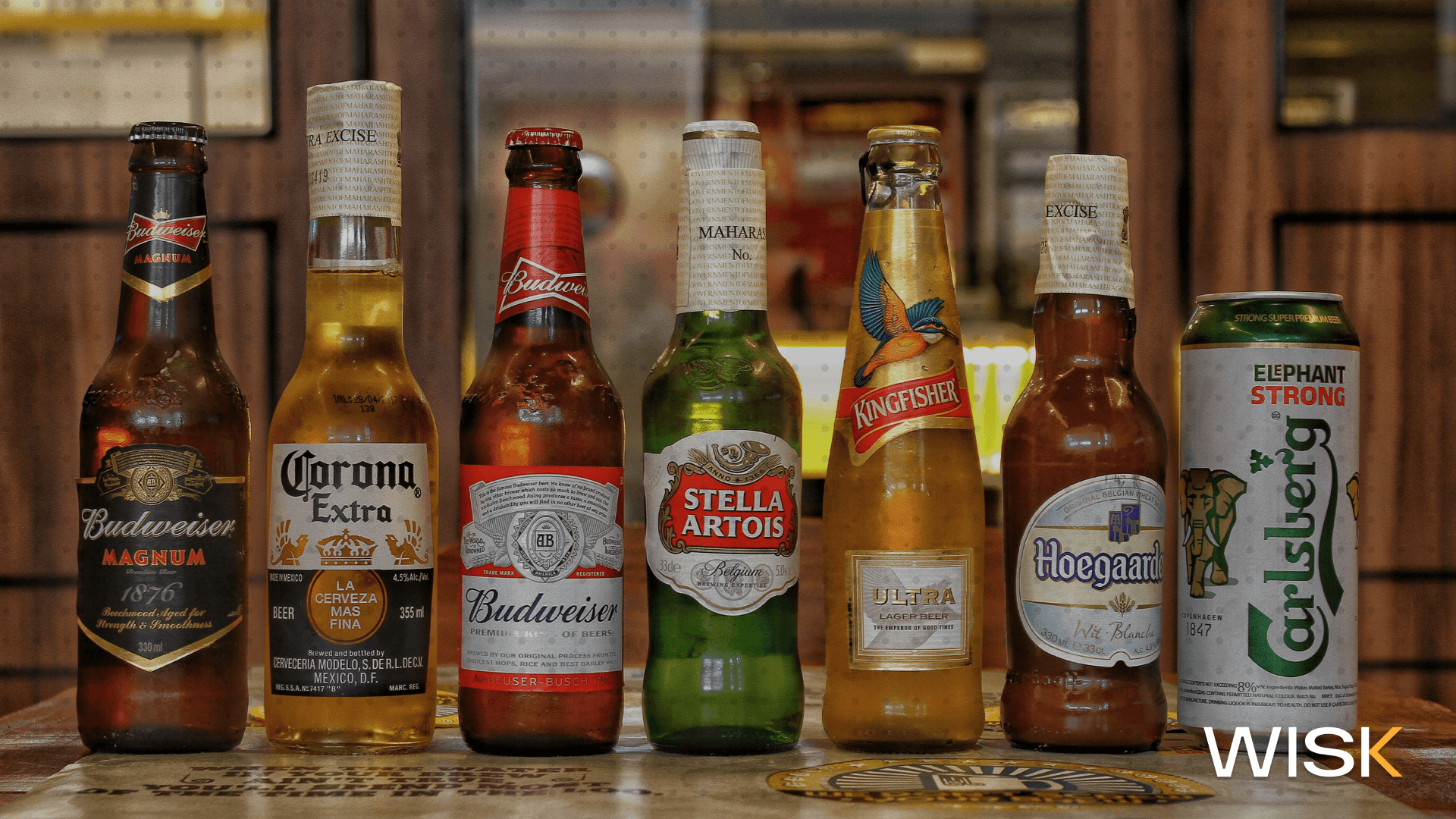
Las tres principales marcas de cerveza (Bud en todas sus variantes, Corona y Heineken) suman 7,446 artículos rastreados por código de barras, lo que representa el 45% de todo el inventario de cerveza escaneado en WISKen su red de hostelería.
Estas cifras cuentan una historia clara sobre lo que realmente se consume en bares y restaurantes. Las variantes combinadas de Budweiser (3,133 artículos) superan significativamente a todos sus competidores, pero lo que resulta igualmente revelador es la distribución del mercado. Las posiciones de la 4 a la 10 cuentan con entre 1,098 y 1,668 artículos cada una, lo que demuestra que ninguna marca domina el sector por completo.
- Dominio nacional: Las marcas estadounidenses (Bud, Bud Light, Coors, Miller, Michelob, Budweiser) ocupan 6 de los 10 primeros puestos
- Fortaleza de las importaciones: Las cervezas mexicanas y europeas (Corona, Heineken, Modelo, Stella Artois) mantienen una fuerte presencia a pesar de sus precios más elevados
- Concentración de volumen: Las 5 marcas principales representan 10,696 artículos, aproximadamente el 65% del inventario rastreado
¿Por qué algunas marcas de cerveza se escanean más que otras?
Los bares y restaurantes escanean las variantes de Budweiser 2,85 veces más frecuentemente que las de Stella Artois porque las cervezas lager nacionales ofrecen una mayor velocidad de rotación, un atractivo más amplio para el cliente y una disponibilidad más constante por parte de los distribuidores.
La frecuencia de escaneo se correlaciona directamente con el volumen de ventas. Cuando un camarero escanea un código de barras durante el inventario, está documentando una transacción que ya ha ocurrido o que está a punto de ocurrir. Las marcas con alto nivel de escaneo se sitúan en la intersección de tres factores: accesibilidad de precio, reconocimiento de marca y fiabilidad operativa.
- Accesibilidad de precio: Las cajas de productos nacionales suelen ser entre un 15 y un 30 % más baratas que las de importación, lo que permite a los locales alcanzar sus objetivos de margen sin alejar a los clientes que cuidan su presupuesto.
- Reconocimiento de marca: Corona y Heineken se benefician de décadas de marketing que las convierte en opciones "seguras" para bases de clientes diversas.
- Fiabilidad operativa: Las marcas con alto nivel de escaneo suelen tener mejores relaciones con los distribuidores, lo que significa menos roturas de stock y menos sustituciones de emergencia.
Visualización de datos interactiva: Distribución de escaneo de cerveza a mediados de 2026

¿Cómo cambia el escaneo de códigos de barras la gestión del inventario de cerveza?
El inventario manual de cerveza lleva de 4 a 6 horas por semana en un bar estándar, mientras que el escaneo de códigos de barras reduce este tiempo a entre 45 y 60 minutos —una reducción del 80 %—, mejorando la precisión del 75 % al 98 %.
El cambio del conteo con portapapeles al escaneo digital no es solo cuestión de velocidad, y herramientas como una plantilla de hoja de cálculo estructurada para el inventario de bar puede ayudar a los establecimientos a pasar de procesos manuales a automatizados. Cuando su personal escanea un código de barras, crea un punto de datos con marca de tiempo que alimenta las tasas de consumo, los informes de varianza y los algoritmos de reabastecimiento. Esto es importante porque la cerveza representa entre el 20% y el 25% de los ingresos en la mayoría de los restaurantes informales y, sin embargo, es históricamente la categoría con las mayores tasas de pérdida.
- Visibilidad en tiempo real: Sepa exactamente qué se vendió anoche, no lo que la hoja de cálculo dice que debería haberse vendido
- Detección de varianza: Detecte ese 3% del inventario que desaparece entre la entrega y la venta
- Responsabilidad del personal: Los registros de escaneo crean pistas de auditoría que reducen las pérdidas "misteriosas"
¿Cuál es la diferencia entre el conteo manual y el escaneo de códigos de barras de WISK?
El sistema de escaneo de códigos de barras de WISK procesa el inventario 5 veces más rápido que el conteo manual, manteniendo una precisión del 98%, en comparación con el 75% de precisión típico de los métodos basados en portapapeles.
A continuación, se muestra una tabla comparativa que ilustra cómo se compara el enfoque tradicional con el sistema automatizado de WISK, y dónde complementos como una báscula de inventario de licores integrada con su aplicación de bar pueden mejorar aún más la velocidad y la precisión:
La tabla anterior ilustra por qué los establecimientos que utilizan WISK reportan una reducción del 15-20% en los costos de bebidas durante el primer trimestre. Cuando puede ver exactamente qué marcas se están moviendo, y a qué velocidad, deja de pedir en exceso los productos de baja rotación y evita quedarse sin sus productos más vendidos.
¿Qué categorías de cerveza muestran el mayor crecimiento en 2026?
Las importaciones mexicanas (Corona, Modelo) representan en conjunto 3,521 artículos escaneados, lo que demuestra una demanda sostenida que supera a varias marcas nacionales tradicionales a pesar de sus precios premium.
Analizar los datos a través de una lente de categoría revela cambios en las preferencias de los consumidores. Las cervezas mexicanas representan ahora el 21% de los 10 artículos más escaneados, frente al 18% en 2024, y los operadores que utilizan un software de gestión de inventario para bares y restaurantes pueden ver rápidamente cómo estos cambios se reflejan en su propia combinación de ventas. No se trata solo de sabor, sino de posicionamiento. Estas marcas han logrado posicionarse con éxito como opciones "premium casual" que justifican precios más altos sin alejar a los consumidores habituales.
- El ascenso de Modelo: Con 1,160 artículos, Modelo ha reducido la brecha con las marcas nacionales tradicionales
- La consistencia de Stella: A pesar de ser la más pequeña entre las 10 principales, Stella Artois mantiene su posición gracias a sólidas asociaciones en el punto de venta
- La diversificación de Michelob: Con 1,465 artículos, la cartera centrada en Ultra de Michelob demuestra que el posicionamiento enfocado en la salud funciona
¿Cómo pueden los establecimientos utilizar estos datos para optimizar sus programas de cerveza?
Los establecimientos que utilizan el análisis de marca de WISK reducen el stock muerto en un 30% y aumentan la rotación de inventario en un 22% al alinear sus compras con los patrones de consumo reales verificados mediante escaneos.
Aquí es donde los datos se vuelven prácticos. Si gestionas un bar o restaurante, ahora sabes exactamente qué marcas están siguiendo más de cerca tus competidores, y comparar las mejores aplicaciones de inventario para bares disponibles en 2024 le ayuda a decidir cómo poner en práctica esos conocimientos. No se trata de copiar, sino de comparar. Si Corona registra 2361 artículos en toda la red y usted solo tiene dos SKU, es posible que esté perdiendo dinero. Por el contrario, si tiene 15 cervezas artesanales que nunca se escanean, es capital que no está generando beneficios.
- Optimización de niveles de stock: Utilice la velocidad de escaneo para establecer puntos de pedido dinámicos en lugar de pedidos semanales estáticos, basándose en un proceso estructurado de control de inventario de bar que mantiene los niveles de existencias ajustados
- Ingeniería de menú: Destaque las marcas con mayor rotación en posiciones de alto margen (botellas frente a grifos, bebidas premium)
- Poder de negociación: Acuda a las reuniones con los distribuidores con datos de consumo que respalden su volumen
¿Qué nos dicen los datos de mediados de 2026 sobre las preferencias de los consumidores?
El dominio de las cervezas lager ligeras (Bud Light, Coors, Miller y Michelob suman 6286 artículos en total) confirma que la accesibilidad y la facilidad de consumo siguen siendo los principales motores de las ventas de cerveza en los establecimientos.
A pesar del auge de la cerveza artesanal en la última década, los datos muestran que los consumidores estadounidenses siguen prefiriendo opciones familiares y fáciles de beber cuando salen. Esto no significa que la cerveza artesanal haya fracasado, sino que el posicionamiento es clave. Un bar con 20 grifos necesita 5 o 6 productos de venta segura para cubrir los gastos mientras las opciones experimentales encuentran a su público.
- La facilidad de consumo gana: Las opciones con menor graduación alcohólica predominan porque permiten estancias más largas y varias rondas
- Confianza en la marca: Los clientes piden Corona o Heineken cuando quieren "algo bueno" sin tener que estudiar la carta
- Variaciones regionalesAunque estos son datos nacionales, WISK.ai permite a los usuarios profundizar para ver cómo divergen las preferencias locales
¿Cómo ayuda WISK a los bares y restaurantes a gestionar mejor su inventario de cerveza?
La plataforma de análisis y escaneo de códigos de barras de WISK reduce el tiempo de inventario en un 80 %, mejora la precisión al 98 % y ofrece visibilidad en tiempo real sobre qué marcas (como las 10 principales que aparecen aquí) generan ingresos realmente.
No has leído hasta aquí para saber que Budweiser vende mucha cerveza. Lo has hecho porque buscas una gestión más eficiente. WISK elimina las conjeturas de la gestión de bebidas al conectar cada escaneo con información práctica. Tanto si gestionas 50 como 500 SKU, el sistema se adapta a tus necesidades.
- Configuración instantánea: Importa tu lista de productos actual y empieza a escanear en menos de 24 horas con un software especializado en gestión de inventario de bares diseñado para programas de gran volumen
- Enfoque móvil: Tu personal utiliza dispositivos que ya conocen: smartphones y tablets
- Listo para integraciones: Se conecta con Square, Toast, Clover y más de 50 sistemas TPV, complementando otras herramientas esenciales que todo gerente de restaurante necesita para dirigir una operación moderna
¿Listo para ver cómo es realmente tu top 10? Comienza tu demostración de WISK hoy y pon en marcha esta misma semana en tu local el seguimiento por código de barras que generó estos datos.