L'essentiel : La standardisation des opérations quotidiennes de votre bar prévient les pertes de revenus, assure des expériences client cohérentes et réduit considérablement le temps de préparation. En numérisant les 10 principales procédures d'ouverture et de fermeture avec WISK.ai, les directeurs des boissons et les directeurs généraux peuvent automatiser le suivi des stocks, identifier instantanément les pertes et remplacer les systèmes papier sujets aux erreurs par une supervision opérationnelle en temps réel.
Pourquoi est-il essentiel de standardiser les procédures d'ouverture et de fermeture de bar pour la rentabilité ?
Les procédures de bar standardisées réduisent le gaspillage opérationnel jusqu'à 15 % et diminuent le temps administratif des managers de 80 % lorsqu'elles sont intégrées à des outils de suivi automatisés.
Soyons réalistes un instant. Lorsque votre équipe se fie à la mémoire, aux habitudes ou à des tableaux blancs désordonnés pour ouvrir et fermer le bar, des détails cruciaux passent inaperçus. Des ingrédients de préparation manquants, des consommations offertes non enregistrées et des stocks « fantômes » commencent à grignoter discrètement vos marges jour après jour. Lorsque vous, en tant que directeur des boissons ou directeur général, standardisez ces étapes précises, vous ne faites pas qu'organiser votre bar, vous protégez activement vos résultats. J'ai vu de mes propres yeux comment le passage de routines manuelles chaotiques à des procédures strictes et numérisées transforme un service stressant en une machine fluide et très rentable. Décomposons les dix étapes non négociables que vous devez mettre en œuvre dès aujourd'hui.
Comment vérifier les niveaux de stock d'alcool avant le début du service ?
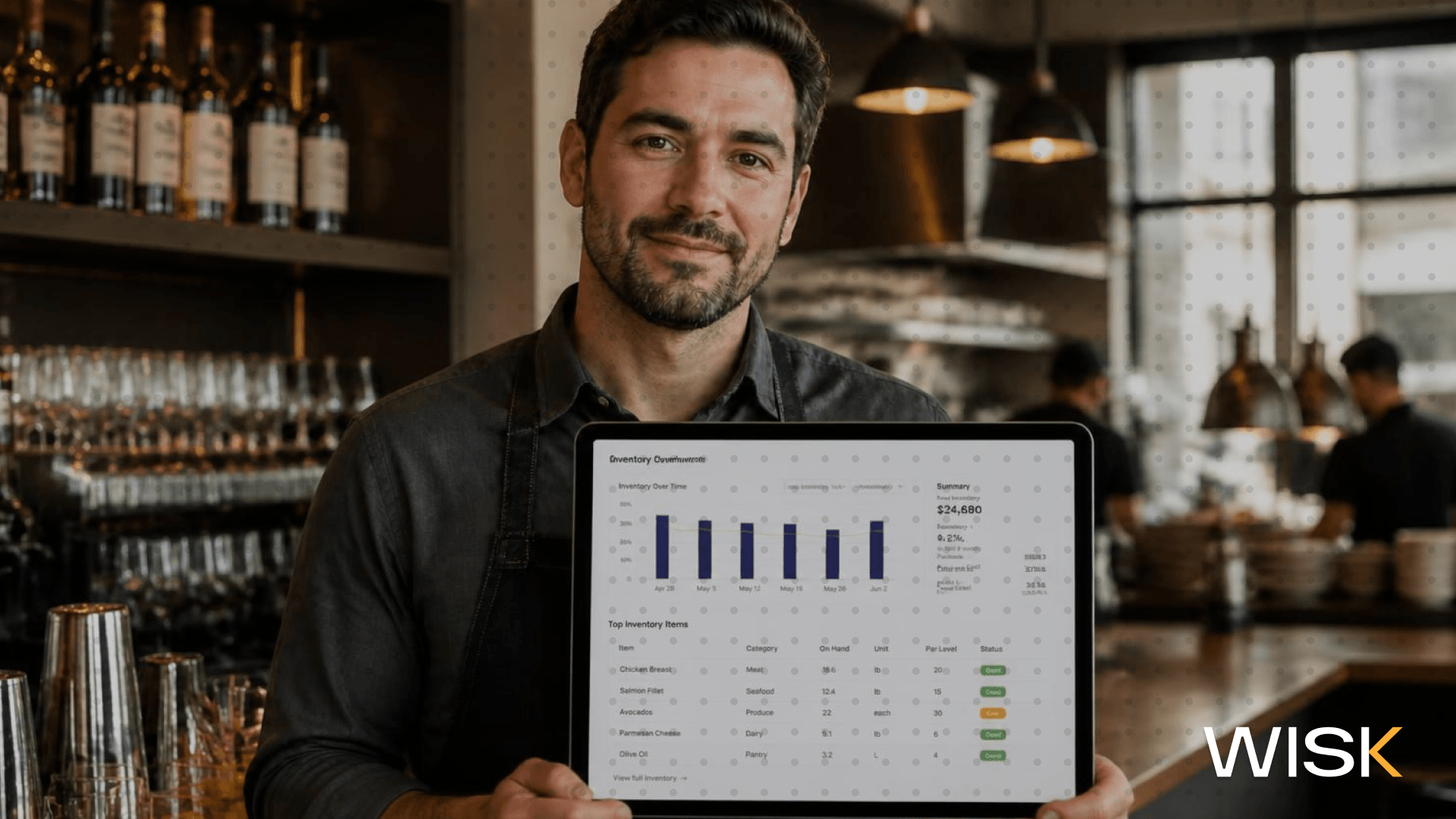
La vérification des stocks par rapport à la base de données de 200 000 bouteilles d'alcool de WISK.ai permet aux managers d'identifier instantanément les écarts et les faibles niveaux de stock avant même qu'une seule boisson ne soit servie.
Commencer un service chargé sans savoir exactement ce qui se trouve sur vos étagères revient à conduire les yeux bandés. Vous ne pouvez pas vendre ce que vous n'avez pas, et vous ne pouvez pas suivre ce que vous n'avez pas compté, c'est pourquoi un contrôle des stocks de bar est si essentiel.
- Scannez, ne devinez pas : Utilisez des scanners mobiles pour vérifier les niveaux de stock en quelques minutes plutôt que de passer des heures avec un presse-papiers, et formez le personnel sur un guide clair et précis en 10 étapes pour mesurer les bouteilles d'alcool afin que les comptages soient précis à chaque fois.
- Contrôlez immédiatement : Comparez votre inventaire physique d'avant service avec les chiffres de clôture d'hier pour vous assurer que rien n'a disparu pendant la nuit.
- Vérifiez vos stocks minimums : Assurez-vous d'avoir défini les bons niveaux de stock minimum pour les soirées à forte affluence afin de ne jamais être en rupture de stock pour un cocktail signature à 21h, en comprenant les coûts de service et combien d'onces ou de shots contient une bouteille de 750 ml. Si vous utilisez encore un presse-papiers, il est temps de moderniser votre logiciel de gestion des stocks pour maintenir une visibilité totale.
Quelle est la meilleure façon d'organiser le poste de service et les stations de préparation ?
La standardisation de l'organisation du poste de service et de la préparation en lots selon des métriques précises de coût de recette garantit que chaque cocktail respecte un coût de service strict de 18 % à 20 %, protégeant ainsi vos marges bénéficiaires sur chaque commande.
Rapidité et constance sont vos meilleurs alliés derrière le bar. Si vos barmans courent à la chambre froide arrière à la recherche de sirop simple pendant le coup de feu du dîner, vous perdez de l'argent sur le roulement des tables, c'est pourquoi l'optimisation de chaque élément du menu avec un logiciel robuste de gestion des recettes et de calcul des coûts de recettes est rentable sur chaque commande.
- Optimisez le speed rail : Organisez le rail strictement en fonction de l'efficacité des mouvements. Les alcools les plus populaires doivent être directement à portée de main du barman.
- Préparez et datez tout : Assurez-vous que tous les jus frais, les garnitures et les sirops faits maison sont préparés, étiquetés avec la date et conservés aux bonnes températures.
- Vérifiez vos lots : Examinez les recettes de vos lots pour garantir la protection des marges, et envisagez des outils comme une balance d'inventaire d'alcool pour maintenir la précision des rendements des lots et des doses servies de manière constante. Le sur-dosage dans un lot est un tueur silencieux de la rentabilité.

Comment rapprochez-vous le tiroir-caisse en début de journée ?
Commencer chaque service avec un tiroir-caisse précisément équilibré établit une base financière claire, réduisant les écarts de caisse en fin de soirée de plus de 95 %. Modernes outils dont chaque gérant de restaurant a besoin facilitent la standardisation de ces contrôles financiers dans tous les établissements.
Faites confiance à votre équipe, mais vérifiez toujours les chiffres. C'est une étape fondamentale qui protège à la fois votre entreprise et votre personnel des accusations inutiles ou des maux de tête comptables.
- Double vérification : Comptez la caisse sous surveillance vidéo ou assurez-vous que deux paires d'yeux (un gérant et le barman d'ouverture) vérifient le fonds de caisse initial.
- Vérifiez les fonds de caisse par coupure : Assurez-vous qu'il y a suffisamment de monnaie (billets de un, de cinq et pièces) disponible pour le volume attendu de la journée.
- Consignez-le immédiatement : Enregistrez immédiatement le montant de départ dans votre système de caisse. Ne laissez pas d'argent sans surveillance sur le comptoir arrière.
Comment le personnel doit-il consulter les notes de service et les listes d'articles épuisés ?
La numérisation des notes de service et des listes d'articles épuisés garantit que 100 % de votre personnel est informé des ruptures de stock, des réservations VIP et des suggestions du jour avant même l'ouverture.
La rupture de communication est le pire ennemi de l'excellence en matière d'accueil. Vous ne pouvez pas vous fier aux post-it laissés sur le terminal de caisse pour communiquer des informations de service essentielles.
- Le briefing de 5 minutes : Organisez une brève réunion avant le service pour consulter le journal de bord numérique ensemble, en équipe.
- Mettez en avant les produits à forte marge : Mettez en évidence les bouteilles ou cocktails spécifiques à forte marge que vous souhaitez que l'équipe promeuve activement ce soir-là pour écouler les stocks dormants.
- Passez en revue les VIP : Discutez de tout incident, demande spéciale ou réservation VIP reportée de la nuit précédente.
Quelle est la procédure standard pour nettoyer et désinfecter le bar ?
L'application d'un protocole d'assainissement strict, basé sur une liste de contrôle, évite les infractions graves aux normes d'hygiène et prolonge la durée de vie fonctionnelle des équipements de bar coûteux.
Cette procédure fait le lien entre l'ouverture et la fermeture. Un bar impeccablement propre est une norme non négociable pour la perception des clients et la sécurité sanitaire globale.
- Entretien des lignes de tirage : Rincez les conduites de tirage et nettoyez énergiquement les becs de robinet quotidiennement pour prévenir l'accumulation de levure et le goût altéré de la bière.
- Assainissement des surfaces : Désinfectez toutes les surfaces, en accordant une attention particulière au dessous souvent négligé du comptoir où les résidus collants s'accumulent.
- Vérifications des équipements : Vérifiez que les lave-verres ont les bons niveaux de produits chimiques et que les tapis de sol sont nettoyés et séchés.
Quelle est la méthode la plus efficace pour suivre le gaspillage et les pertes quotidiens ?
L'enregistrement quotidien des déversements, des consommations offertes et des casses permet la détection automatisée des pertes, ce qui permet à un bar à fort volume de réaliser des milliers de dollars d'économies chaque année.
Les déversements sont inévitables dans l'hôtellerie-restauration. Cependant, un déversement non enregistré est essentiellement un vol. Vous devez créer une culture qui permet à votre équipe de signaler honnêtement les erreurs et de s'attaquer aux problèmes les plus courants de gestion des stocks de bar avant qu'ils ne s'aggravent.
- Le PdV fait loi : Exigez des barmen qu'ils enregistrent chaque bouteille tombée, chaque verre trop rempli ou chaque boisson ratée directement dans le PdV sous une catégorie spécifique "déversement", et complétez cela avec une feuille de calcul structurée de gestion des stocks de bar afin que rien ne passe inaperçu.
- Examen quotidien : Examinez le registre quotidien des déversements pendant la routine de fermeture. N'attendez pas la fin du mois.
- Repérez les tendances : Recherchez les tendances. Si vous voulez comprendre pourquoi vos marges diminuent, vous devez suivre quotidiennement les pertes de stock d'alcool — un barman "renverse-t-il" constamment de la tequila haut de gamme ?
Comment pouvez-vous rapidement rapprocher les données de vente de fin de service ?
La comparaison des données de vente du PDV avec l'inventaire épuisé pour générer des rapports d'écart instantanés permet aux directeurs généraux de localiser les revenus manquants jusqu'à l'once près.
C'est là que la magie opère et où les bons managers prouvent leur valeur. Vous ne voulez pas attendre que votre comptable vous envoie un e-mail à la fin du mois pour savoir que vous avez perdu de l'argent un mardi très fréquenté.
- Tirez le rapport Z : Générez les rapports de vente finaux directement depuis le PDV.
- Vérifiez les pourboires et les lots : Assurez-vous que tous les pourboires par carte de crédit sont saisis avec précision, regroupés et clôturés.
- Comparez le théorique et le réel : Comparez les ventes totales à l'utilisation théorique pour le service. Si vous avez vendu 30 shots de Jameson, votre inventaire devrait refléter exactement 30 shots manquants.
Comment devriez-vous sécuriser l'inventaire d'alcool pendant la nuit ?
Le verrouillage physique de tout l'inventaire de grande valeur et sa vérification croisée avec les rapports d'écart du jour éliminent complètement le risque de vol après les heures de travail.
La sécurité ne se limite pas à verrouiller la porte d'entrée de l'établissement. Vos actifs liquides doivent être rigoureusement protégés de tous, y compris le personnel, les fournisseurs et les équipes de nettoyage de nuit.
- Sécurisez tout : Verrouillez toutes les réserves d'alcool, les caves à vin et les vitrines haut de gamme.
- Sécurisez les tireuses : Assurez-vous que le système de bière pression est verrouillé ou que le gaz est coupé si votre installation le permet.
- Déposez l'argent : Rangez toutes les dernières caisses et le fonds de caisse de départ pour le lendemain dans un coffre-fort sécurisé à verrouillage temporisé.
Quelle est la bonne façon de réapprovisionner pour le prochain service ?
Le réapprovisionnement basé sur des niveaux de parité déterminés par les données, plutôt que sur les estimations des barmen, réduit les commandes excessives et optimise la trésorerie hebdomadaire de votre établissement.
Une bonne fermeture prépare une ouverture impeccable. Laisser le bar complètement vide pour l'équipe du matin est une recette pour le ressentiment, une préparation bâclée et un service retardé.
- Réapprovisionnez le poste de travail : Prenez les stocks de la réserve d'alcool sécurisée pour réapprovisionner entièrement le poste de travail et l'arrière-bar pour le barman d'ouverture.
- FIFO strict : Assurez-vous que la méthode Premier Entré, Premier Sorti (FIFO) est strictement respectée, en plaçant les stocks plus anciens à l'avant pour qu'ils soient utilisés en premier.
- Laissez une liste détaillée : Laissez une liste numérique claire de tous les articles qui ont été entièrement épuisés afin que la direction sache exactement ce qui doit être commandé le lendemain matin.
Comment effectuer la dernière visite de contrôle et la liste de vérification du responsable ?
L'utilisation de l'intégration de la liste de contrôle WISK pour la vérification finale garantit une conformité à 100 % avec toutes les procédures de fermeture avant que le responsable ne soit autorisé à pointer sa sortie.
La vérification finale par le responsable est votre filet de sécurité ultime. C'est le moment crucial où vous garantissez que l'établissement est sûr, propre, physiquement sécurisé et prêt pour l'activité du lendemain.
- Contrôles de température : Vérifiez tous les thermostats des chambres froides et des réfrigérateurs de comptoir. Un réfrigérateur en panne pendant la nuit peut vous coûter des milliers en produits gâtés.
- Ronde de sécurité : Vérifiez que toutes les portes extérieures sont verrouillées, que les fenêtres sont fermées à clé et que le système d'alarme est activé.
- Validez numériquement : Validez la liste de contrôle numérique. Cela laisse une trace claire et horodatée de la responsabilité afin que la direction sache exactement qui a fermé le bâtiment et comment.
Les données : Procédures de bar manuelles vs. automatisées
Si vous hésitez encore à numériser vos opérations, examinez la différence entre la gestion traditionnelle d'un bar et l'approche modernisée, en commençant par le panorama des meilleures applications d'inventaire de bar.
Comment WISK.ai rationalise-t-il vos procédures d'ouverture et de fermeture de bar ?
Vous et votre équipe travaillez incroyablement dur pour offrir une hospitalité exceptionnelle. Vous ne devriez pas être accablé par la paperasse manuelle à 3h00 du matin alors que vous ne rêvez que de rentrer chez vous. En intégrant vos procédures quotidiennes dans WISK.ai, vous éliminez les approximations et reprenez le contrôle de votre temps.
Notre plateforme offre aux directeurs des boissons et aux gérants une base de données inégalée de 200 000 bouteilles d'alcool pour un scan d'inventaire instantané, des rapports d'écart en temps réel pour détecter les incohérences, et un calcul précis des coûts de recette pour garantir la rentabilité de chaque verre servi.
Les logiciels de gestion des stocks de WISK pour les bars et restaurants et les logiciels dédiés à la gestion des stocks de bar sont conçus pour prendre en charge les opérations à volume élevé avec un minimum d'effort manuel. Grâce à la détection automatisée des pertes et à l'intégration transparente des listes de contrôle WISK, vous pouvez enfin gérer un bar qui fonctionne parfaitement, même lorsque vous n'êtes pas sur place. Ne perdez plus d'argent à cause des erreurs manuelles et des feuilles de calcul obsolètes. Prêt à standardiser vos opérations et à augmenter vos marges bénéficiaires ? Réservez une démo avec WISK.ai dès aujourd'hui.